Danjiang Bridge: A World-class Landmark at the River and Sea Confluence
Anchor point
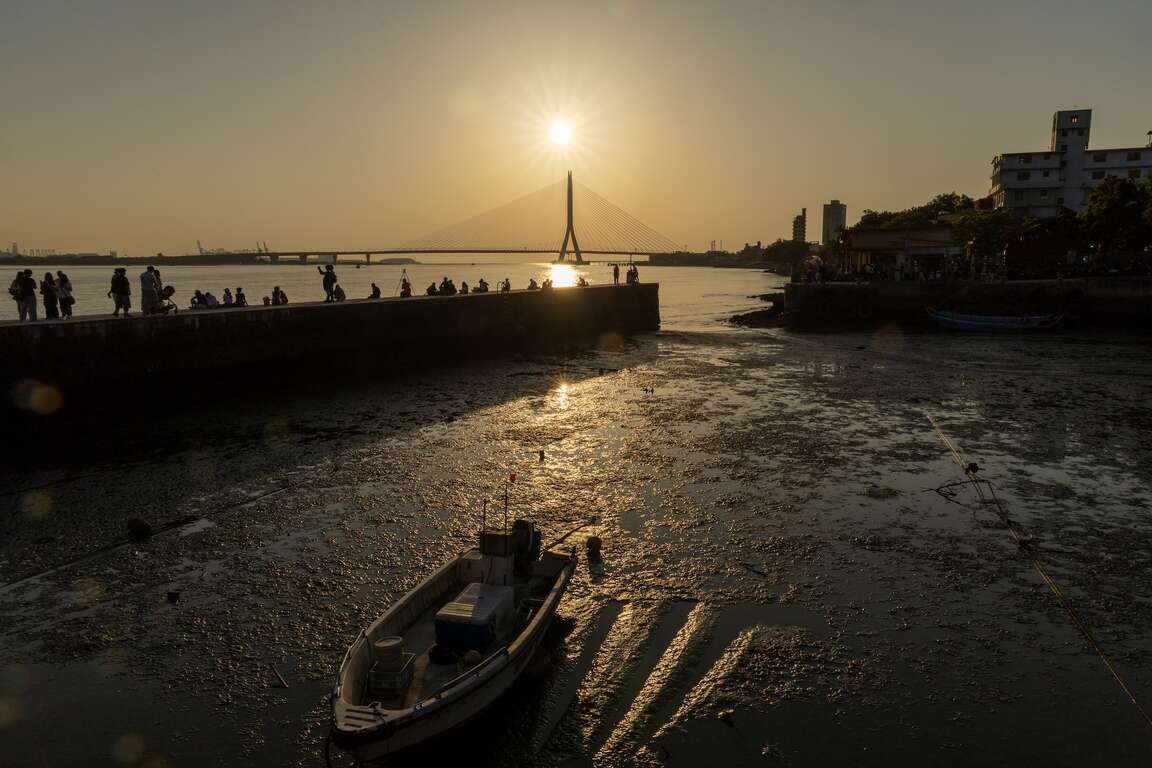
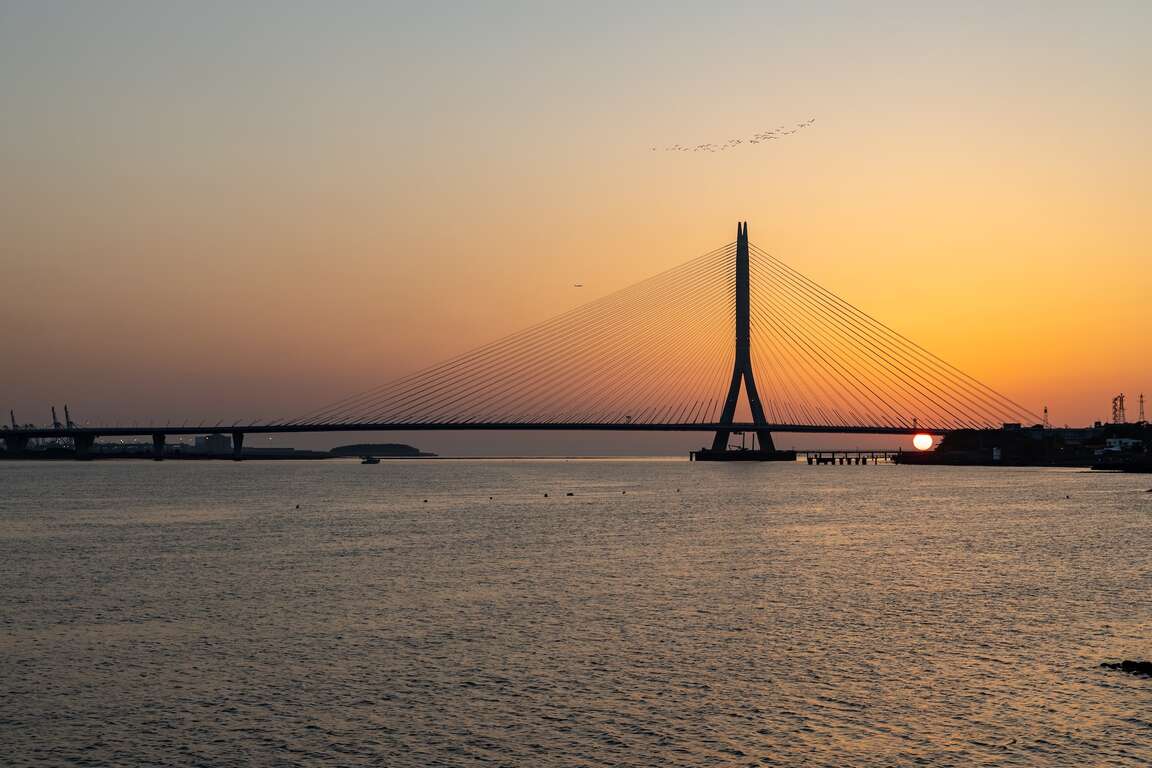
Sunset in Danhai and the Danjiang Bridge
The Danjiang Bridge opened on May 12, 2026, after decades of planning and construction. The bridge is a road bridge spanning the mouth of the Tamsui River, connecting the Tamsui and Bali banks. It not only greatly improves regional transportation and alleviates the long-standing congestion problem at the Guandu Bridge, but also becomes the world's largest single-tower asymmetric cable-stayed bridge, with a sleek, beautiful bridge-body posture, making it a dazzling world-class landmark at the mouth of the Tamsui River.
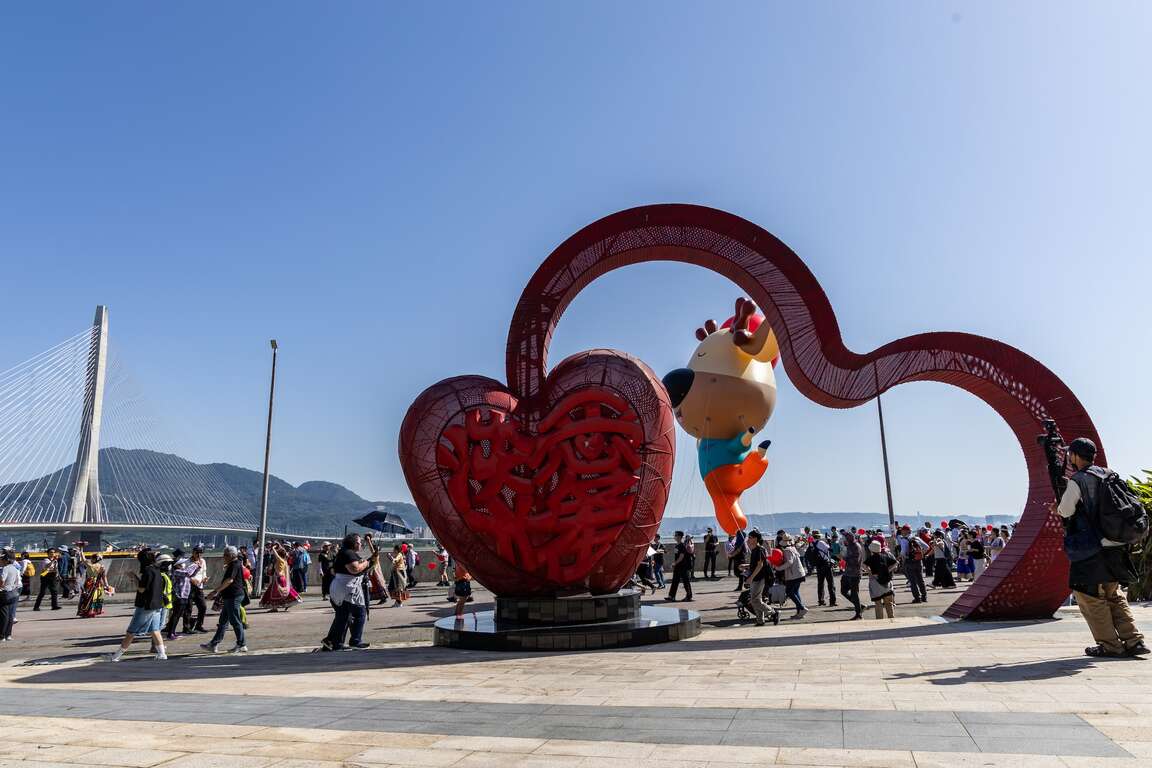
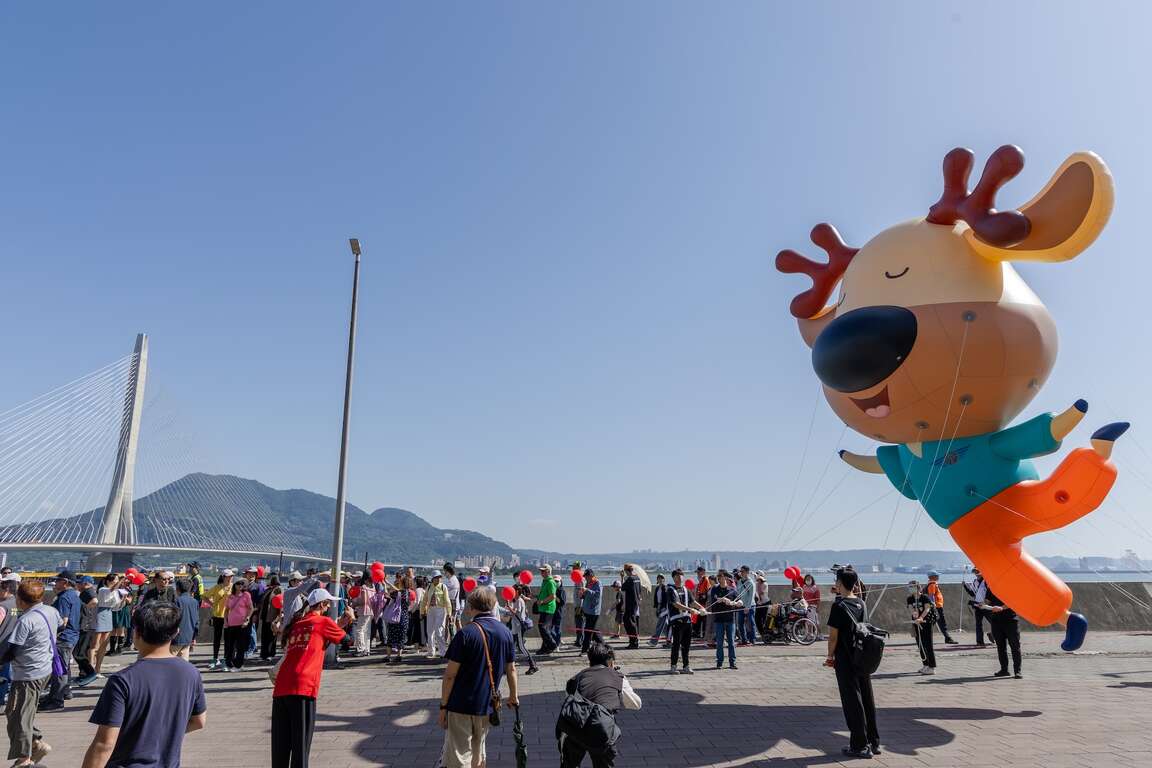
The Highway Bureau Mascot Balloon

The Aesthetics and Craftsmanship of the Danjiang Bridge
In 2015, architectural master Zaha Hadid won the international competition to design the Danjiang Bridge. The design inspiration comes from the elegant body movements of Taiwanese Cloud Gate dancers. The bridge landscape lamp posts and stay cables are integrated with dance imagery, showcasing a rhythmic bridge vocabulary. The bridge towers, with their "hands clasped together" gesture, symbolize blessings for Taiwan.
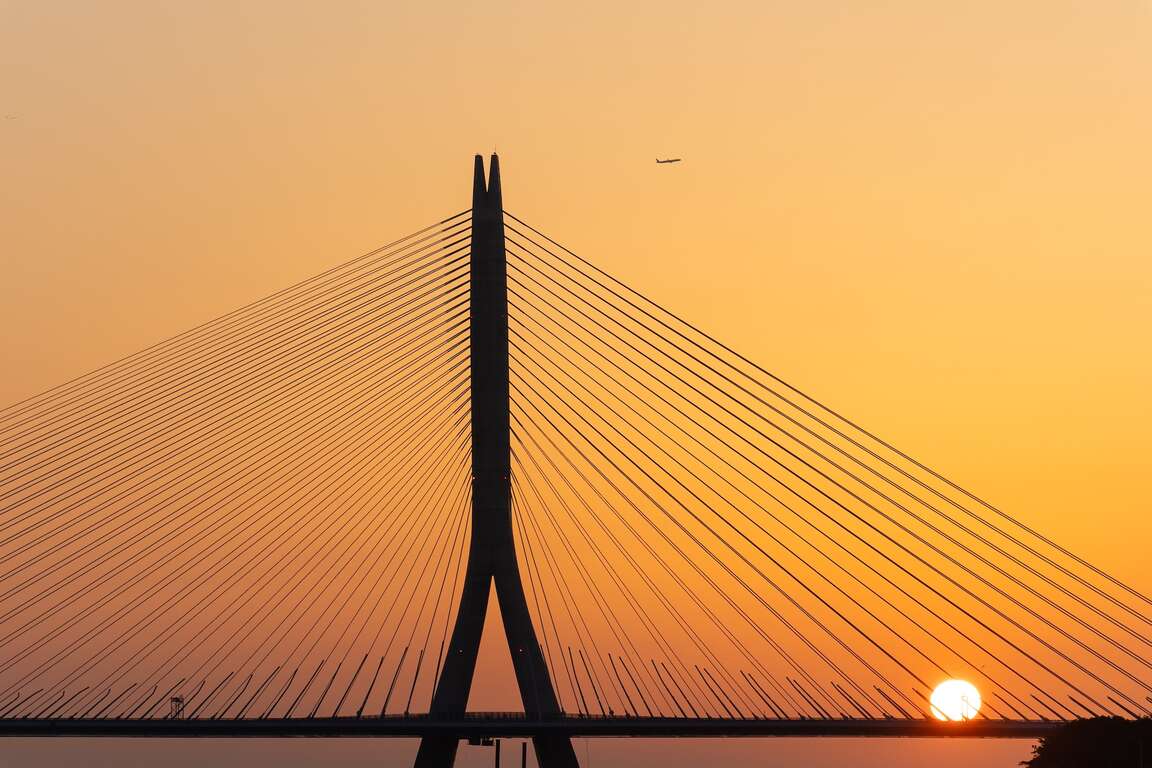
The Danjiang Bridge in the Evening


Faced with difficult engineering conditions, such as strong sea winds and silty riverbed geology, the Danjiang Bridge successfully overcame challenges through excellent construction methods. Supported by a 211-meter-high tower and approximately 66 stories tall, the bridge has a total length of 920 meters. It has a main span of 450 meters and a back span of 175 meters, with a maximum bridge deck width of 70 meters, setting a record for the world's largest single-tower asymmetric cable-stayed bridge, demonstrating Taiwan's world-class engineering capabilities.
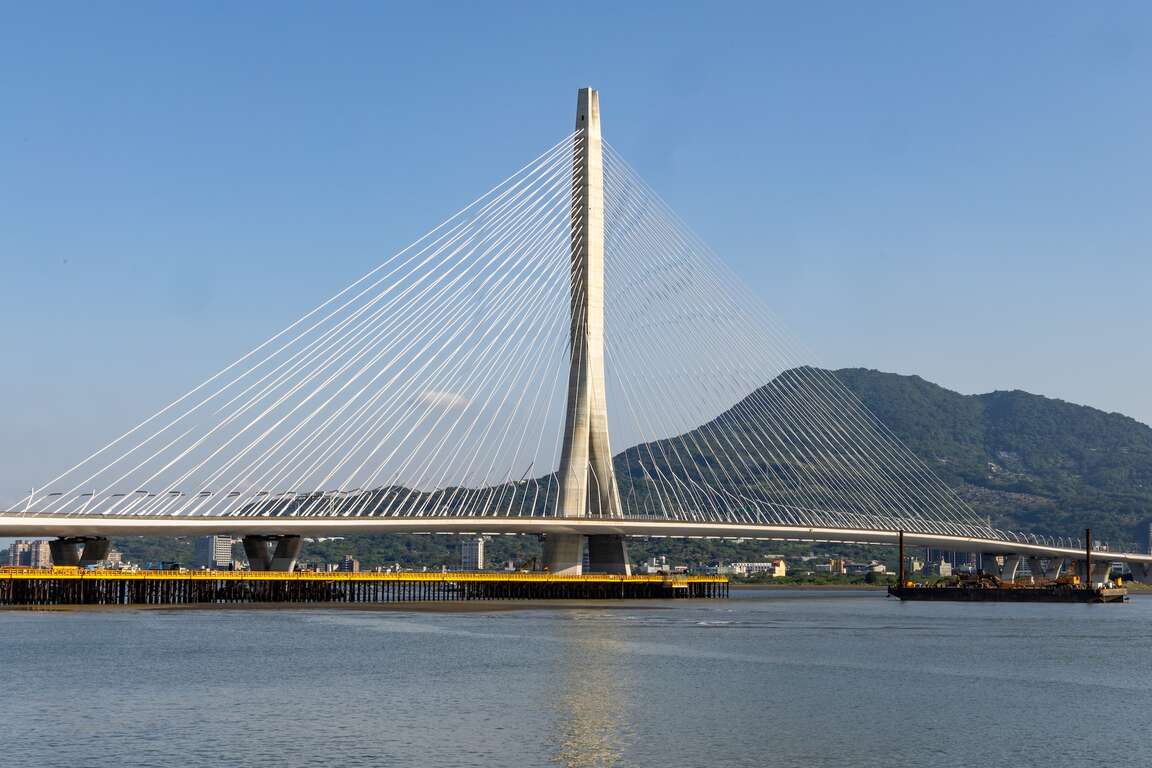
The Danjiang Bridge and Guanyin Mountain


Sunset in Tamsui
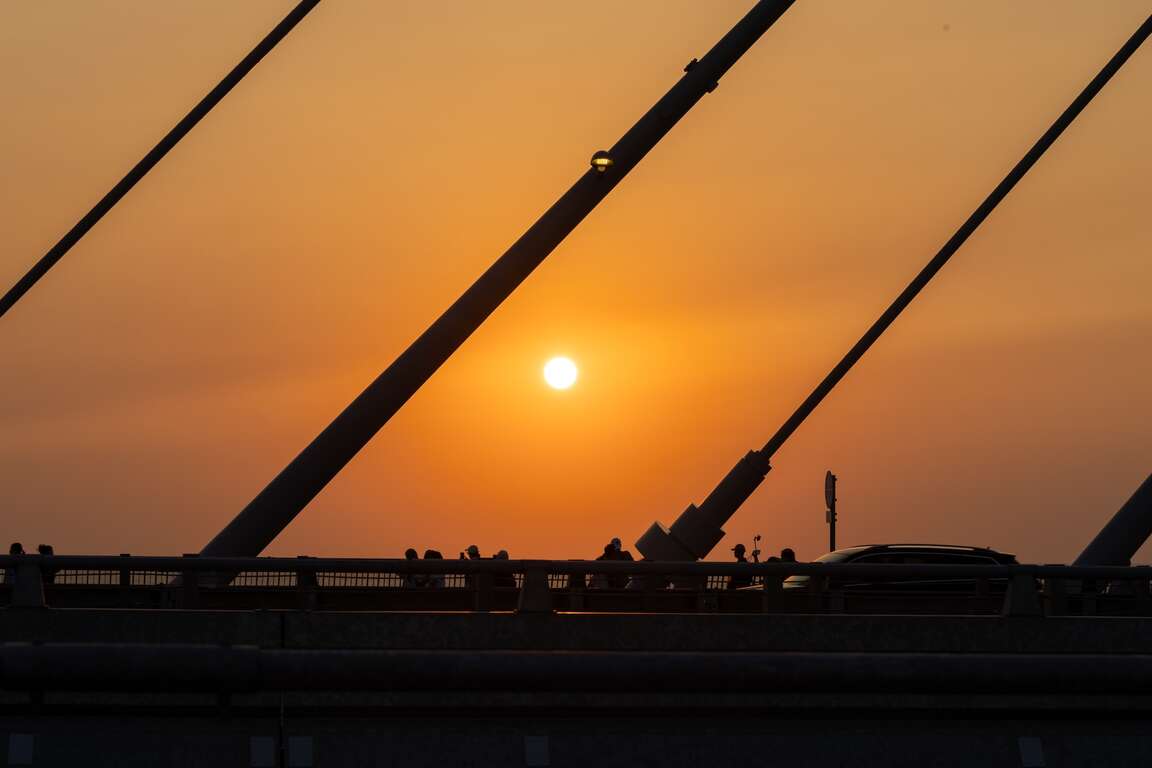
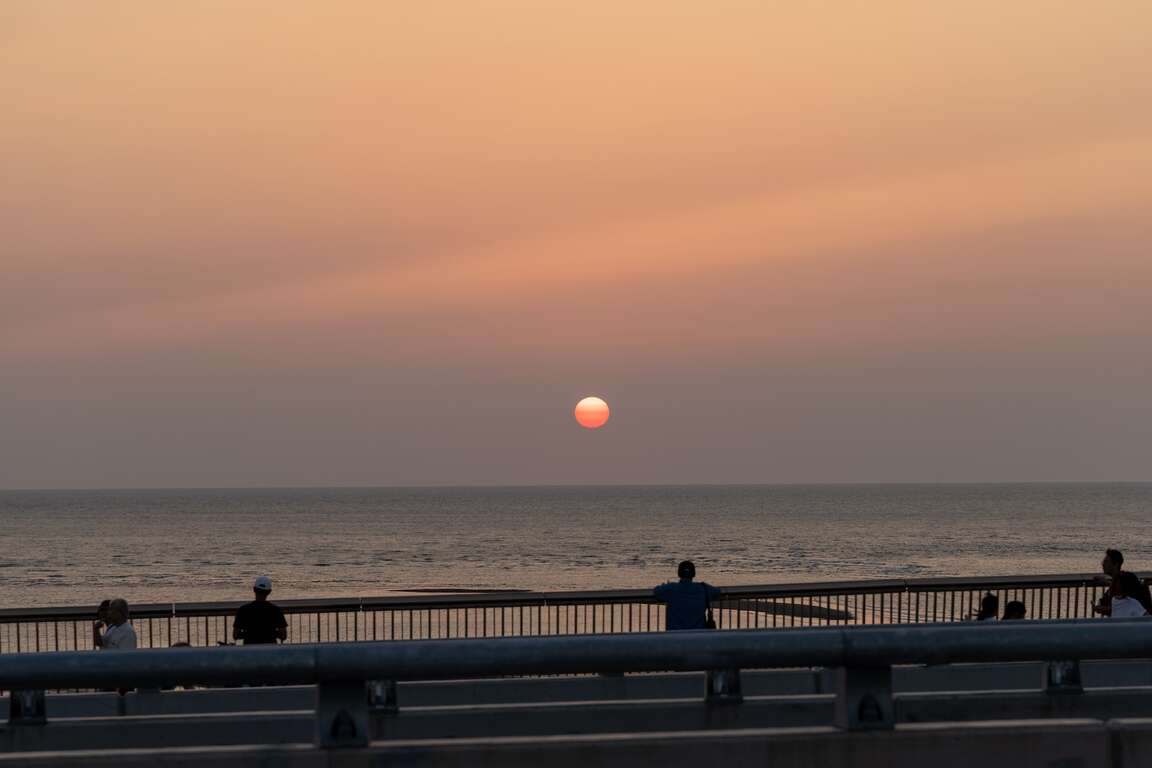
The team specially took into account the most charming natural scenery in Tamsui - Sunset in Danhai - when designing the Danjiang Bridge. To avoid blocking the river mouth landscape, the bridge adopts a single-tower asymmetric design; the team configured the main tower at the Tamsui end. Besides echoing the distant view of Bali Guanyin Mountain, it also preserves the wide view of the river mouth as much as possible. It makes the Danjiang Bridge not only a transportation construction project, but also a new highlight of the Sunset in Tamsui.
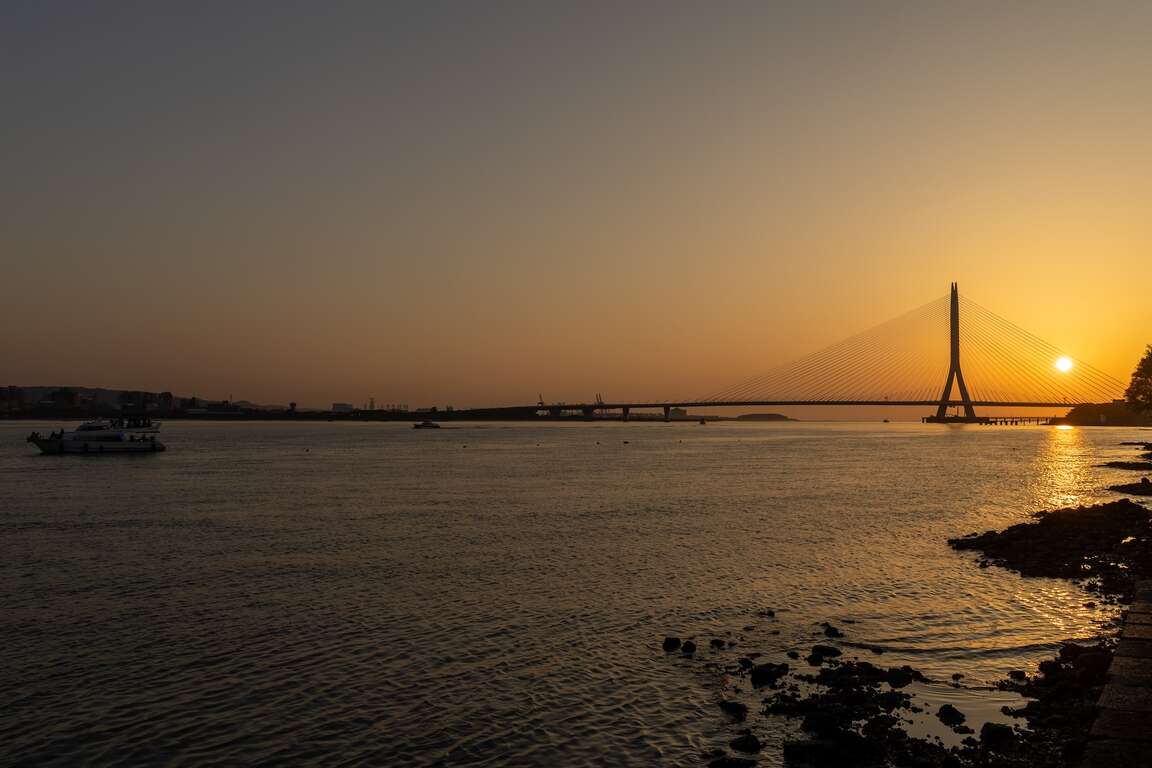
The Danjiang Bridge Spanning the Mouth of the Tamsui River

Danjiang Bridge Opening Activities
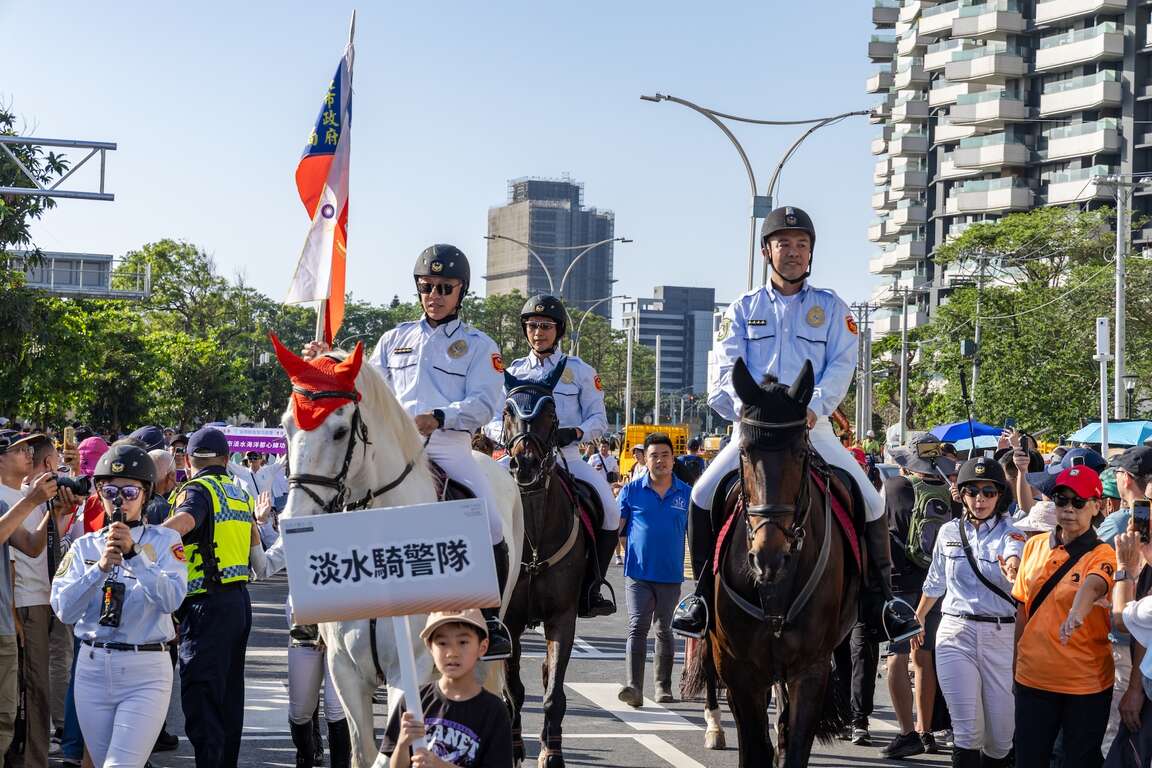
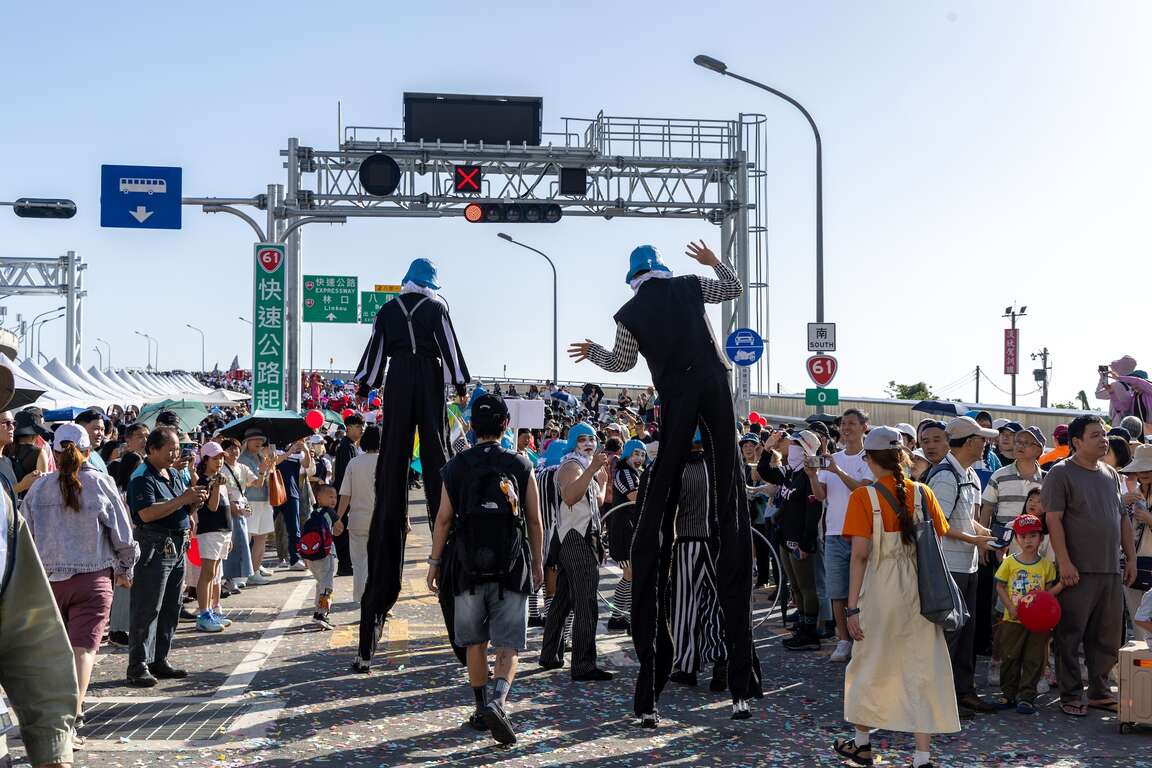
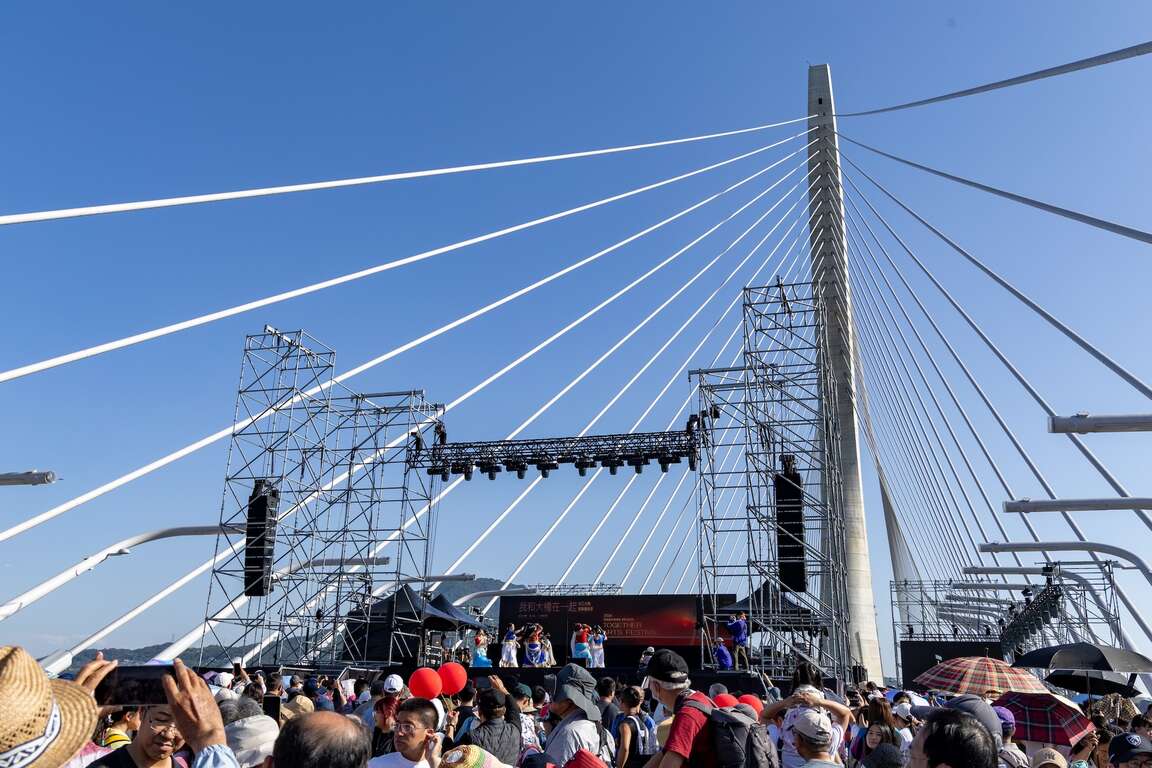
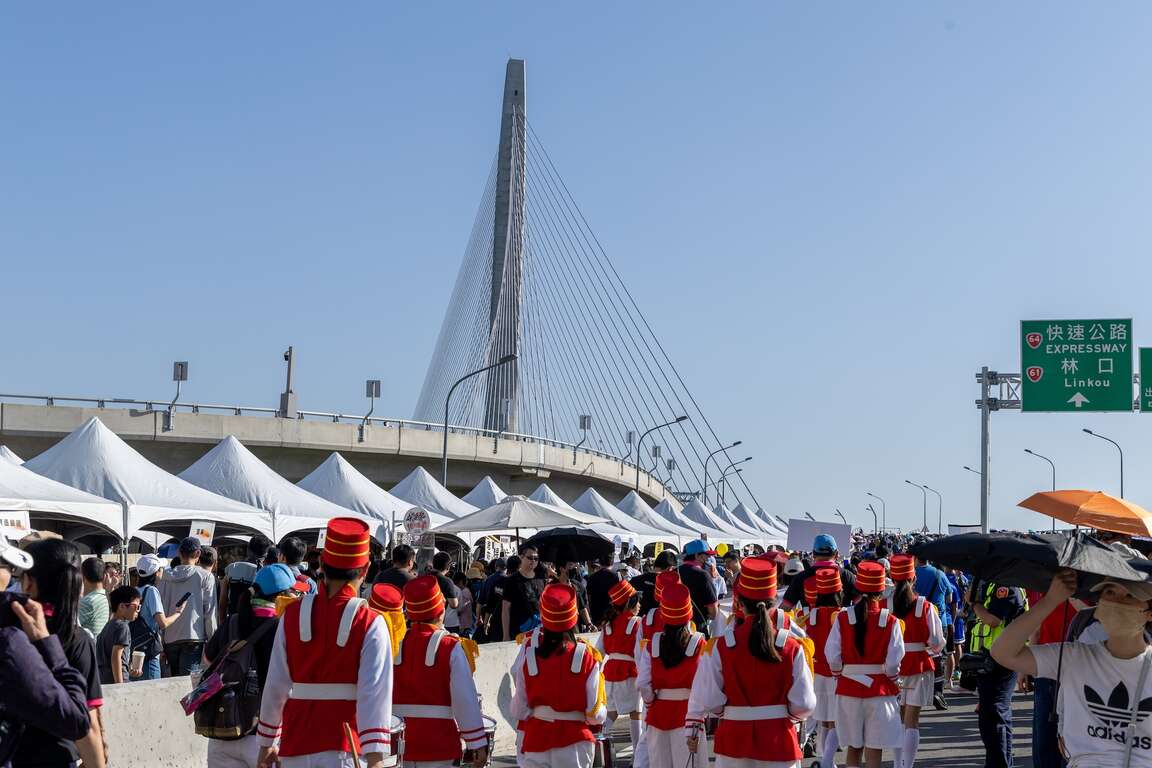
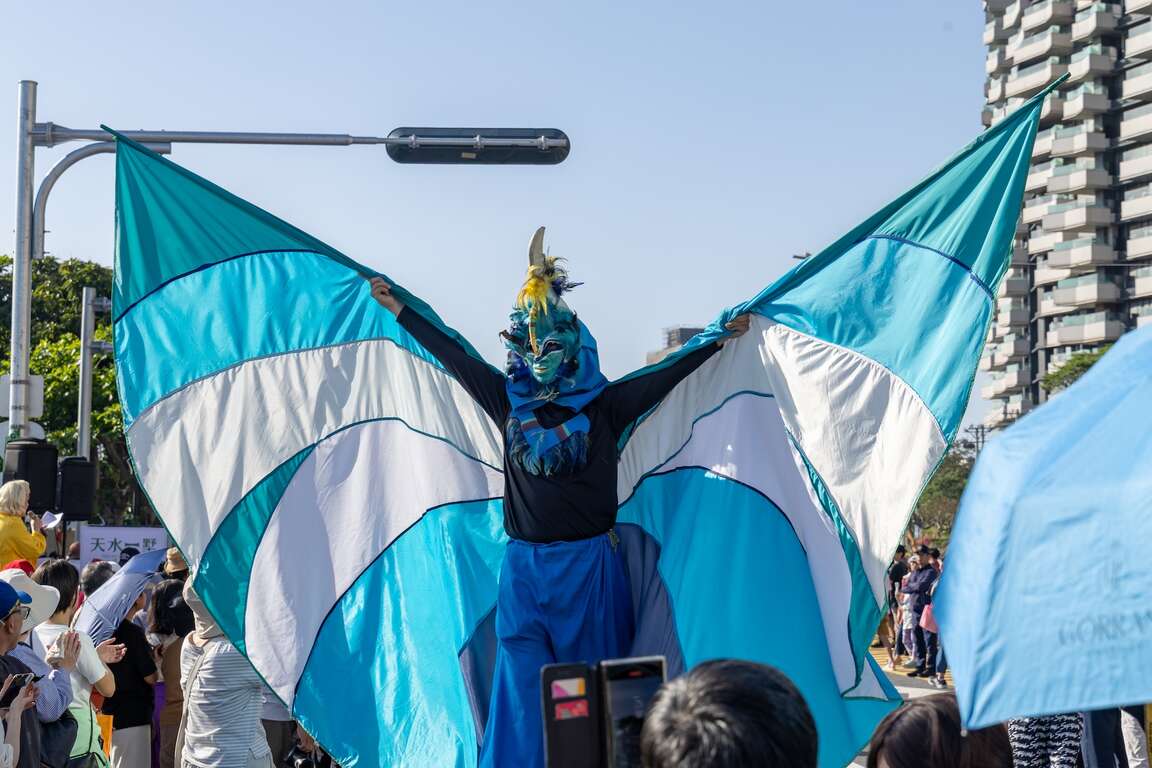
New Taipei City and the Highway Bureau had planned a series of events to invite the public to experience the Danjiang Bridge before its opening. The event kicked off with a parade in late April, followed by a Starry Concert and Picnic Day in early May. The public enjoyed the beauty of the bridge amidst music, sunset, and sea breeze, witnessing the birth of a new landmark at the mouth of the Tamsui River.
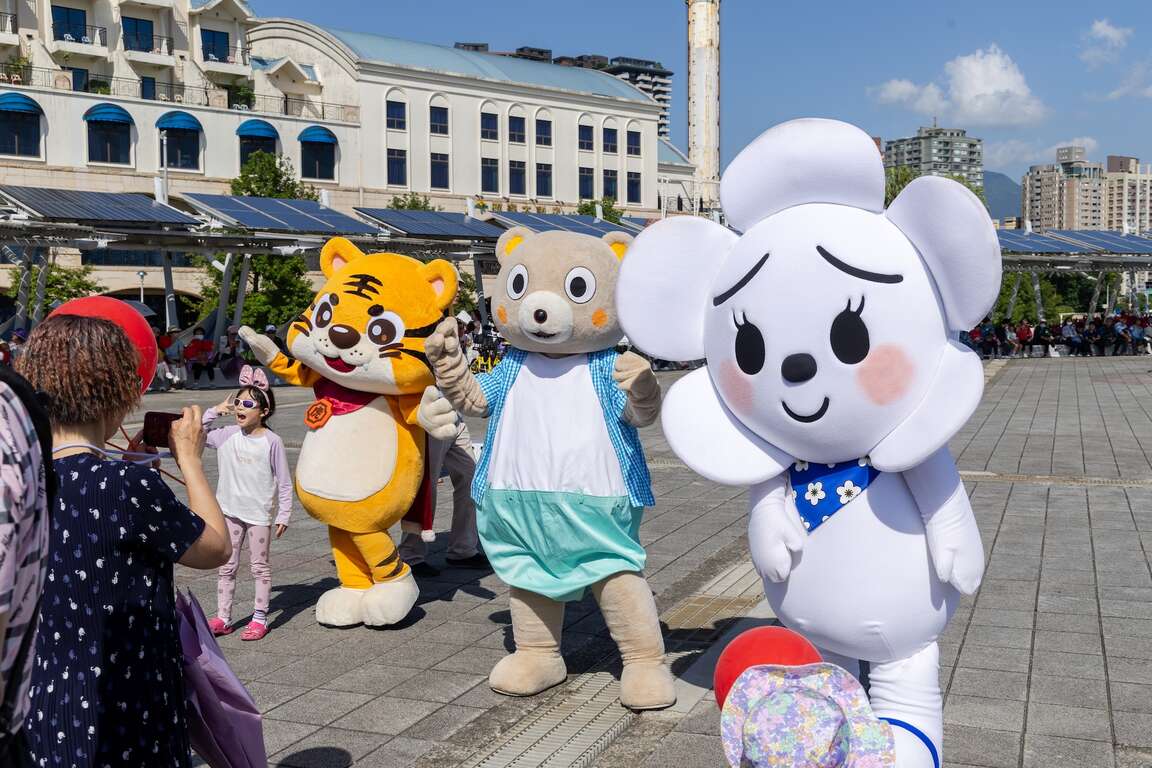
New Taipei City's Mascot "Xiao-Ke" Joyfully Interacting with the Public
New Taipei City Mounted Police Joining the Parade
The Theater Troupe Marching Toward the Danjiang Bridge
The Main Stage Area of the Danjiang Bridge


Wide Pedestrian and Bike Lanes
The Danjiang Bridge, approximately 70 meters wide at its widest point, has integrated a Danhai Light Rail reserved lane, bus, car, and motorcycle lanes, as well as pedestrian and bicycle spaces, balancing transportation functionality with a leisure experience. Strolling along Tamsui Old Street in the wind, crossing the bridge to Bali Wazihwei, visitors can slow down on the bridge, stop to admire its curved design, and quietly wait for Tamsui's stunning sunset.
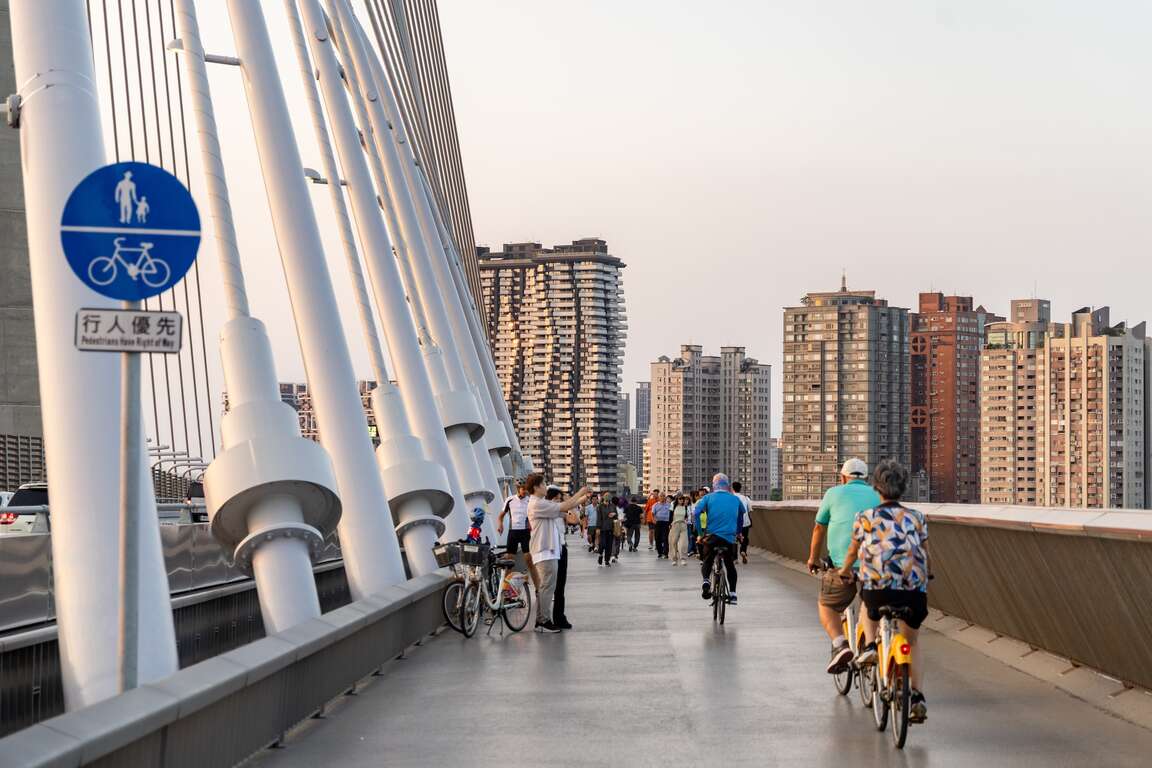
Exploring the Danjiang Bridge by Bicycle
Admiring the Sunset in Tamsui from the Danjiang Bridge

North Coast Double-Decker Bus
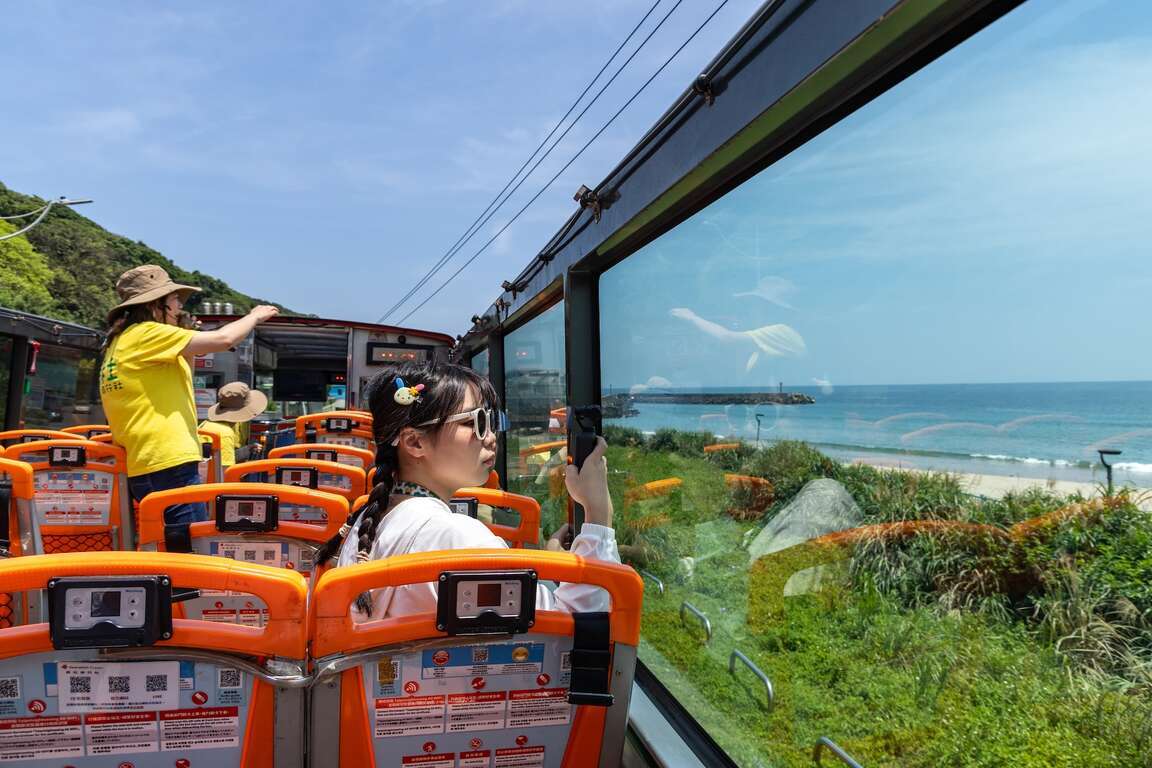
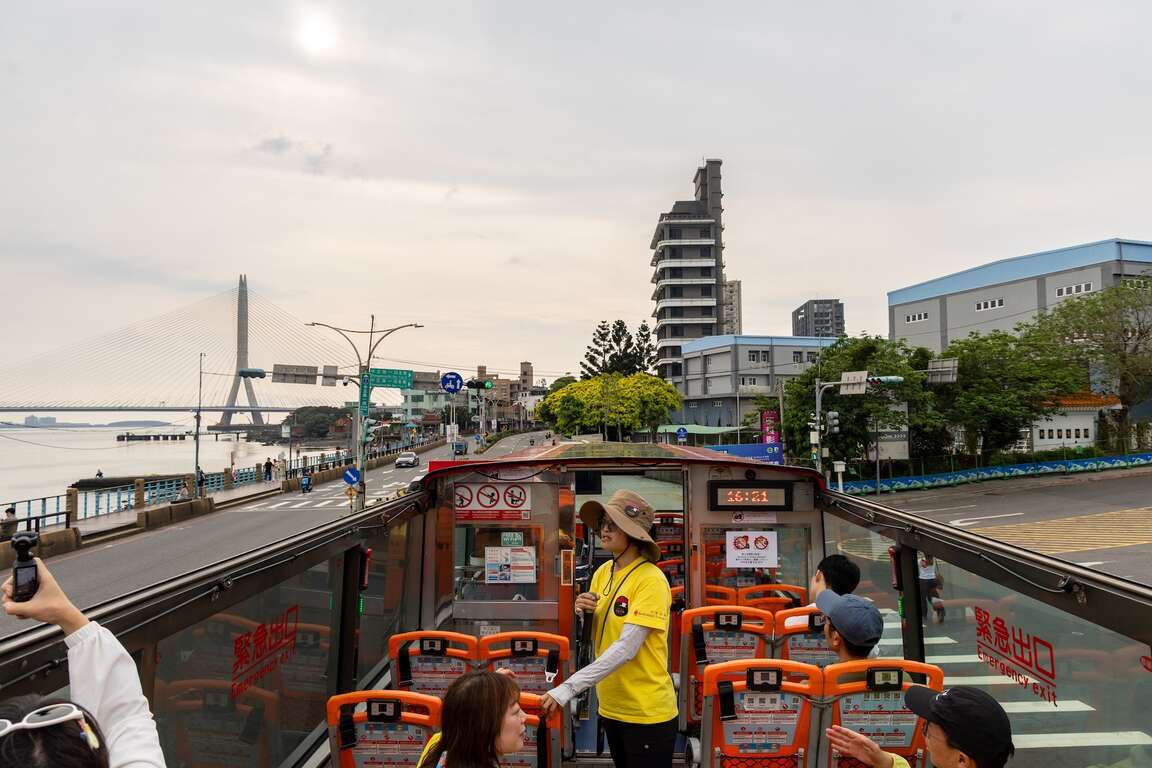
Enjoy panoramic views of the North Coast and Danjiang Bridge from the height of a double-decker bus. The Route 2 Taiwan double-decker bus departs from Nangang Station, circling the North Coast and offering cruise-like views along the azure coastline. It also allows visits to classic scenic spots such as Yehliu Geopark, Jinshan Old Street, and Cape Fugui, where visitors can savor local delicacies and flavor bento boxes. Arrive at the Danjiang Bridge in the evening to admire this magnificent engineering marvel of Route 2 Taiwan.
Exploring the Danjiang Bridge by Bicycle
Touring the North Coast by Double-Decker Bus


Enjoy the Danjiang Bridge Online
Since 2022, the New Taipei City Government Tourism and Travel Department has established a Live Cams System to showcase the beauty of New Taipei City around the clock. The live streams from Bali Left Bank and Tamsui Fisherman's Wharf are excellent choices for appreciating the Danjiang Bridge. Through high-definition live streaming, the system captures the bridge's elegant form and riverside scenery in real time. Whether it's everyday landscapes or large-scale events like fireworks displays across the river, the public can view all online in real time. The public can also use the live footage to check the weather and conditions before their trip, ensuring a well-prepared visit to the Danjiang Bridge!

Previous
“Get in the Sedan Chair!” “Let’s Go!” Yehliu Cultural Festival of Jumping into the Sea with Gods
One day in 1820, fishermen of Yehliu found a Fujian-style sailboat drifting alone on the open waters, so they boarded the sailboat to check, and found no one on it. However, they found a statue of Kai Zhang Sheng Wang and Chinese fir and limestone, building materials, in the cabin. After having a discussion, people resolved to welcome the god to their fishing village. They used building materials found on the boat to build a temple called Baoan Temple to bless fishermen in Yehliu a safe journey when they went fishing on the sea.Several decades later, a boat from Fujian struck a reef and sank. After the tragedy, Kai Zhang Sheng Wang entered the body of a spirit medium to indicate fishermen to offer sacrifices to pray for peace, not allowing the remains of victims to be brought to the fishing port. Kai Zhang Sheng Wang further indicated that He would go on an inspection tour around the port at Lantern Festival in person. Following the instructions of the God, young and strong residents in Yehliu carried the God’s sedan chair on January 15 of the lunar calendar, jumping into the cold sea water to expel ghosts and monsters at the port. This was the origin of jumping into the sea with gods in Yehliu.Come in Water and Go in FireThe tradition of jumping into the sea with gods in Yehliu has over one hundred years of history, and it is a unique activity at Lantern Festival at Taiwan’s Northern Coast. The tradition enjoys the fame with Sky Lantern Festival in Pingxi and beehive fireworks in Yanshui as they are all intangible cultural heritage. The four rituals of jumping into the sea with gods in Yehliu include “going on an inspection tour with gods on the sea,” “bringing back a whole cabin of catches,” “jumping into the sea with gods,” and “stepping on the bonfire with gods to expel evils and adversities.” Participating followers have to jump into the water with a god’s sedan chair first, and run toward the bonfire after they go ashore. Therefore, we say “come in the water, and go in the fire.” It is the most distinctive cultural festival in Wanli District.Jumping into the sea with gods is an annual occasion in Yehliu. Residents and fishermen in Yehliu support the event by donating money and contributing their labor to plan it. It is an important activity that enables local people to work together as a team. The event of jumping into the sea with gods starts early in the morning, and followers and sacrificial service chiefs carry out the blessing ceremony successively in Baoan Temple. In front of the temple, you can see the spectacular performances of the lion dance of Yehliu Elementary School, beiguan music club, and god’s generals. It is difficult to take your eyes off the performances, and you can hear the sounds of camera shutters one after another as well. The temple workers carry the eight gods’ sedan chairs to the front of Baoan Temple. After they carefully place gods’ statues in the sedan chairs, they hang firecrackers on the sedan chairs. Strong and brave men carrying the sedan chairs move forward while firecrackers are being set off. For a moment, the sounds of firecrackers resound across the sky, going through the cloudy and rainy sky to the Heavenly Palace.Going on an Inspection Tour with Gods on SeaThe lead boat sets sail with people’s blessings, kicking off the event of going on an inspection tour with gods on the sea. Over ten fishing boats follow the lead boat in order and dash out Yehliu Fishing Port amid the loud noise of firecrackers. During the one hour of the inspection tour, all fishing boats circle around Yehliu Fishing Port three times to pray for plentiful catches and safety.Bringing back a Full Cabin of CatchesAfter an inspection tour on the sea, fishermen will open their cabin and crane up a full load of catches to the truck before they return to Baoan Temple. This means that fishermen will get a full load of catches on their each voyage this year. Next, the city mayor will host a charity auction for catches, where competitive bidding can be seen at the scene.Jumping into the Sea with Gods The highly anticipated event of “Jumping into the Sea with Gods” starts in front of Baoan Temple as people shout “get into the sedan chair” and “let’s go” loudly. Strong and brave men in Yehliu carry the eight gods’ sedan chairs for Kai Zhang Sheng Wang, Mazu, General Zhou Cang, the Lord of Land and so on, and they brave the cold and dash into the fishing port amid the loud cheers of people. The scene is exactly the same as the one when Kai Zhang Sheng Wang went on an inspection tour at the fishing port over one hundred years ago. The ceremony is held to expel ghosts and spirits, praying for favorable weather and safety.In recent years, the event has changed with the times: people are welcome to join the activity of jumping into the sea with gods, and a design competition is held. After gods’ sedan chairs arrive at the fishing port, 100 people are welcome to participate in the event of jumping into the sea. The year 2024 is the year of the dragon, so quite a few participants wear clothing with the style of the dragon to celebrate the year of the dragon and pray for safety in the coming year.Stepping on Bonfire with Gods to Expel Evils and Adversities After strong and brave men carrying gods’ sedan chairs jump into the port, they have to swim across Yehliu Port with the sedan chairs. After they come ashore, they are ready to step on the bonfire. When it is time, the shouts of “get into the sedan chair” and “let’s go” echo throughout Yehliu, and strong and brave men carry gods’ sedan chairs and step on the bonfire that has been sprinkled with salt and rice barefooted to purify calamities on their bodies. After doing this for three rounds, they complete the ritual of “coming in the water, and going in the fire.”Being led by the beiguan music club, gods make a pilgrimage procession around the fishing port to protect Yehliu. The cultural festival of jumping into the sea with gods originated from a mysterious unmanned boat drifting on the sea over one hundred years ago. After Kai Zhang Sheng Wang was brought ashore by local fishermen, He entered the body of a spirit medium to go on an inspection tour at the port to protect the safety of Yehliu Fishing Port. Residents in Yehliu, in return, pass down the tradition. The event of jumping into the sea with gods is not only a special activity at Lantern Festival, but also a shared memory of residents of different generations in Yehliu.
Next
Ride a Double-Decker Bus Along Route 2 Taiwan!
Hop aboard an open-top double-decker bus and take in Route 2 Taiwan from a higher vantage point. Departing from Nangang Station, the bus glides along the brilliant blue North Coast like a slow-moving cruise ship on land. Along the way, you will marvel at the geological wonders of Yehliu in Wanli, browse and shop along Jinshan Old Street, pause for afternoon tea at Fugui Cape in Shimen, strike the perfect shot at the Zhilan Park Ocean Viewing Platform in Sanzhi, and arrive in Tamsui at sunset to admire the striking new landmark, Danjiang Bridge. From start to finish, the flavors of the North Coast unfold alongside the scenery, making this a feast for both the eyes and the palate.The upper deck of the double-decker sightseeing bus features an open-top design, giving passengers an excellent view that takes in the sea and sky of the North Coast. On board, water-mist cooling systems and air-conditioned zones respond flexibly to changing weather, ensuring a comfortable ride. Your onboard guide has deep roots in the North Coast and is well versed in its local history, ecology, and cultural stories, from the story of the little crane at Qingshui Wetland to the traditional Sulfuric Fire Fishing technique and the rise to fame of Yehliu Queen's Head. With photographs accompanying each tale, passengers can enjoy the scenery while gaining a deeper appreciation of this land. Leaving Nangang Station, the bus threads through the Keelung River Valley and passes through Xizhi, where the urban scenery outside the window gradually gives way to open mountains and sea. The coastline shimmers on the right side, drawing gasps from passengers. Following the winding coastal road, the bus arrives at Yehliu, celebrated for its geological landscapes, and enters Yehliu Geopark to view world-class geological wonders up close.After exploring Yehliu Geopark, the route continues to the lively, bustling Jinshan Old Street. Alighting at Jinshan District Office, where three highways converge, you will have time to wander and shop in the largest town on the North Coast, picking up Jinshan's celebrated trio of local produce: sweet potato, taro, and water bamboo, along with the pork bun included in the tour.Passing by Qingshui Wetland, Black Kite raptors wheel overhead while Lotus flowers dot the water, turning the double-decker bus into a kind of migratory-bird train through a thriving ecosystem. The famous Jinshan Wave Road, viewed from the elevated height of the double-decker bus, reveals the rolling lines of the road in even more magnificent form.Hugging Tiaoshi Coast, the bus reaches Fugui Cape, the northernmost point of Taiwan's main island, where afternoon tea awaits at the Jinbaoli Station rest stop. Every sip and bite surprises: Shimen's famous Alibang black tea and a half-baked cheese tart filled with honey sweet potato. The kabayaki eel bento brings together the rich bounty of the North Coast, packing in eel, pork roll, sweet potato, neritic squid, and lotus seed for a complete taste of the coast in one box.As evening approaches, the bus heads to Sanzhi to capture the beautiful scenery of the Zhilan Park Ocean Viewing Platform. Arriving at Danjiang Bridge at sunset, you will have the chance to take a photo with this striking new landmark spanning the mouth of the Tamsui River. With golden light cascading over the water, a stroll along the Tamsui riverbank offers a captivating view where a world-class bridge meets the Tamsui sunset, a fitting end to a day on the North Coast.