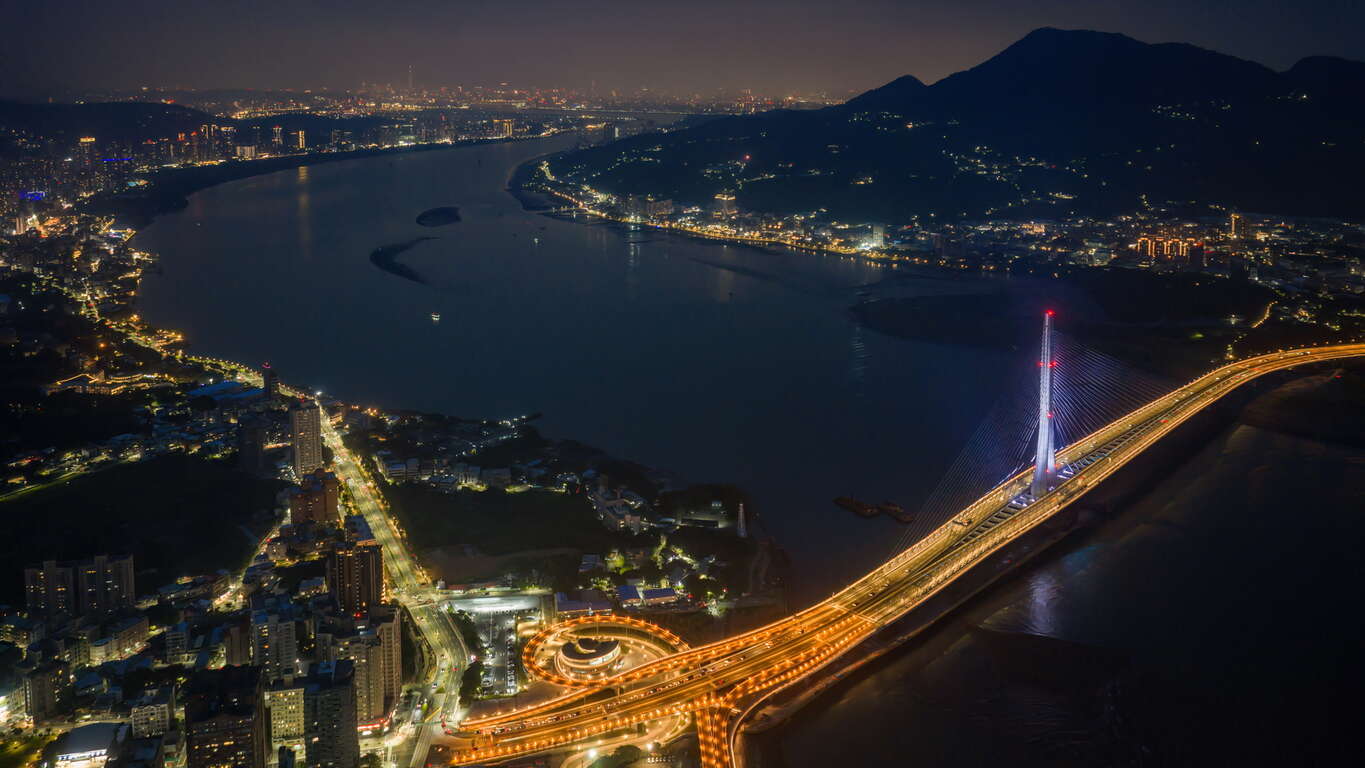
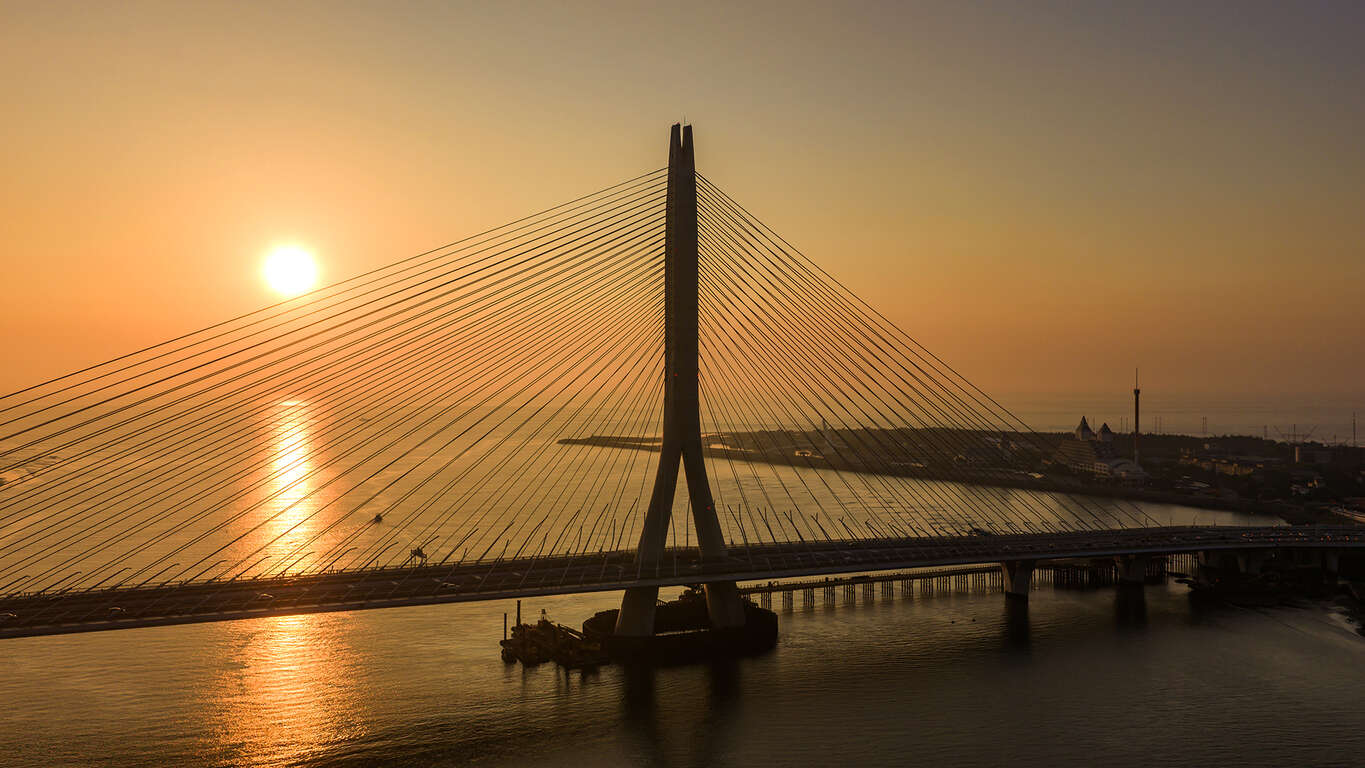
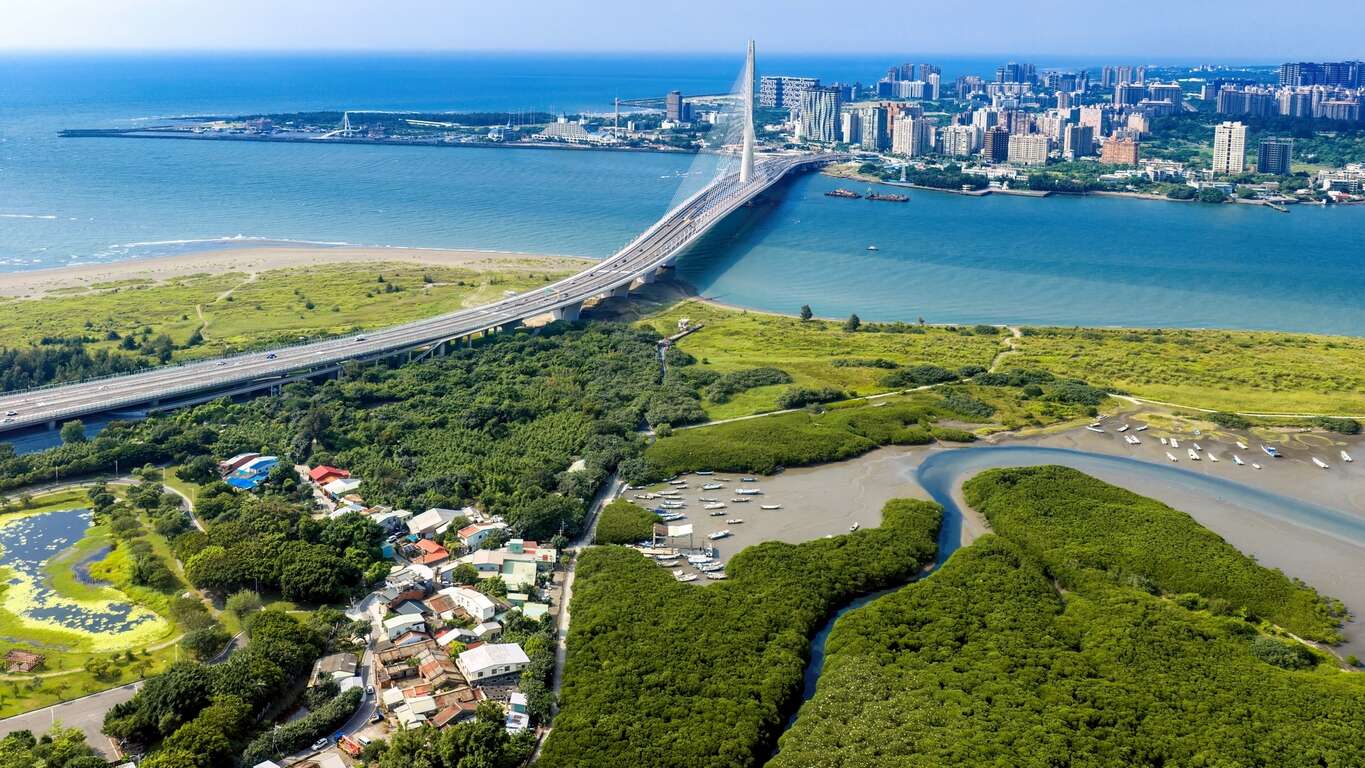
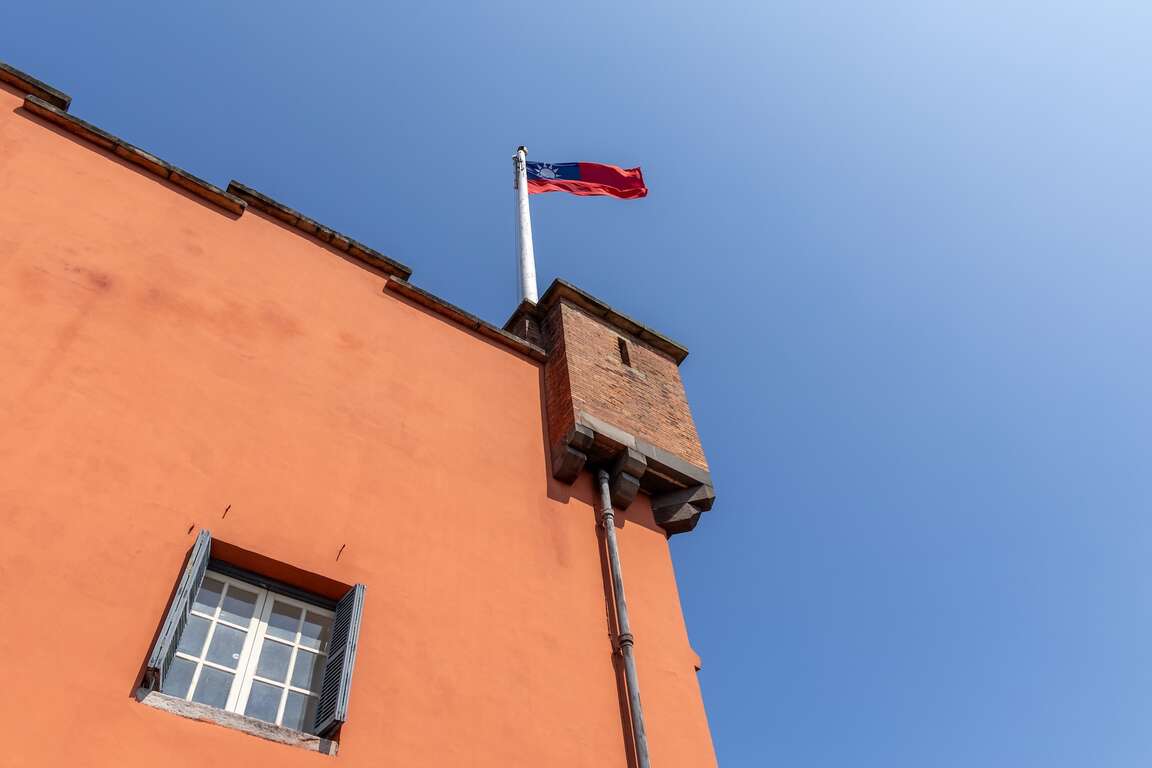
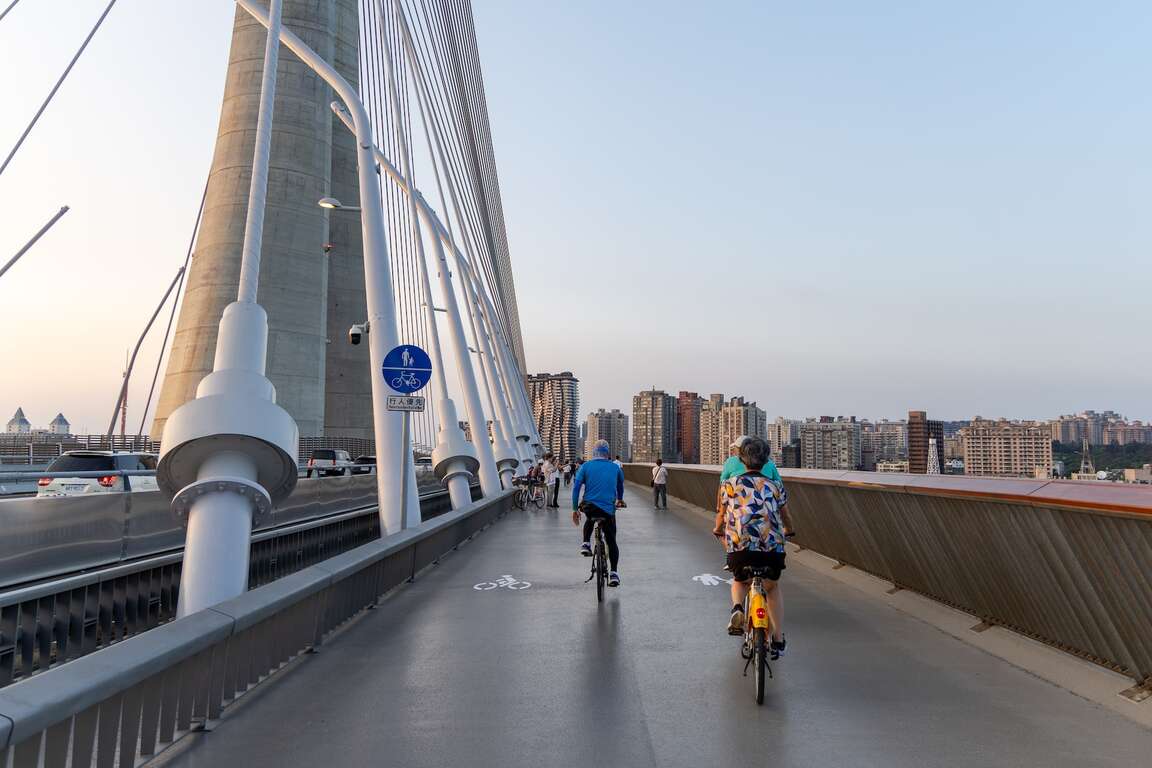
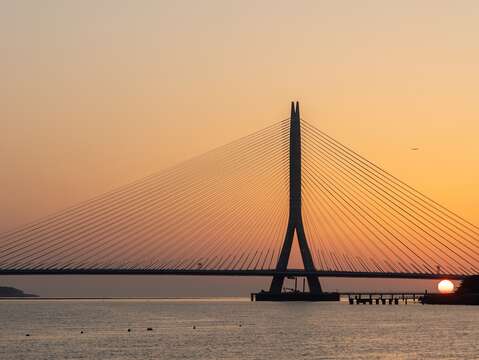
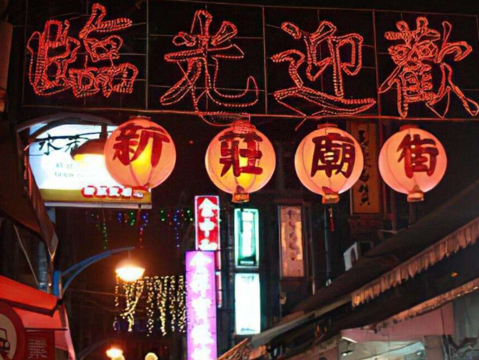
Zhonghe-Xinlu Line of Taipei MRT Xinzhuang branch began service in 2013. The whole route is underground, spanning across Xinzhuang and Sanchong Districts. There are a total of nine stations, including Taipei Bridge (O13), Cailiao (O14), Sanchong (O15), Xianse Temple (O16), Touqianzhuang (O17), Xinzhuang (O18), Fu Jen University (O19), Danfeng (O20), and Huilong (O21). Xinzhuang was once passed through by Taiwan's first railway, built by Liu Mingchuan. In 1893, the section between Taipei and Hsinchu began service. Haishankou Station was set up in front of today's Xinzhuang Elementary School. During the Japanese Rule period, Taiwan Railways modified the route so that after 1901, the train began passing through Banqiao area. Xinzhuang's status was therefore gradually surpassed by Banqiao. A century later, with the launch of Zhonghe-Xinlu Line, Xinzhuang entered the era of new railways.Xinzhuang District is the second largest district of New Taipei City after Banqiao District, with a population of more than 400,000. It is the earliest developed area in Greater Taipei with many ancient temples and local culture preserved. It is also where the Pontifical university, Fu Jen University, is located. Join us to tour around Xinzhuang by MRT!Taipei Bridge (O13): Sanchong Air Force Military Kindred Village No. 1The first stop is near Taipei Bridge. With low and simple brick houses on the riverside hanging the "Blue Sky, White Sun, and a Wholly Red Earth" flags, the nostalgic Sanchong Air Force Military Kindred Village No. 1 is a favorite location of film crews. It is also the childhood memories of many Taiwanese. In addition to military kindred related exhibitions, many military-themed exhibitions and activities are held here, bringing many military fans here.Sanchong Air Force Military Kindred Village No. 1 was where the Japanese anti-aircraft artillery was based during World War II, responsible for defending the sky over Tamsui River. Today, the underground tunnels between the artillery positions have been preserved. Put on a helmet and follow the guide to explore the underground Village No. 1!Cailiao (O14): Yunye Meat Curd MuseumYunye Meat Curd Museum inherits the delicious dried meat from an old shop of more than 30 years of history at Huannan Market. It is the first culture museum in Taiwan having the dried meat industry as the theme. Integrating Taiwan's traditional cuisine and food culture, with fun experiences in the fully transparent production process of dried meat, the museum allows visitors to learn in guided tours about modern dried meat and the cutting-edge concepts of food hygiene. It is a great indoor location for a family tour.Sanchong (O15): New Taipei Metropolitan ParkSanchong (O15) and Taoyuan MRT Sanchong Station (A2) are connected, and you can transfer between the lines within the station. It is the first impression of Taipei for international travelers after crossing the Linkou Plateau. Outside of Sanchong Station, you will find New Taipei Metropolitan Park that is located within Erchong Floodway. The park covers an area of 424 hectares, which is 16 times the size of Daan Forest Park in Taipei City. New Taipei Metropolitan Park has vast space and greenery with bicycle paths, various sports facilities, and children's favorite, Bear Monkey Forest Playground. Bear Monkey Forest Playground and Sea World Water Park are the world's largest inclusive embankment slide park. The design incorporates endemic species of Taiwan such as Formosan black bear, Formosan landlocked salmon, Mikado pheasant, green sea turtle, and mudskipper. Adults and Children of all ages can enjoy the park together!Xinzhuang (O18): Xinzhuang Temple Street Commercial District, Xinzhuang Guangfu Temple, Crescent Bridge"Fu first, Lu second, Xinzhuang third" is a proverb that entails the prosperity of Xinzhuang. Xinzhuang was the earliest developed area in Taipei, rising to the advantages in shipping of Dahan River. In the 18th century, it was the busiest commercial center of Taipei. Walking through Temple Street, you can vaguely feel how the web of streets was formed more than 200 years ago, seeing streets such as Mishi (rice market) Lane, Xiancai (pickled vegetable) Street, and Tiaoshui (water-carrying) Lane.Temple Street Commercial District is a blend of old and new with shops set up among temples. It is an area where Xinzhuang people gather for meals and go shopping. There are many well-known ancient temples in Temple Street, such as the only national monument in Xinzhuang, Guangfu Temple (built by Chaozhou Hakka people in 1780); Xinzhuang Ciyou Temple (built in 1729), Xinzhuang Dizang Temple (built in 1757), Xinzhuang Wusheng Temple (built in 1760), and Xinzhuang Wenchang Temple (built in 1813). The unique "Guanjiangshou" culture is therefore developed along with the temple fair pastry, Xianguang cake. This temple fair pastry is shaped like a bagel with a mixed savory and sweet flavor. It is a special product sold in the pastry shops on Temple Street that brings people blessings.Although Xinzhuang Port disappeared a hundred years ago due to siltation of the river, gazing at the vast Dahan River on Crescent Bridge outside the embankment would still remind you of the scene of "Xinzhuang Port crowded by thousands of sails, and the market lit by thousands of household lights." Crescent Bridge is the longest double-span steel arch bridge in Taiwan. It has a beautiful shape and is designed for pedestrians and bicycles only. Taking advantage of its height, you can enjoy the view of both banks of Dahan River in the breeze.Fu Jen University (O19): Fu Jen Catholic UniversityUniversity campuses often occupy a vast area and are surrounded by many inexpensive food options, making them great places for a weekend trip. Fu Jen University was founded in Beijing in 1925 and was once ranked as one of the four top universities in Beijing. In 1961, Fu Jen University was reestablished in Taiwan. It is the only university in Taiwan that is under the direct authority of the Holy See. The campus was designed by German engineers. There is coverage of dense vegetation. The buildings are of the color scheme of red, blue, and gray. Most signs of the buildings were created by calligraphers and politicians, including Chiang Kai-shek, Tai Jingnong, Wang Jingzhi, and Chia Ching-teh. You can enjoy them while strolling on campus.Fu Jen University's popular delicacy, FJU Department of Food Science ice-cream, is something alumni would visit the campus for. There are three flavors: chocolate, vanilla, and mixed. Every year, a time-limited flavor is launched during FJU's anniversary celebration. It is the sweetest memory for many. There are also many high-value, low-cost delicacies around the main gate of Fu Jen University, such as Teppanyaki, spicy hotpot, and Cantonese roast meat. There are many affordable and delicious options!Huilong (O21):New Taipei City Military Cemetery(Arms Park)The last station of Xinzhuang Line is Huilong Station. This station is located at the westernmost end of the Taipei Basin. At the Military Shrine at the foot of Datong Mountain, Ministry of National Defense placed retired arms on display at the plaza, including fighter jets from the 1970s-90s, Lockheed F-104 Starfighter and Northrop F-5;5"/54 caliber Mark 16 gun and warship anchor of the Navy; and M41 Walker Bulldog tank and various anti-aircraft guns of the Army. This is the favorite spot of many military enthusiasts! In the future, Huilong Station will be connected with the Brown Line of Taoyuan MRT and Wanda-Shulin Line of Taipei MRT, making it the largest transit station in Xinzhuang. It is hoped that the well-connected web of public transportation will take visitors to all corners of the metropolitan.