Romantic River Bank- “Tamsui” Sunset and Relic One Day Tour

Anchor point
Romantic River Bank- “Tamsui” Sunset and Relic One Day Tour
Category :
Outdoor excursion
Travel days :
1 day

推薦路線

Day
    第一天

      Introduction

      Anchor point
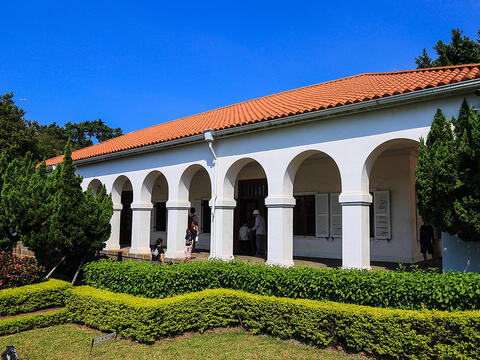
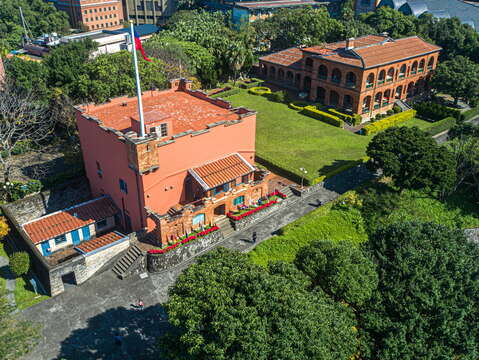
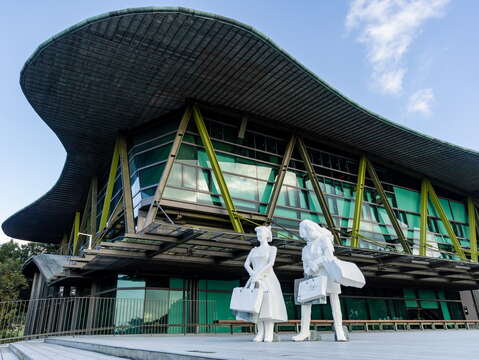
      “Tamsui” of New Taipei City is a beautiful river bank with sunset and numerous relics. Whether strolling along the river banks hand in hand or shopping on Old Street, trying the local snacks or enjoying the unparalleled ocean view, all of them present an enjoyable traveling atmosphere. Beginning from the“MRT Tamsui Station”, visit the “Tamsui Old Street” to shop around and taste popular local snacks such as A Gei, fish fries and traditional egg pancakes; then move on to the centuries old white Qing Dynasty architecture the “Little White House” and pose with the romantic half domed archway and corridors. The nearby “Bok Su Lao” is featured with red brick exterior and slanted rooftops, and the “Tamsui Red Castle” with three hundred years of history used to multi-function as a military defense, consular office and dungeon. “Cloud Gate Theatre”is the rehearsal and performance venue of the renowned performance group Cloud Gate. The park contains several works of art, including famous works by sculpting master Ju Ming. Here you can leaf through Cloud Gate selected books and uniquely developed art products of the dancer lifestyle. Finally, transfer to the “Lover’s Bridge” to capture unbeatable ocean views and the beautiful sunset in Taiwan. The neighboring “Fisherman’s Stage” allows visitors to enjoy the gentle ocean breeze and enjoy performances by independent bands.

      Note

      【Return-Take a bus】
      Take the “Red 26” bus from Fisherrnan’s Wharf back to MRT Tamsui Staion., then transfer to MRT Tamsui Xinyi line back to Taipei Main Station.
      Previous
      Taiwan Tourist Shuttle - Jiufen Jinguashi Line
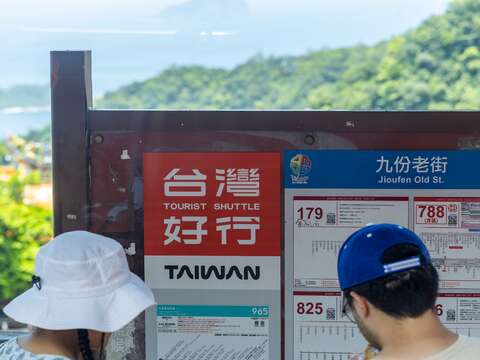
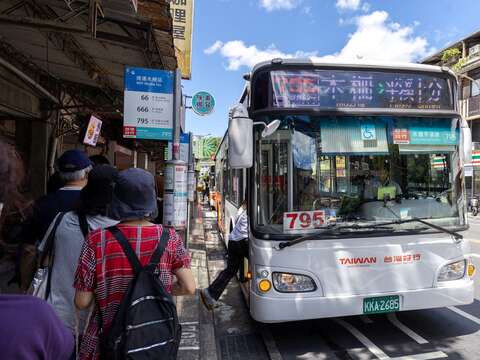
      Jiufen and Jinguashi are New Taipei City's most iconic mountain towns, where old streets, mining heritage, and sweeping mountain-and-sea views blend into a one-of-a-kind atmosphere that draws travelers from around the world. If you're heading from Taipei or New Taipei City and want to skip the hassle of transfers, hop on the Taiwan Tourist Shuttle Jiufen-Jinguashi Line.Buses depart every 10 to 30 minutes from Fuzhong, stopping along the way at key urban transit hubs and bustling districts such as Banqiao Bus Station, Wanhua Station, Ximending, and MRT Beimen Station, before continuing onto Civic Boulevard and the freeway straight to Jiufen and Jinguashi in Ruifang District. With no transfers needed, your mountain town adventure begins the moment you step aboard the Taiwan Tourist Shuttle!Taiwan Tourist Shuttle – Jiufen-Jinguashi Line 965 operates large buses equipped with charging outlets, running directly from Taipei and New Taipei City to Jiufen and Jinguashi with no transfers and no hauling luggage between buses, making for a relaxed, comfortable visit to the mountain towns. The route from Fuzhong to the final stop at Jinguashi spans six fare sections, with a one-way fare of NT$ 90. Payment is accepted via EasyCard, iPASS, iCash, Taipei Fun Pass, and LINE Pay, and the route is also covered under the TR PASS Taipei–New Taipei–Keelung–Taoyuan 1200 commuter pass.Because the route travels on the freeway, no standing passengers are allowed after MRT Beimen Station; if all seats are taken, the driver will ask passengers to wait for the next bus. To guarantee a seat, reserve in advance through the Taipei Fun Pass official website and set off on your Jiufen and Jinguashi adventure with peace of mind.(Image source: Taiwan Tourist Shuttle official website)The bus runs directly from the city to the final stop at Jinguashi, taking about 90 minutes under smooth traffic conditions. After gold was discovered here in 1894, waves of prospectors poured in, launching the mountain town's golden age. Though the mining boom is now history, Jinguashi has shed its old bustle for a quiet, peaceful charm—visit the Gold Museum, stroll the hiking trails, and enjoy some leisurely time.Opened in 2004, the Gold Museum is Taiwan's first museum built on the concept of an "ecomuseum." Centered on mining history and community strength, it connects the mining relics, village landscapes, natural ecology, historical memory, and cultural heritage of Jinguashi and Shuinandong, promoting resource sustainability and ecotourism. This vision extends the Gold Museum beyond its walls across the entire Jinguashi mountain town, showcasing its uniquely captivating local culture.From the Gold Museum, wander through winding, hilly alleys to reach Qitang Old Street. Once Jinguashi's busiest commercial hub, it earned the nickname "Jinguashi's Ginza"; the hillside settlement built during the Japanese colonial era shaped the distinctive streetscape seen today. The old street has traded the clatter of mining days for the aroma of coffee and a slower pace—admire the mining-themed art installations along the way, then settle into a small shop to rest and savor Jinguashi's cultural charm.Hop back on Taiwan Tourist Shuttle Line 965 and cross over Keelung Mountain to reach Jiufen, the mountain town on the other side. Both Jiufen and Jinguashi flourished through gold mining and are known together as the "Golden Mountain Towns"; their lively heyday even earned them nicknames like "Little Shanghai" and "Little Hong Kong." In the late 1980s, the film A City of Sadness was shot here, bringing Jiufen's mountain-and-sea scenery, nostalgic lanes, and hillside village onto the big screen and introducing the mountain town's charm to the world.Shaped by the terrain, Jiufen's village spreads across the hillside, with its streets forming a distinctive pattern resembling the Chinese character "丰." The horizontal Jinshan Street is the busiest commercial strip, packed with snack stalls and specialty shops, while the vertical Shuqi Road is famed for its long stretch of stone steps, where you can take in tiered old houses and sweeping mountain-and-sea views. After dark, red lanterns light up one by one along the hillside, lending the old streets a quiet, romantic glow.Follow the stone steps to where Shuqi Road meets Qingbian Road, and discover the storied Shengping Theater. Opened in the 1930s, it was once one of Taiwan's largest theaters during the Japanese colonial era, reflecting Jiufen's gold-fueled prosperity. After the theater went dark in the 1980s, its distinctive architecture and old-world atmosphere made it a filming location for movies including A Borrowed Life and A City of Sadness. After strolling the old streets and tracing these film locations, hop back on Taiwan Tourist Shuttle 965 – Jiufen-Jinguashi Line for a transfer-free ride straight back to your accommodation in Taipei or New Taipei City!
      Next
      Summer at the end of the Century, evolutions on the Banqiao railway
      The Banqiao Railway Station today is a massive station and a transport hub located in the Xinban Special District. However, do you still remember the old Banqiao Railway Station situated on the MRT Fuzhong Station today? In recent years, many cities in Taiwan are conducting railway grade separation, such as the Railway Underground Project in Kaohsiung, Tainan and Taoyuan, and the Elevated Railway Project in Taichung. The Taipei Railway Underground Project, the first railway section to be conducted underground, started back in 1983. This project, spanning 30 years, has drastically transformed the transportation system and city landscape in Taipei City. This has also affected Banqiao, the capital district in New Taipei City. Let us roam from Fuzhong to Xinban Special District, and feel the changes between new and old Banqiao.The Banqiao Broadcasting Station, a municipal historic site located at the MRT Fuzhong Station, was completed and opened in 1930. It was designed by Kuriyama Shunichi, the architect of Taipei Beimen Post Office, which was completed in the same year. With its horizontal elevation, the building is a representation of contemporary architecture. Besides, it is also the most iconic Japanese colonial building in the area. As a transmission facility for radio broadcasting, the broadcasting station could send waves as far as Minxiong in Chiayi County. It is an important historical site when it comes to Taiwan's broadcasting history.The Fuzhong Shopping Area, located at the old Banqiao Railway Station, was once the busiest district in Banqiao and the entertainment center for the local residents. From 1901 to 1999, Banqiao Railway Station was situated in today’s Fuzhong. Even though the station has been relocated, the wide variety of stores still make Fuzhong a special place. karaoke bars, eateries, restaurants, malls and clothing stores co-exist and prosper together, making it a nice place for shopping in Banqiao. Moreover, the Halloween party at the end of October is a spectacular annual event in the Fuzhong Shopping Area.Although the old Banqiao Railway Station is gone because of the Railway Underground Project, we can still see the remaining traces of the old Banqiao Railway Station at Fuzhong Shopping Area. In the first year of the 20th century, the route of the Taiwan Railway had changed from passing through the north of the Dahan River in Xinzhuang to the south of the Dahan River in Banqiao, which laid the foundation for Banqiao to become the capital district of New Taipei City. The Railway Underground Project, which operated at the end of the century, boosted local development once again.Fuzhong 15 is the first theme pavilion that combines film and animation art with a documentary auditorium in Taiwan. After many years of development and management, Fuzhong 15 has become an important venue for sharing stories, and has become an important cultural landmark in Banqiao. Come to Fuzhong 15 and let its spokespeople, “Brother One” and “Brother Five” lead you into a world of images!Walk Along Xianmin Boulevard, which was rebuilt from an old railway, toward the northeast, where the new Banqiao Railway Station 800 meters away has turned into a transport hub and a large shopping area. The 25-story new station attracts passengers from the HSR, TR, MRT Bannan Line, Circular Line, and Banqiao Bus Station. It is a true business center, connecting office buildings, malls, and hotels in series in this area with underground walkways and skywalks. It also created the richest skyline in Banqiao District.There are lots of skyscrapers in Xinban Special District. It is a great thing for people to be able to overlook the city on a higher floor. With a height of 140.5 meters, New Taipei City Hall makes use of its height advantage by setting a free observation floor for viewing on the 32nd floor. People can take the exclusive elevator straight up to the observation deck. There, they can look 360 degrees through the full-width window design and see Mount Guanyin, Tamsui River, and Taipei 101 all at once, not to mention that you can clearly see the skyscrapers in Banqiao and Banqiao station since they are much closer. From the old Banqiao Railway Station to Xinban Special District, you can experience the differences brought about by the changed railway in Banqiao.
      Read more