Go to the main content section Anchor point

New Taipei City Travel

From Northeast Coast with Low: Gongliao Mountain and Sea One-Day Tour

Anchor point
From Northeast Coast with Low: Gongliao Mountain and Sea One-Day Tour
Category :
Outdoor excursion
Travel days :
1 day

推薦路線

Day

      Introduction

      Anchor point
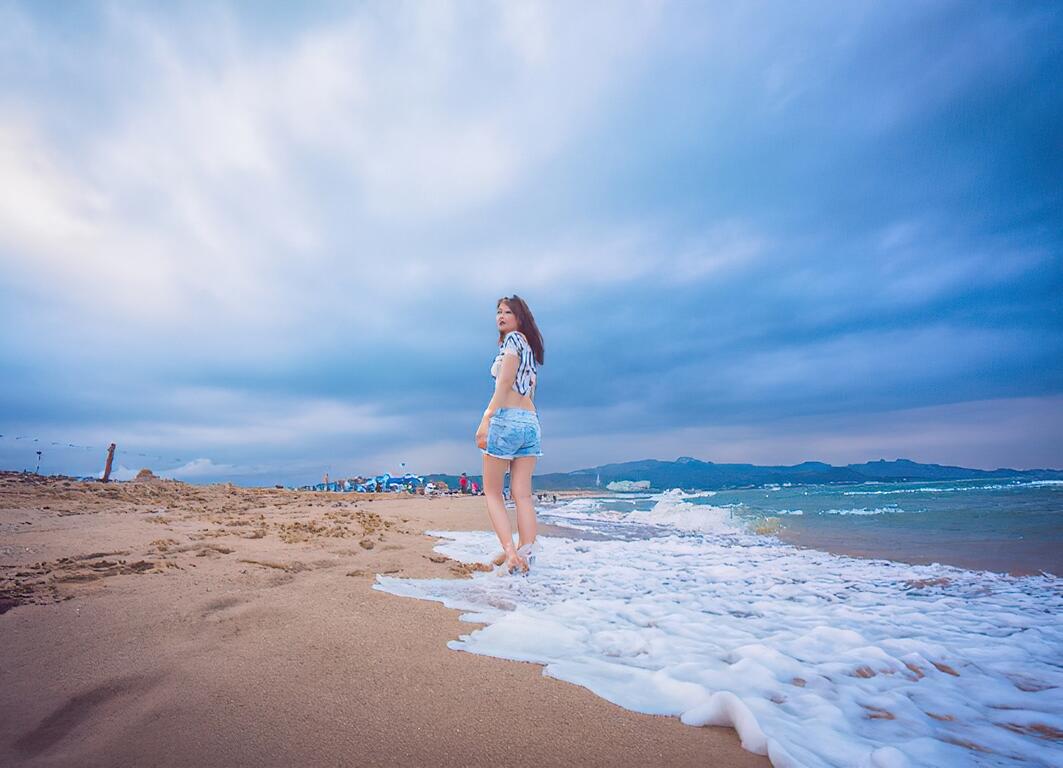
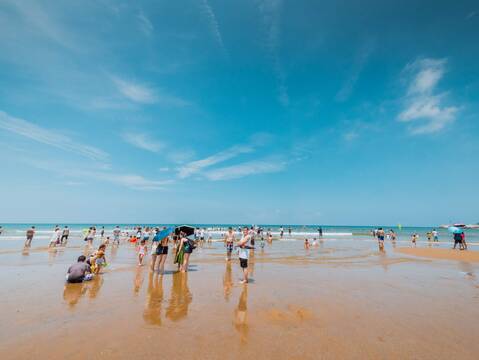
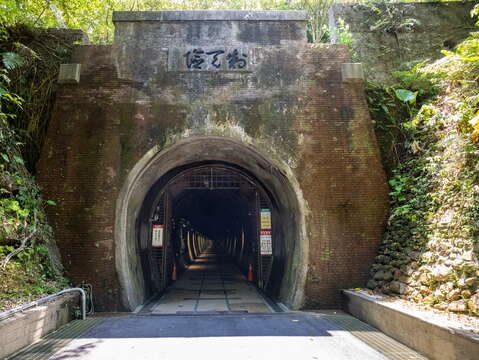
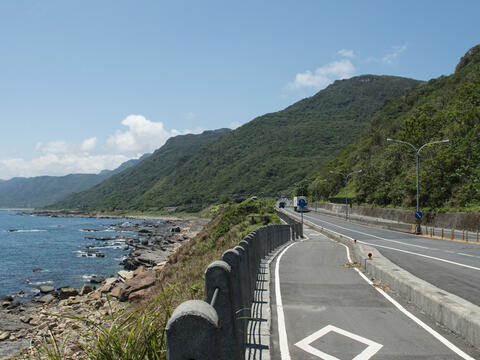
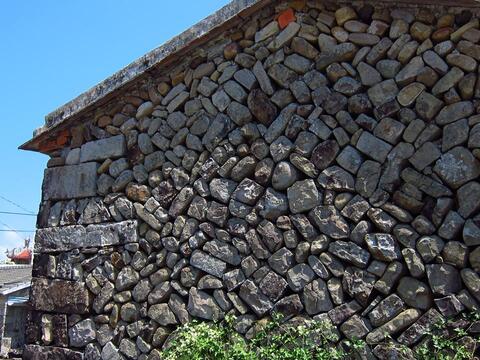
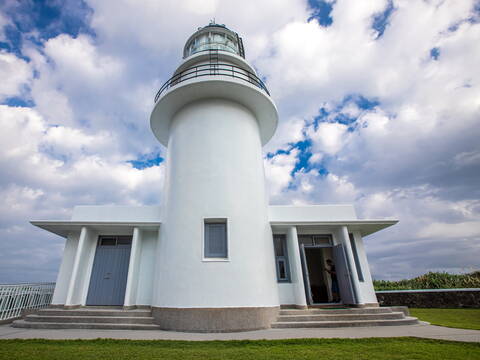
      Taiwan’s most gorgeous coastal scenery can be found in Gongliao District, New Taipei City. In Nanya, there are the “Nanya Rocks” uniquely shaved by weathering. In the “Longdong Ocean Park”, visitors can experience the fun of swimming with the fish and snorkeling. In the seafood street in “Aodi Fishing Harbor”, people can freely taste local fresh seafood. On the “Fulong Beach”, visitors can find fun in the cool seas and on the golden beach. Apart from an ideal destination for releasing energy in summer, Gongliao is the place where the Ho-hai-yan Rock Festival, an international musical event, is held. In consideration of time, visitors can travel to attraction one: the “Old Caoling Tunnel” with a natural cooling effect. After penetrating the tunnel, visitor can continue with the “Old Caoling Belt Bikeway” to appreciate the beautiful fusion of the mountains and the sea along the coastal highway to reach the “Mao’ao Fishing Village” to explore the tranquility among the century-old stone houses in this little fishing village. Visitors can also pick attraction two located in the easternmost tip of Taiwan to see the first twilight at dawn. There are many romantic installation artworks and the invincible view of the “Santiago Lighthouse”. From this trip, visitors can explore and will be impressed by the charm and unique wonder of Taiwan’s ocean.

      Note

      【Return traffic information】
      (1) From Old Caoling Belt Bikeway: Ride along the bikeway back to Fulong Railway Station, return the bike, and take the train from “Fulong Railway Station” back to the “Taipei Main Station”.
      【Return-Take a bus】
      (2) From Santiago Lighthouse Stop: Take routes 1811 (Loudong-Taipei) or 1812 (Nanfangao-Taipei) of Kuo Kuang Bus at “Magang Stop” and get off the bus at “Taipei Main Station”
      day01
        Previous
        Preparation for World Masters Games 2025 in Taipei and New Taipei City with Low Carbon Emission Bike Tour in Gongliao!
        SPORTS beyond AGE|LIFE without LIMITSWorld Masters Games will be grandly held in New Taipei City and Taipei City in May, 2025, and contestants from over 100 countries will attend the sports event in the two cities. World Masters Games 2025 will be hosted by New Taipei City and Taipei City and co-hosted by Taoyuan City, Hsinchu County, Hsinchu City and Yilan County. 35 games are included in the sports event. People over 30 years of age can participate in the masters games to compete with the world and make like-minded friends.Gongliao District of New Taipei City will be the venue for the games of sailing and lifesaving of World Masters Games 2025. You can take Taiwan Railway to Fulong Station in Gongliao District and ride a bike on the challenging Old Caoling Circular Line and pass through Old Caoling Tunnel while listening to the music of Clinking Coins, a renowned folk song. You can bike along the coast to the easternmost point of Taiwan. Lastly, you can return to Fulong Beach and stay at a local hotel to enjoy hot springs and delicious food!Once you exit Fulong Train Station, you will be able to smell the delicious Fulong boxed lunch. Fulong boxed lunch enjoys equal fame with Chishang boxed lunch, and it is one of the famous boxed lunches sold by Taiwan Railway Administration. With the dishes of sliced pork, braised pork, sausage, cabbage, vegetable roll, braised egg, braised bean curd, fried meat roll, pickled vegetables and so on, the classic boxed lunch has been sold for over seven decades. Although the boxed lunch is no longer sold on the platform, several restaurants still sell boxed lunch in front of the train station. Hurry up and enjoy a Fulong boxed lunch in one of the restaurants.After regaining energy, we will face our challenge! We will rent a bicycle or an e-bike and enter Old Caoling Circular Bike Trail from Fulong Station. The total length of Old Caoling Circular Bike Trail is approximately 20 kilometers, and it takes about 2 hours to make a round trip by biking. You can ride through the Snow Mountain Range on the bike trail between the mountain and sea, and reach Sandiaojiao Lighthouse, the easternmost point of Taiwan, and East Park to check in on social media. Finally, we will directly arrive at Fulong Beach, a venue of World Masters Games.👉The total length of Old Caoling Circular Bike Trail is 20 kilometers, so please take your physical fitness into consideration. You can rent an e-bike if you think it is too strenuous for you to finish the entire trail by a regular bike. Please make sure you apply sunscreen and bring sufficient drinking water in summer before biking.“The train goes, chugga choo drip, into the tunnel…...” This is a catchy Taiwanese folk song. The term “tunnel” in this song refers to Old Caoling Tunnel which was open for use in 1924. It was the most critical construction of Yilan Line of Taiwan Railway, and it was 2,167 meters long. Old Caoling Tunnel that going through Snow Mountain Range greatly shortened the traffic time between New Taipei City and Yilan. The north entrance and south entrance of the tunnel were inscribed with Chinese calligraphy, “overcoming challenges to dig the tunnel” and “seeing a clear and boundless sky with clouds” at the New Taipei City end and Yilan end respectively to commemorate the hardship workers had faced in excavating the tunnel.Old Caoling Tunnel had retired after Taiwan Railway implemented the dual track system and electrification. Since 2008, the railway has been open for use as a bike trail. The trail still preserves railway tracks. To make it look more like a railway, lampshades for oil lamps are used to restore the appearance of a railway tunnel. It is interesting to bike in the old-fashioned Old Caoling Tunnel while listening to the music of “Clinking Coins.” There is a semicircular ring of light which marks the border of New Taipei City and Yilan in the middle part of the tunnel, and it is the most popular spot for check in in the tunnel!As the light gets brighter at the end of the tunnel, you can gradually see the immense Pacific Ocean. When waves crash against the cuesta, surf and Turtle Island make a perfect picture. You can bike on the bike trail along the mountain and sea toward the easternmost point of Taiwan.Lailai Coast Geological Area that stretches several hundred meters is the largest wave-cut platform of the Northeast Coast, and it is called the “Devil’s Washboard.” A wide variety of coastal terrains scatter on the wave-cut platform, such as the largest fire dragon rock in Taiwan and several sea grooves. Kuroshio, the warm current of Pacific Ocean, passes the open waters of Lailai, and it nourishes thriving marine ecology, making Lailai Coast Geological Area a great spot for rock fishing. Moreover, its wide intertidal zone is a good location for ecological observation.Sijiaoku Observatory with the design of hollow twin hearts is located at the north tip of Lailai Coast Geological Area. You can look down at the geological area and Turtle Island. Additionally, Sijiaoku is a relay station of Old Caoling Circular Bike Trail. The prairie facing Pacific Ocean next to the observatory is the best spot for photography.The first light of morning shines on Sandiaojiao. The name of Sandiaojiao originated from Santiago in Spanish. Sandiaojiao is at Taiwan’s easternmost point. Snow Mountain Range stretches all the way from Sandiaojiao to Zhuishui River. Since 1935, Sandiaojiao Lighthouse has stood tall in the mountain to guard the safety of boats. The name of East Park at the foot of the mountain is white in English and red in Chinese. The park marks the easternmost point of Taiwan, longitude 122° east. It looks like a gigantic gorilla overlooking Pacific Ocean if you look back at the starting point of Snow Mountain Range!Magang Fishing Port, located to the north of Sandiaojiao, is the easternmost fishing village of Taiwan. Fishermen mostly catch fish in the fisheries by Turtle Island and Sandiao Bay. Their main catches include sea breams, oceanic bonitos, neritic squid, squid and lobsters. You can take a rest at the fishing port, enjoy the ocean views while savoring seafood noodles or coffee. You can play with cats in the fishing village as well.After feasting your eyes on the magnificent views of the mountain and sea that stretch for 20 kilometers, you will return to Fulong Beach filled with fine and soft sand. With a curvy beach, Fulong Beach gets the name of Gold Coast. Shuang River meets the sea here, forming the two landscapes of an inland river and open waters. Fulong’s exceptionally gifted terrain has made it suitable for various water sports, such as sailing, kayaking, windsurfing, surfing and so on. Fulong has been a famous beach since Japanese Colonial Period, and it has carried the youthful memories of numerous generations.The games of sailing and lifesaving will take place on Fulong Beach during World Masters Games in 2025. With an excellent geographical location, Fullon Hotel Fulong adjacent to Fulong Beach enables its guests to overlook the venue of the games. Additionally, the hotel provides delicate meals and hot springs. To encourage low carbon travel, guests who take public transportation may enjoy eco-friendly accommodation promotions. Let’s take the train to Fulong, ride a bike around Taiwan’s Northern Coast, and participate in the sports event that takes place in northern Taiwan. “SPORTS beyond AGE! LIFE without LIMITS!” Let’s meet in Fulong to attend World Masters Games 2025!👉Registration for World Masters Games 2025 held in Taipei and New Taipei City starts on February 17. Everyone is welcome to participate in the grand occasion!
        Next
        Visiting Qitang Old Street
        In 1889, Taiwan's first railway was under construction at full speed between Keelung and Taipei. Railway construction workers discovered glittering gold dust in the river in today's Qidu area of Keelung. Those who are seeking wealth traced the river upstream, and eventually found the outcrop of gold vein in Xiaojingua and Dajingua, which kickstarted the gold mining era of Northern Taiwan. The previously quiet Jinguashi and Jiufen therefore entered their golden years. Until 1987, Taiwan Metal Mining Corporation closed the mining business and drew an end to Jinguashi's hundred-year mining history.Different from the strong commercial vibes of Jiufen, after the mining activities ended, Jinguashi became an isolated and quiet little mountain town. The buildings scattered among the emerald hills, the huge Guangong statue guarding the area, and the occasionally seen hikers in the alleys represent the present life of Jinguashi."Let us never forget." During World War II, Jinguashi was once used as a Japanese war prisoner camp. The locals called it "Dubiziliao," which meant the place where foreign prisoners were held. These prisoners of war in Southeast Asia were from Britain, the US, Canada, New Zealand, Australia, South Africa, and the Netherlands. During their imprisonment, they mined copper here under poor living conditions. Most of them did not survive the war and died in Jinguashi. In 1997, Taiwan POW Memorial and Peace Park opened to commemorate the war. "Freedom is not free" reminds the world that peace and prosperity are not easy to come by.Qitang Old Street is an important street of Jinguashi. The old street built along the mountain is the main living circle of the miners in the early years. In its most prosperous period, 80,000 gold diggers gathered here! In addition to restaurants and grocery stores, there were entertainment venues such as jewelry shops, pool halls, and bars! During the Japanese Rule period, it was known as the "Jinguashi Ginza." After the gold mining era ended, the number of residents in Jinguashi plummeted to less than 2,000. Today, the once-bustling Qitang Old Street retains a strong nostalgic atmosphere. The renovated rainbow stairs have become a topic in social media, drawing the world's attention to this mining town in the mountains again.Follow the rainbow stairs up to Jinguashi Quanji Temple, also known as Qitang (Qi Hall). The temple has been built for more than 120 years. It is the belief center of Jinguashi, dedicated to worshiping the Holy Emperor Lord Guan. The most treasured object at Quanji Temple is the largest Guan Gong statue in Taiwan that is made of pure copper and 10.6 meters in height. This statue of Guan Gong reading Chunqiu (the Spring and Autumn Annals) and standing majestically at the high point of Jinguashi against the mountains and facing the sea is the most visible landmark of Jinguashi. It is also the patron saint, blessing generations of Jinguashi people.The 260-meter-high Baoshi Mountain is named after the timed horns here during the Japanese Rule period. From the parking lot of Quanji Temple, you can walk up along the hiking trail and reach the viewing platform in 10 minutes. Facing the sea, Yin-Yang Sea and the North Coast are all within your sight. Looking back at the mountains, you can see Teapot Mountain and Liukeng Slope Cableway right in front of your eyes, surrounded by greenery and between mountains and the sea.Teapot Mountain is the backbone of the Jinguashi area, with an elevation of 602 meters. When viewed from the Jinguashi side, the ore rock at the top of the mountain looks like a teapot without a handle, earning it the cute and memorable name of "earless teapot." Teapot Mountain Trail is the most popular hiking trail in Jinguashi. It takes about 30-50 minutes to reach the top of the mountain from the parking lot of Quanji Temple. It is the most beautiful view in Ruifang. With Keelung Mountain right in front of your eyes, the little town of Jinguashi, the winding roads under your feet, and the boundless blue sky and sea, this spectacular scenery can heal you from your stressful daily life."Asia's No. 1 precious metal mine" was the prestige Jinguashi enjoyed in the past. The settlements formed around gold and copper mines in the old days carried the dreams of countless gold diggers. After the demise of the mining industry, what remained unchanged is the beautiful scenery of mountains and seas. They remain the spiritual home of hikers and Jinguashi people.
        Read more
        Back to the top of page
        小客帶路