"Shulin" climb the super-popular Taiwan Xiao Baiyue and pray for peace in the largest local Tudigong temple

Anchor point
"Shulin" climb the super-popular Taiwan Xiao Baiyue and pray for peace in the largest local Tudigong temple
Travel days :
1 day

推薦路線

Day

      Introduction

      Anchor point
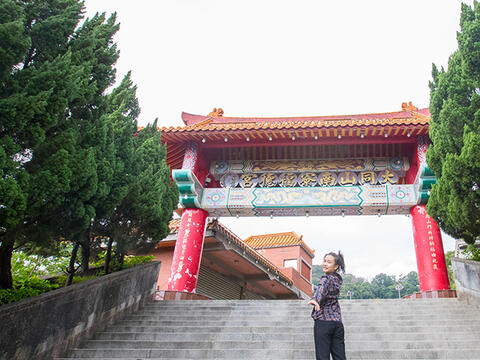
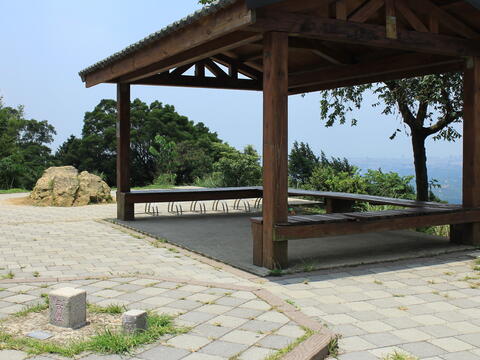
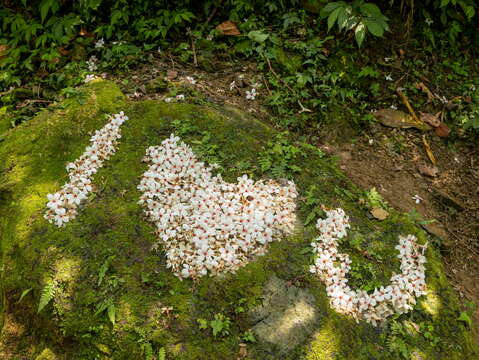
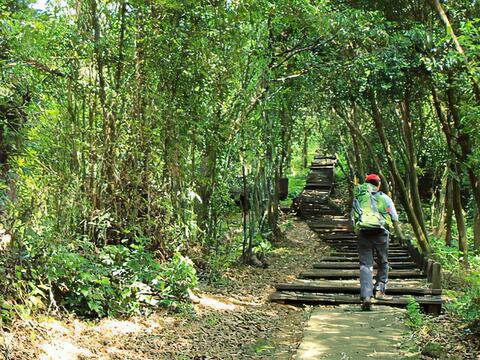
      "Eating too much during the New Year? You can use the holiday to climb the Taiwan Xiao Baiyue on a hiking tour to appreciate the dreamy scenery, absorb some natural flower essence, and then enjoy the precious cold springs and slides in the largest local Tudigong temple. In the winter, you can still be in the mountains, take pictures of the beautiful scenery under the cherry blossom trail!" In the morning, starting from the 30-year-old temple, the largest Tudigong temple in Shulin, the “Nan Liao Fu De Temple”, enjoy the combination of a cold spring, a slide, prayer to Tudigong and the beautiful scenery of the mountains and cherry blossoms (seasonal) at this five star temple; then take the Datongshan hiking trail next to the temple through the Qinglongling hiking trail to the Dadongshan hiking trail, and climb the highland overlooking the vast scenery of Shulin, Yingge, Taoyuan, Taipei 101, etc., take in the natural energy and heal the body and mind!

      Note

      【Return traffic information】
      Get off the mountain from “Dadong Mountain” to reach the “Sanjia Station” where you can take the TRA home.
      Previous
      Water Source Tea Fragrance・Pinglin Low-Carbon Journey
      As global carbon reduction gains momentum, the tourism industry works to lower emissions across all tour elements. From choosing meeting points and transportation methods, to incorporating environmental education and selecting eco-friendly restaurants, professional institutions now calculate carbon footprints using international standards. Unavoidable emissions are offset through purchasing Verified Carbon Standard (VCS) certified carbon credits, achieving genuine low-carbon tourism.Pinglin, renowned for producing Paochung tea, pioneered Taiwan's low-carbon tourism movement. Starting from Pinglin Suspension Bridge, the route follows Beishi River to the Taipei Water Management Branch Environmental Education Center to discover wastewater purification processes. At midday, visitors enjoy creative cuisine featuring local tea at Just Pinglin eco-restaurant on Pinglin Old Street. The afternoon continues at Xinfeng Tea plantation in Pinglin's hills, where young farmers share their lives devoted to tea.The journey begins at Pinglin Suspension Bridge. Spanning approximately 60 meters across Beishi River, this bridge connects fish-watching trails on both riverbanks. Led by a guide, visitors observe Taiwan shovel-jaw carp (a.k.a. "underwater fireflies"), and the river's rich aquatic ecosystem. The Beishi River watershed falls within the Taipei Water Conservatiopn Area. Policies such as river closure for fish protection and sediment barrier installations are implemented to safeguard water resources for the Taipei-New Taipei metropolitan area and extend Feitsui Reservoir's lifespan.At the fish-watching trail's end, behind flood walls stands Pinglin Wastewater Treatment Plant—one of two major treatment plants under the Taipei Water Management Branch and an environmental education venue. Designated in 1984, the Taipei Water Conservation Area spans five districts: Wulai, Shuangxi, Pinglin, Xindian, and Shiding. It’s Taiwan's only protected zone established in accordance with the Urban Planning Act, with merely 1% being low-density residential areas.Inside the Environmental Education Learning Center, visitors gain insight into Taiwan's water resource management and observe the treatment plant's three-stage process—physical, biological, and chemical purification that ensures discharge quality. Visitors collect water samples themselves, comparing influent and effluent quality for an intuitive understanding of purification's importance.At noon, visit Just Pinglin eco-restaurant at the entrance to Pinglin Old Street. Inside this stone-slab heritage building, savor dishes crafted with local tea—black tea braised pork rice, salmon ochazuke, and various tea snacks. A young man from Beigang and a young lady from Guanziling chose to settle in Pinglin, New Taipei, conveying the town's atmosphere and energy to travelers through cuisine, fine tea, curated items, and exhibitions.After enjoying refined tea cuisine, explore Pinglin Old Street with a guide. Stretching approximately 200 meters, the old street features teapot installation art and uniform green signage. Paper shops, tofu stalls, grocery stores, and tea merchants line the way. Street vendors use Pinglin's famous Paochung tea to create innovative treats—tea cakes, tea steamed buns, tea nougat, and camellia oil thin noodles."UChung," established by local young tea farmers, offers a modern compound tea space on the old street, selling tea snacks, tea gift items, and tea celebration wine developed exclusively by Pinglin tea farmers. This bright space hosts tea ceremony experiences from time to time, promoting tea culture in ways that resonate with younger generations. At a corner of the old street, Pinglin Tea Cultural Museum, operated by the Pinglin Farmers' Association, visitors will learn about tea and camellia oil culture while exploring Pinglin's tea history and other industrial features. Stone heritage buildings constructed with herringbone and T-shaped patterns offer another visual highlight along the street.Afternoon brings a journey to Pinglin's hills. Near Xiangong Temple, famous for sunrises and seas of clouds, sixth-generation young tea farmer Zhan Chengde of Xinfeng Tea guides visitors through verdant tea plantations to pick one bud with two leaves, then hand-craft and taste their own tea.Xinfeng Tea is known for its "friend tea," aimed to convey warmth and authenticity. After picking tea leaves, participants personally stir-fry and knead them under the farmer's guidance to create their own green tea! Through the journey from a plantation to a cup, savor Pinglin tea town's distinctive flavor.The "Water Source Tea Fragrance・Pinglin Low-Carbon Journey" meets the Ministry of Environment's "Green Tourism" standards and appears on the "Green Lifestyle" information platform. Carbon footprint calculations show this tour produces 11.5 kg CO2e per person, reducing emissions by 5.6 kilograms compared to typical self-driving tourism.
      Next
      Set sail in summer and set sail from Bali!
      In the hot summer, the cloudless weather always arouses people's desire to run to the coastline. Bali, located on the left bank of the Tamsui River bayou and protected by the Wazihwei Embankment, has a peaceful and wide water area. It is one of the most suitable places for water sports in New Taipei City. Come to the Bali Aquatics Center to set sail on the waterway between Guanyin Mountain and Datun Mountain and enjoy the beautiful scenery of the Tamsui Sea. Then, go to the Environmental Education Center and Wazihwei Nature Reserve, look for fiddler crabs and mudskippers in the mangroves, and finally, go to the secret place on the mountainside of Guanyin Mountain to spend a beautiful afternoon.Surrounded by the sea on all sides, Taiwan's coastal areas have always been the first choice for summer leisure. Have you ever imagined leaving the land and sailing far away while playing by the seaside? Turn your ideas into action and come to Bali District on the left of Route 2 Taiwan in New Taipei City to experience the fun of sailing!The predecessor of Bali Aquatics Center was Bali Sailing Pier, the first riverbank pier specially designed for sailing sports in the country. Located at the river and sea junction, but fortunate enough to have a Wazihwei as a natural barrier, the waters here are pretty calm, making it very suitable for beginners to experience the fun of sailing.Under the guidance of professional coaches, people set out from Bali Pier and began their first sailing trip on the Tamsui River. Besides sailing, the aquatics center offers water sports such as SUP (Stand Up Paddle), canoeing, windsurfing, etc. Visitors interested in sailing on the seven seas can also sign up for the advanced ASA International Sailing Certification Course at the aquatics center. Set out from Bali and sail to the world. Sail on a white keel sailboat at the bayou of the Tamsui River, adjusting the angle of the sail according to the wind direction. While sailing through the waves, you can enjoy the scenery of Bali Guanyin Mountain and Tamsui Datun Mountain as well as famous landmarks such as the FAB Green Village and Fort San Domingo.Exercising under the burning sun consumes energy very quickly, so spicy and sour Thai food is the most delicious dish in this season. Many restaurants near the aquatics center are suitable for gatherings. Come to the Island of Thai cuisine next to Bali ZuoAn (Left Bank) Park to taste popular Thai dishes such as Thai basil chill pork, full-moon shrimp patties, green curry, shrimp paste cabbage, etc., and pair it with a cup of cold Thai milk tea to eliminate the summer heat.With the increasingly severe global warming, pursuing net zero carbon emissions has become a common global concern. The "New Taipei City Sustainable Environmental Education Center," established in 2008, is the central hub for promoting sustainable environmental education, conservation, and research in New Taipei City. Starting from the Environmental Education Center, under the guidance of the tour guide, ride a bike to the Wazaiwei Nature Reserve and enter the ecological world of the mangrove forest.The name of Waziwei comes from its topography. It is the last bend of the Tamsui River before it flows into the sea. It formed a lagoon-like terrain at the river and sea junction. It is a shelter for local ships and a mangrove paradise, such as Kandelia. The Waziwei Natural Ecological Reserve covers an area of 30 hectares, and the main conservation targets are the kandelia and the animals and plants that live with them.Underneath the lush green Kandelia at Waziwei is a vibrant intertidal zone. This precious wetland is home to many bird species, and observe various creatures on the wetland during low tide. Besides the cute fiddler crab with one giant and one small claw, look closer! The mudskippers are jumping among them. Summer afternoons are the best time of the season. When arriving at "Happy Time" halfway up Guanyin Mountain, open the door, and a nostalgic space unfolds before eyes. Wooden Chinese medicine cabinets, typewriters, old cameras, rotary phones, shaved ice machines, and signs of various old shops arose people's good memories of the past.Use exquisite glass bottles and ceramics to serve drinks full of summer flavor, pair them with desserts such as Dorayaki and pineapple cakes, and enjoy them together in this space full of antiques. When the setting sun outside shines on the pond, watching the light reflecting through the water and the sparkling summer is the most memorable and beautiful time.
      Read more