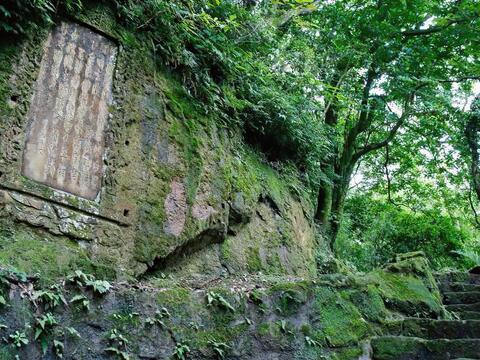
Jinzibei Historic Trail – Houtong overlooked mining glories and offers a healing journey searching for kitties while visiting local attractions.

Anchor point
Jinzibei Historic Trail – Houtong overlooked mining glories and offers a healing journey searching for kitties while visiting local attractions.
Category :
Hiking Trails
Travel days :
1 day

推薦路線

Day

      Introduction

      Anchor point
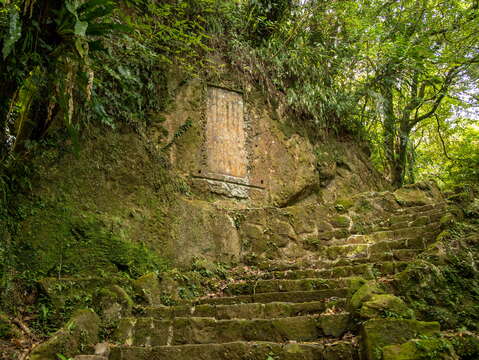
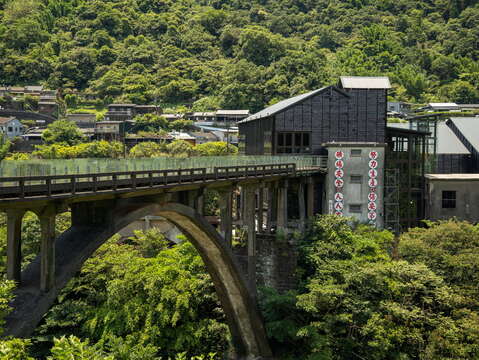
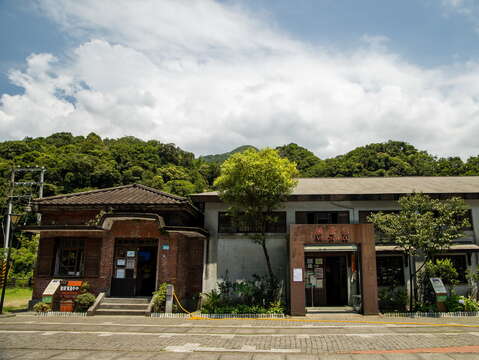
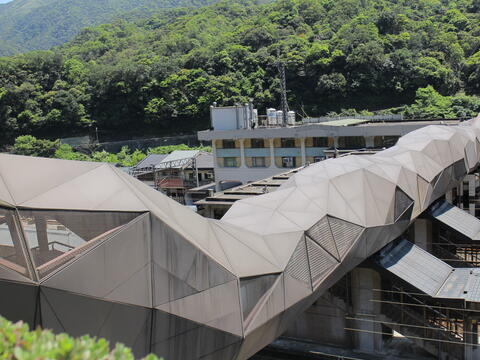
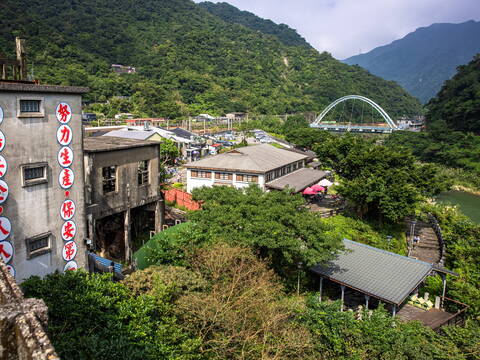
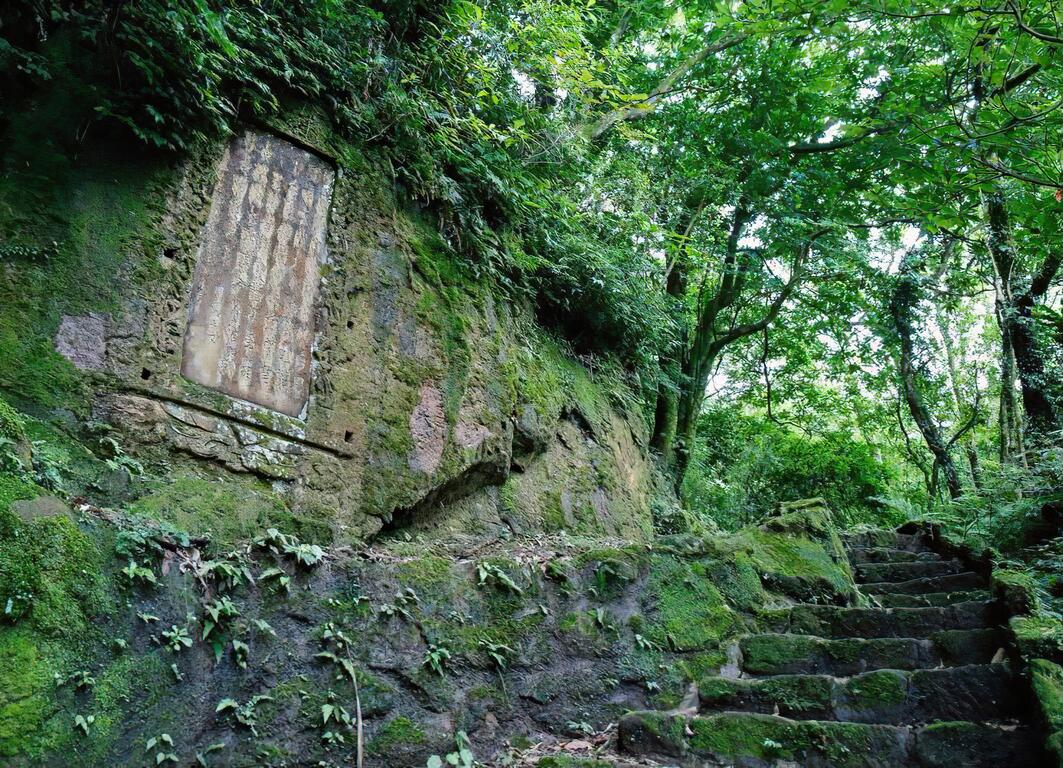
      Jinzibei Historic Trail’s starting point at the Mudan end is the same as that of Canguangliao Historic Trail; Canguangliao exits from Jinguashi, while Jinzibei hiking trail exits from Houtong. After getting off from Shisanceng Old Tree Stop, walk for 15 minutes and you will arrive at “Jinzibei Historic Trail Entrance/Exit”. Along the Trail, visitors will come upon century-old historic sites of Jinzibei and Fengxianshijin Tablet; the total distance of the Trail is approximately 3.4km, and it takes about 2.5 hours to finish walking the Trail. The Trail is mainly made of stone path and stone stairs, which will take some energy to finish the route; but the lush green woods give refreshing coolness along the way. After exiting the Trail, visitors will connect to Jiuqiongqiao Rd. and then Houtong Rd. if they continue going straight. And going further down, visitors will see Ruisan Coal Transporting Bridge and Ruisan Coal Preparation Plant. Walking into the “Vision Hall” transformed from previously the coal preparation warehouse, visitors will have an in-depth experience of the old-time glory of Houtong’s coal mining industry as well as an overview of the local coal mining development through the introduction provided inside the Vision Hall. The other key feature of Houtong would have to be “Cat Village”! Walking over Houtong Cat Bridge, and visitors will arrive at cat lovers’ “promised land” – Cat Village. Let us kindly remind all visitors to follow the rules here, and please do not hit, feed, disturb, or pet the cats, and please do not free your cats here and do not litter. Let’s safeguard this precious “cats’ heaven” together as we enjoy a healing holiday and wander amidst the historic paths.

      Note

      【Return traffic information】
      Walk to Houtong Train Station and take Taiwan Railways for your return journey.
      Previous
      Exploring New Taipei by Taipei MRT – Zhonghe-Xinlu Line (Nanshijiao)
      "There is Yonghe Road in Yonghe, and Zhonghe Road in Zhonghe. Zhonghe Road in Zhonghe connects with Zhonghe Road in Yonghe. Yonghe Road in Yonghe does not connect with Yonghe Road in Zhonghe. Zhonghe Road in Yonghe connects with Yonghe Road in Yonghe…." The "Song of Zhong-Yong-He" fully reflects the maze-like urban landscape of Shuanghe (double-he, Zhonghe and Yonghe) Area, which is the most densely populated area in Taiwan. Among them, Yonghe District has a population density of more than 30,000 people per square kilometer, which means that its mere 5.7 square kilometers of land is home to over 210,000 people! During Taiwan's urbanization period, a large number of people came to Shuanghe area, including not only Taiwanese from central and southern Taiwan looking for work, but also expatriates from Southeast Asia and South Korea. A diverse ethnic culture is therefore formed here, which also brought delicious exotic cuisine.The Nanshijiao side of Zhonghe-Xinlu Line serving Zhonghe and Yonghe Districts was the earliest to begin service on Zhonghe-Xinlu Line on Christmas Eve of 1998. There are a total of 4 underground stations, namely Nanshijiao (O01), Jingan (O02), Yongan Market (O03), Dingxi (O04). Let's take the MRT to explore Shuanghe!Nanshijiao (O01): Huaxin Street (Myanmar Street)The first stop is Nanshijiao Station, which is the main residential area of Chinese Burmese in Taiwan, including Kuomingtang troops and their families in Burma who retreated to Taiwan in the 1950s, and Chinese Burmese who were deprived of their political and economic status after the Myanmar military government came to power in 1962 and immigrated to Taiwan. They are mainly concentrated in Huaxin Street, which is also known as Myanmar Street or Nanyang Food Street. The street signs are written in both Chinese and Burmese, and the restaurant owners and employees would speak Burmese between them. It is the largest Southeast Asian community in New Taipei City. Taiwan's first Southeast Asia themed bookstore, Brilliant Time, is located here. The annual Songkran Festival is also held here!The delicacies on Huaxin Street are mainly Burmese, Indian, Chinese Yunnan, and Thai, including fish soup noodles, naans, rice noodles, pea gravy, and various milk teas! The restaurants here are homey and down-to-earth. They are typically open from morning to afternoon, offering authentic and affordable food. Huaxin Street is a treasure trove of flavors in New Taipei City.Yongan Market (O03): 823 Memorial Park (Zhonghe Park), National Taiwan LibraryNext to Yongan Market Station, you will find 823 Memorial Park, known as the "lungs of Shuanghe." Initially, six large parks were planned for the Shuanghe area. Due to the rapid inflow of people, in the end, only two parks, namely 823 Memorial Park and Renai Park, were completed. 823 Memorial Park covers an area of 11 hectares, and it is the largest park in the Shuanghe area. The August 23 Artillery Battle monument is the landmark in the park, commemorating the war that broke out in Kinmen in 1958.National Taiwan Library in the park was formerly known as the Government-General of Taiwan Library. It was the first modern library in Taiwanese history, and the No. 1 library during the Japanese Rule period in terms of size! In the 1940s, it already had a collection of more than 200,000 books. The neo-classical arched corridor on the outside of the building is a popular photo spot.Dingxi (O04): Yang Sanlang Art Museum, Zhongxing Street (Korea Street), Lehua Night MarketThe area around Dingxi Station is the busiest area in Zhonghe and Yonghe. As it is only a bridge away from Taipei City, lots of people who work in Boai Special Zone and around Taipei Station live here. Yonghe is best known for soymilk. The world-renowned Yonghe Soymilk shop originated from Zhongzheng Bridge. With its fragrant soymilk and hearty Chinese breakfast, it is a must for foodies who like northern Chinese food.Yang Sanlang Art Museum, hidden in the alley behind the soymilk shop, is the former residence of Yonghe-born oil painting master, Yang Sanlang. At the museum, Yang's representative works from each period are on display. Yang has studied in Japan and France and has been dedicated to the development of local art in Taiwan. Jointly with artists of the same era, Chen Chengbo, Liao Jichun, Yan Shuilong, and Li Meishu, Yang founded Taiyang Art Association. The wooden house on the premise is Wangxi Villa, the residence and art studio of Yang Sanlang. It is quiet and elegant. Painting tools and various items used by the master have been preserved such that we could peek into the master's dedication to art."어서오세요!" Zhongxing Street that is next to Exit 1 of Dingxi Station is also known as Korea Street. It was where many Chinese Korean coming from Shandong stayed in Taiwan. As Korean pop culture became popular all over the world, Korean goods are in high demand. Yonghe Korea Street therefore becomes a great shopping place for fans of Korean culture. There are many exclusive Korean goods, including clothing, instant noodles, kimchi, sauces, snacks, and soju. The wide variety of products is waiting for you to explore.It's dinner time! Shuanghe's kitchen, Lehua Night Market, is one of New Taipei's largest night markets. There are many well-known delicacies, offering diverse options. You can find the Taiwanese street must-haves, "fried chicken cutlet in the right hand and bubble tea in the left hand;" classic dishes such as beef soup, sesame oil chicken soup, pig blood soup, chicken rice, spicy duck blood, green onion pancake, sweet potato balls; exotic dishes such as ramen, green papaya salad, Italian coffee, and curry rice. There are so many options to satisfy all types of foodies!Some say that there is a second stomach for desserts. After a full meal, you must have some iced desserts to satisfy all senses! There are several famous ice shops in Lehua Night Market. You can choose from shaved sugar cane ice with taro, snowflake ice, and iced bean paste to draw a "cool" ending to your Shuanghe MRT tour!
      Next
      Tamsui and Shiding Ancient Trails Trio
      Shiding District is the geographical center of New Taipei City, the main catchment area of Feicui Dam, and an essential path along the southern route of Tamsui Kavalan Historical and Cultural Trails. Many approachable trails around Shiding Old Street are suitable for families to wander together. From the Tamsui-Kavalan Suspension Bridge, you can walk along the Waian Historic Trail, Wutuxi Trail, and Sifenzi Historic Trail, bathing in the green mountain trails. Then, go to the bee farm and tea garden on the Beiyi Highway to learn about the ecology of bees, taste tea, and feel the infinite vitality of the real estate industry.The Dipteris Conjugatas standing at the end of the Tamsui Suspension Bridge marks this place as an important scenic spot of the Tamsui Historic Trail. The red bridge of the Tamsui-Kavalan Suspension Bridge spans the Shiding River, and the pavilion and stone slabs simulate the scene of the transport wharf in the past. After crossing the suspension bridge, enter the Waian Historic Trail, go under the tall National Freeway 5 viaduct, and head to Shiding Old Street.The southern route of Tamsui-Kavalan Historical and Cultural Trails is known as the "Tea Road." In the mid-19th century, after Taiwan opened its ports, tea became an essential international export commodity for Taiwan. The vast mountainous area between Taipei and Yilan became a significant tea production center, and the settlements in the valleys became trading bases for tea merchants. People transported Baozhong tea from the Shiding and Pinglin areas to Muzha, Jingmei, and Bangka along the southern route of Tamsui-Kavalan Historical and Cultural Trails and Jingmei River waterway transportation network. After being processed and packaged in Dadaocheng, the merchants shipped the tea out of Tamsui to the world.The endpoint of the Waian Historic Trail: Shiding Old Street is the earliest developed area in Shiding. It is divided into two streets, east and west, by the Wanshou Bridge, built with stone bridge piers. The century-old tofu shop, the unique hanging-leg building (diaojialou), and the skyless street on the old street are all classic attractions in Shiding. Passing by the Shiding Elementary School, which is more than 120 years old, reflects a flourishing population of Shiding during the coal mining period in the early years.After passing through Shiding Elementary School, connect to the Wutuxi Trail built along the left bank of the Wutuxi. The trail is roughly parallel to Dingge Road, with a total length of about two kilometers and gentle undulations. Bamboo forests lined the path along the way, accompanied by Formosa Acacia, tung flowers, ficus variegata blume, nest ferns, and lagerstroemia subcostata of Shansu and Han. Besides, fishing protection policies allow rivers to retain various fish species, with clear and transparent water quality and a rich and diverse ecosystem.The Sifenzi Historic Trail is a mountain trail connecting Sifenzi and Yueshan Lake. Along the trail, you can see many historical sites, such as a stone bridge, stone houses, a Tudi Gong temple, tea plantations, terraced fields, and bamboo gardens. The picturesque scenery of Shiding has attracted many people who love mountain life to build their homes here. After walking the three major mountain trails in Shiding, arrive at the Mamami Honey, about a 5-minute drive from Shiding Old Street. Under the guidance of the beekeeper, you put on professional bee-proof clothes and enter the home of honey. In the garden where hundreds of bees are flying, observe the ecology of bees up close and deeply understand the importance of bees to the world's ecosystem.The Bei Yi Highway is a 58-kilometer highway connecting Taipei and Yilan. The highway transportation function of the Bei Yi Highway replaced the traditional traffic route – Tamsui- Kavalan Historical and Cultural Trails, and has formed many new settlements. The latest traffic route brought traffic and people and allowed many industries to move to the side of the highway. Wang Lai Tea, which focuses on tea cultivation, is among the best. In the tea house full of unique award plaques, enjoy the excellent tea brewed by the tea garden owner and quietly appreciate the beautiful tea garden scenery.
      Read more