Go to the main content section Anchor point

New Taipei City Travel

Tamsui-Bali One-Day Spa Trip

Anchor point
Tamsui-Bali One-Day Spa Trip
Category :
Hot Spring
Travel days :
1 day
適合對象 :
Public

推薦路線

Day

Introduction

Anchor point
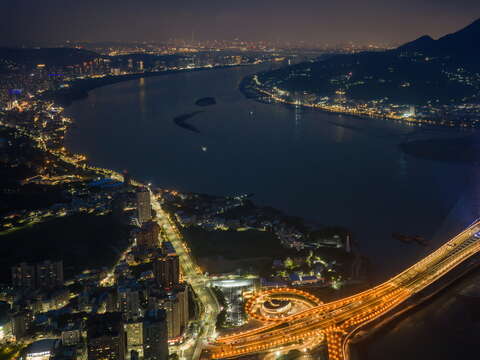
In recent years, Bali Township has become an attractive leisure area in New Taipei City. The old streets at the ferry head and the surrounding environment have taken on a romantic new look. People can rest in the park on the Tamsui River’s left bank, enjoy the natural beauty, watch the sunset, and watch the migratory birds.

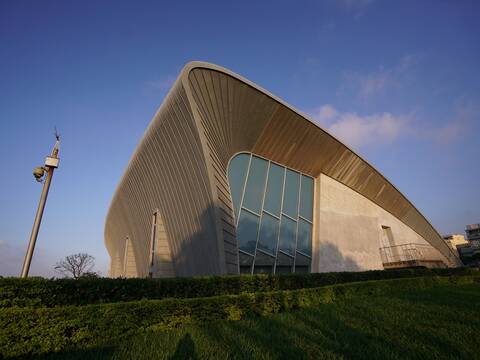
The Bali Sustainable Environmental Education Center, located in the center of the left bank park, has been renamed "New Taipei City Sustainable Environmental Education Center." The education center on Guanhai Avenue in Bali focuses providing education on wetland conservation, environmental protection, and energy conservation and aims to make the public aware of the significance and value of the ecological environment. The center has a diversified educational space concerning the rehabilitation of the ecological environment and a high-quality family-friendly environment. Parents and the public who participate in mutual teaching and learning can expect a rich educational experience, at a fun location.Wazihwei Nature Reserve
After listening to the explanation, you may go to the Duziwei Natural Reserve to experience its rich natural resources. The Duziwei Natural Reserve is the country’ highest elevation mangrove area, etc., such as water ponds, fiddler crabs, little egrets, and seaside plants. It is suitable for parents and children or couples to travel together. When you arrive in Bali, don’t miss the Bali Ferry Boat Head Old Streets next to the port, which used to be the place where people coming and leaving Bali gathered, which gave rise to a market over time. A famous one is Kong Que He (Green mussel).
Previous
Tarcking back the refreshing Daluolan River in the Ataya tribe of Wulai
Wulai stands as the most expansive and highest-altitude region within New Taipei City. It represents the sole mountain indigenous district in New Taipei City, primarily inhabited by the Atayal ethnic group. The name "Wulai" originates from the Atayal word "Ulay", signifying the presence of hot springs. Upon entering the North 107 Rural Highway from Wulai Scenic Bridge, you will encounter the idyllic Tranan Tribe, akin to a hidden paradise. Visitors can leisurely walk along the lifeline of the tribe, the Daluolan (Tranan) River, roll up their pants, and immerse themselves in the refreshing river waters to escape the summer heat.Located about a half-hour drive from Wulai Old Street, Tranan Tribe is the first settlement of the Atayal people migrating from Balong in Taoyuan to Wulai in New Taipei City. Situated within the Nanshi River Watershed Protection Area, this small yet beautiful tribe has deliberately avoided excessive development, allowing inhabitants of this region to preserve the most traditional Atayal lifestyle in Wulai. Within the tribe, one can observe characteristic wall paintings and sculptures portraying themes centered around Atayal culture and beliefs.The Daluolan River, known as the mother river of the Tranan Tribe, derives its name from the Atayal word “Tranan” and serves as one of the tributaries of the Nanshi River. A century ago, Atayal people from Balong crossed over the mountain range in search of hunting grounds. They discovered this area, abundant in water sources and fertile soil, and gradually relocated here. During the Japanese domination period, the authorities at the time constructed irrigation canals to channel the waters of the Daluolan River to the tribe for farming purposes. The valley of the Daluolan River is lush and verdant, with the river channel varying between narrow passages and wide expanses. With groups of Taiwan shovel-jaw carps (Onychostoma barbatulum) swimming in crystal-clear waters, it has an astonishingly picturesque scenery.Both banks of the Daluolan River are equipped with scenic trails. The northern bank features an ancient canal trail, while the southern bank hosts the recently established Xilong Trail. The ancient canal trail, also known as the "Fushan Maan Ancient Canal Trail", no longer serves its original irrigation function but continues to flow endlessly. Surrounded by the shade of lush trees, the trail is adorned with towering old trees on both sides and various ferns thriving along the way. The trail is also furnished with rest areas and the Butterfly Garden, offering visitors a beautiful view of butterflies fluttering during the summer.The Tranan Scenic Bridge stands out as the newest attraction in the tribe, connecting the Ancient Canal Trail and Xilong Trail to form a circular route. This steel-structured arched bridge gracefully spans over the Daluolan River. As visitors traverse its path, they're greeted by breathtaking views of the valley and distant mountain peaks. The harmonious fusion of the river and lush forests crafts an invigorating visual spectacle. Returning to the tribe via the Xilong Trail, travelers encounter two intersecting paths that lead to the Daluolan River. Here, guests have the chance to kick off their shoes, roll up their pants, and immerse themselves in the refreshing waters, offering sweet respite from the summer's warmth.While returning to Wulai Old Street via the North 107 Rural Highway, take a moment to gaze toward the right bank where the cable car station of Yun Hsien Resort lies. Here, you can relish the captivating view of the majestic Flying Fountain gracefully descending from the mountaintop. Also known as Yunxian Waterfall, the impressive 80-meter-high cascade stands as the largest waterfall in Northern Taiwan. Since the Japanese colonial period, it has been revered as 'the waterfall from the clouds,' remaining one of the most renowned landscapes in Wulai.After crossing the Wulai Tourist Bridge, turn right to enter the most bustling area of Wulai – Wulai Old Street. Indulging in aromatic indigenous cuisine is a delightful reward after hiking. All the shops along Wulai Old Street have similar signboards. Here, you can discover various indigenous cuisines and local specialties. For instance, rice dumplings, bamboo tube rice, makauy (Litsea cubeba) dishes, bird's-nest fern, shallot, BBQ wild boar meat, hot spring eggs, millet mochi, and more. Let’s relish these local delicacies and satisfy your taste buds!
Next
Exploring Tamsui Womenet s Road: Hearing the voice of women voice in the Red Castle
Let's embark on a deep travel led by women in Tamsui. Begin by walking from the alleys near Tamsui Mazu up to Chongjian Street to uncover the romantic tale of the painter Lin Yu-chu and the writer Wang Chang-hsiung. Then, explore the century-old Red Castle to witness women's dedication to heritage and create your own thread-bound book. Finally, delight in the performance of Peking Opera at the Tamsui Customs Wharf against the backdrop of a sunset. Guided by an elegant female guide, let's embark on a cultural journey through Tamsui and listen to the stories of women in this area.Visiting Tamsui Mazu and the two old streetsCommencing the journey from the old alley adjacent to Fuyou Palace to visit Tamsui's four major temples – Fuyou Palace and Yinshan Temple dedicated to the worship of Mazu, Longshan Temple, and Qingshui Temple. Mazu, symbolizing the fortitude and compassion of women in the past time, is the goddess most familiar to the Taiwanese people and serves as the guardian of Tamsui's maritime activities. Fuyou Palace holds numerous legendary tales. According to accounts, during the Sino-French Battle of Tamsui and World War II, Tamsui Mazu manifested miracles and successfully safeguarded the safety of the Tamsui region. Furthermore, Fuyou Palace sits at the crossroads of two historic streets in Tamsui – Chongjian Street and Zhongzhen Road – bearing witness to the area's development over the past 200 years.Painter Lin Yu-chu’sromance of Chongjian StreetAscending the stairs that wind along the mountain slope, you will arrive at Tamsui's Chongjian Street, the original commercial street. Today, in contrast to the bustling Zhongzheng, Chongjian Street exudes a more serene ambiance. However, it remains the authentic Tamsui Old Street and is home to many political and economic figures of Tamsui. From the mid-19th century to the early 20th century, this area was the most prosperous district in Tamsui. Gazing back at Chongjian Street offers a panoramic view of the picturesque Tamsui River landscape. It also holds significance as the romantic backdrop for Painter Lin Yu-chu and Writer Wang Chang-hsiung.Lin Yu-chu was born on Qingshui Street near Chongjian Street. Qingshui Street, previously known as the "rice market street", was the primary location where rice vendors congregated in Tamsui a hundred years ago. Lin's family, for example, was involved in the rice-selling business. While studying at Tamsui Girls' School, Lin Yu-chu encountered her respected teacher, Chen Jing-hui. Chen Jing-hui, the grandson of Canadian missionary Mackay, had previously received a comprehensive arts education at the Kyoto City Specialized School of Art. Under Chen Jing-hui's careful guidance and through her dedication to learning, Lin Yu-chu began to shine in the field of painting.With the encouragement of her teacher, Lin Yu-chu participated in Taiwan's grand annual art event – the Taiwan Fine Art Exhibition. In 1936, Lin Yu-chu's Nihonga artwork titled "Lighthouse at the Estuary" and Chen Jing-hui's "Aftertaste" were both selected for the 10th Taiwan Fine Art Exhibition. The outstanding accomplishment of a 17-year-old girl within Taiwan's art community during that era significantly heightened the radiance of Tamsui.“If you open the door within your heart, you will witness the vibrant spring scenery.Though spring may not endure, it has the power to alleviate my distress for the moment.”With its lyrics penned by the physician and writer Wang Chang-hsiung, the song 'If I Open My Heart’s Door' has already become a classic Taiwanese song known to all Taiwanese people. Lin Yu-chu and Wang Chang-hsiung met through her teacher Chen Jing-hui. During their courtship, the two frequently rendezvoused on Chongjian Street, leaving behind their footprints, which have now transformed into a notable spot on Chongjian Street today – The Alley of Love, a place that exudes warmth and romance.After visiting the distinctive shops along Chongjian Street such as "Vanilla Street House" and "Nine Valley 28", you will veer into an inconspicuous alley. This alley serves as a time tunnel leading to the Tamsui Red Castle.Grandma of the Red Castle, Hung Hsu-feng, preserves the Red Castle for Tamsui.The brick arched corridor leads to the Tamsui Red Castle, standing proudly on the slope of the old street. This red-brick Western-style building is a century-old landmark in Tamsui and has been featured in numerous paintings depicting this region. Constructed in 1899 by the wealthy businessman Li Yi-he, it was later acquired by Tamsui Street's chief, Hung Yi-nan, in 1913 and became a gathering place for local literati and scholars, attracting many prominent figures. In the 1960s, it was further purchased by Hung Hsu-feng, the owner of Te Yu Taiwan Fish Crackers."When Taiwan's economy started to take off, a construction company once approached Hung about rebuilding the Tamsui Red Castle, but Hung Hsu-feng steadfastly refused to sell it. The reason is that the Red Castle is not only a shared memory among the people of Tamsui but also holds a significant meaning symbolizing family unity and blessings. By steadfastly preserving the Tamsui Red Castle, it now functions not solely as a restaurant but also partners with Tamsui Community College to promote vegetarian cooking and participates in cooperative endeavors with 'Vanilla Street House' on Chongjian Street. These collaborative efforts actively safeguard the heritage of old Tamsui through ongoing initiatives.Visitors can savor a cup of traditional tea within the Red Castle's century-old splendor; don traditional Hanfu attire; and, under the guidance of Li-hsin, a representative possessing national treasure-level female expertise, craft their own thread-bound book at a leisurely pace. This allows visitors to momentarily detach from the digital age's information bombardment and immerse themselves in ancient craftsmanship predating the industrial era, facilitating a serene and mindful experience for the body and soul.The days of sea lights – Wang Jing's Road towards Peking OperaSituated on the banks of the Tamsui River, the Tamsui Customs Wharf plays a significant role in Taiwan’s international trade history. After Taiwan opened the port in 1860, Tamsui welcomed its most splendid era. The wharf, constructed from stones such as Guanyin stone or Kiligan rock, stands as a testament to Tamsui's history as an international trading port. However, as a result of river channel siltation, the functions of the Tamsui port gradually declined, causing it to lose its former prominence.Afterward, the clamor of wharf workers was replaced by the voices of women. In 1975, the Navy Art Work Brigade relocated from Zuoying in Kaohsiung to Tamsui Customs Wharf. The Haiguang Peking Opera Team and Haiguang Peking Opera Training Class, embodying the strength and aspirations of women, also found their new home by the Tamsui River. The former port warehouse was then repurposed as a dedicated space for training Peking opera skills. Over time, talents like Wang Ching, known as the “sea light”, were drawn here and eventually illuminated the Peking Opera stage with their brilliance.In the old warehouse of Tamsui Customs Wharf, several renowned Peking Opera performers such as Wei Hai-min, Wang Hai-bo, and Shen Hai-jung were nurtured. These performers gracefully dance on stage, narrating stories through their art. They also challenge traditional gender roles, where women are not just supporters behind the scenes but also prominent figures on stage. Rooted in local culture, Tamsui Women’s Road will persist in uncovering stories of women in Tamsui and scripting a future of gender equality.
Read more
Back to the top of page
小客帶路