Go to the main content section Anchor point

New Taipei City Travel

In-depth trip to the secluded sports

Anchor point
In-depth trip to the secluded sports
Category :
Route 2 Taiwan-Cycling Routes
Travel days :
3 Days
適合對象 :
Public & Cyclists

推薦路線

Day

      Introduction

      Anchor point

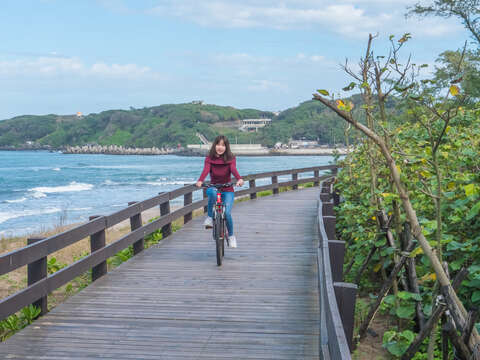
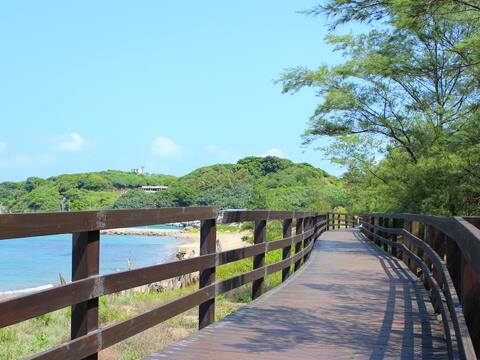
      Take a romantic ride on Shuangwan Bikeway, embrace the blue sky of Linshanbi Trail, and relax your body and soul in the hot spring. Explore the strange Yin-yang Sea of yellow and blue water and the mountain town of Jiufen. Have a feast of Aodi seafood. Enjoy the wide view at Sandiaojiao Lighthouse. Who will not fall in love with this place?
      day01
        Previous
        Take the Ankeng LRT and Explore the Hidden Gems of the Mountain City
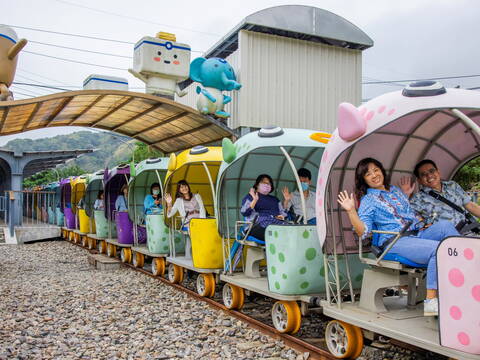
        Stations K1 to K9: Public art on the entire line of Ankeng Light RailAnkeng Light Rail is the second light rail system in northern Taiwan. During its planning stage, several artists were invited to portray the natural environment and cultural significance of the Ankeng area using various materials and techniques. The installation “The Fireflies’ Way Home” at K9 Shisizhang Station is composed of thousands of micro power generators emitting blue and green lights to simulate the firefly's light, guiding people into the mountainous wilderness where various butterflies gracefully dance along the connecting pathway. It is also equipped with a QR code. By scanning it with your mobile phone, you can learn more about these beautiful creatures.The public art situated in light rail stations has transformed platforms into a rail waiting space full of imagination. For example, the “Stellar Universe Ankeng” at Rose China Town Station; “Manbo Ankeng” and “Floating Ankeng” at Xinhe Elementary School Station; and “Stellar Universe Ankeng” and “Soaring Ankeng” at Shisizhang Station. All of these characters appeared in the picture book created for the Ankeng Light Rail have been transformed into the cutest waiting companions.Between Shuangcheng Station and Jinwen University of Science and Technology Station, several public artworks, including “Warmth During the Journey - Enchanted Forest”, “Friends During the Journey - Hand in Hand Dancing”, “Peace of Mind During the Journey - Guardian Spirit”, “Charm During the Journey - Sharing Fragrance”, and “A Pause During the Journey - Happy Moments”, have been installed to accompany travelers with fireflies, the family of frogs, Swinhoe’s pheasants and giant katydids (Phyllophorina kotoshoensis) on each of their journeys.K3 Taipei Xiaocheng Station: Erbazi Botanical GardenTo align with the launch of Ankeng Light Rail, the shuttle buses have also commenced service simultaneously. There are currently five shuttle bus lines that take travelers into the big and small communities and scenic spots in the mountain village of Ankeng. When you arrive at K3 Taipei Xiaocheng Station, you can transfer to Ankeng Line 1 to journey into the mountains. In just 15 minutes, you will reach the Erbazi Botanical Garden, renowned as the “Emerald of Ankeng” to escape the urban hustle and bustle.The Erbazi Botanical Garden, located on Ankeng's landmark “Tutangshan” (Tutan Mountain), is situated near several large mountain communities, including “Daguan Commmunity”, “Rose China Town” and “Taipei Xiaocheng”.It is said that when the ancestors looked down from this high place, they saw the gentle contours of hills in the valley resembling the words of “eight” and “inverted eight”, which forms into “Two-Eight words” (“Erbazi”) together. This is the reason that this place is named Erbazi. The botanical garden covers a vast area of 150 hectares, providing a wide, open view with lush greenery.Erbazi Botanical Garden features a forest formation comprised of natural and secondary forests. The trails within the garden are gentle and suitable for all ages. They are also divided into paths for families, the Cherry Blossoms Trail, the Miscanthus Trail, the Selaginella Trail, the Psychotria Rubra Trail, the Tung Trail, the Butterfly Trail, and more. The trails are also equipped with detailed ecological information boards, enabling visitors to closely observe interesting plants such as “Meliosma rhoifolia Maxim” and “Common Schefflera”.K6 Ankang Station: New Taipei City Weather Park (temporarily closed) and Hu Lien Former Residence MemorialK6 Ankang Station is a major station on the Ankeng Light Rail and the most densely populated area in Ankeng. This is why, in addition to offering “full route service” from K1 to K9, the Ankeng Light Rail also provides “sectional service” from K6 Ankang Station to K9 Shisizhang Station, with peak-hour departures averaging just 7.5 minutes apart. Within the alleys around Ankang Station, you'll discover the recently launched New Taipei City Weather Park and the historic Hu Lien Former Residence Memorial. You can easily reach these scenic spots within a mere 10-minute ride on a public bicycle. The three green buildings surrounded by over 300 energy-saving boards are respectively the New Taipei City Weather Station, Meteorological Instruments Center, and Wind Tunnel Laboratory. This is the New Taipei City Weather Park, which was officially launched in January 2023. The design featuring dynamic curving lines reflects the isobars on the weather map, symbolizing the interaction between buildings, much like the airflow resulting from the convergence of low and high-pressure systems. To allow people to experience the power of nature through architecture, the Greenland Park located at the intersection is equipped with the incredibly beautiful mirror selfie spot “Weather@New Taipei City”, which is also a new highlight in the Ankeng area.The graceful and beautiful curved architecture, along with the brown energy-saving boards, create an excellent photographic composition as you weave through the lines of the buildings. Following the upward spiral staircase leads you into an endless canvas of the blue sky, where every angle offers a unique scenery.The Hu Lien Former Residence Memorial is the former residence of General Hu Lien, a renowned figure. Spanning 720 Ping, the Hu Lien Former Residence Memorial is a modernist-style building. However, it features a protruding fortification room on the western side and defensive gunports in the walls, carrying considerable historical and military significance. The garden of the Residence is adorned with four majestic hoop pines, symbolizing General Hu Lien's four-star military rank as a First-Class General in the Army. The Dragon Chinese Juniper (Juniperus chinensis L. var. kaizuka) represents General Hu Lien's style name “Po Yu”, showcasing the grandeur of the general's residence amidst its simplicity.General Hu Lien served as the commander of the Twelfth Army Corps, the Commander of Kinmen Defense, and the Special Ambassador with Full Powers to the Republic of Vietnam; participated in the Second Sino-Japanese War, the Battle of Kuningtou, and the Second Taiwan Strait Crisis; and established the Kinmen Distillery. He was deeply beloved by the local residents of Kinmen.At present, the Residence has opened its outdoor courtyard and the first-floor space. Inside, it showcases an array of historical artifacts from General Hu Lien's time in mainland China, Kinmen, and Vietnam. These artifacts include the honorary medals awarded to the General, paper currency exclusive to Kinmen, and European fine china used to entertain distinguished guests during his tenure as the Ambassador to Vietnam.There are also treasured scrolls of calligraphy and painting, and several hanging paintings gifted by the renowned calligrapher Yu You-ren. It is an Ankeng historical and cultural treasure trove that should not be missed by friends who appreciate modern history.👉As General Hu's descendants still reside within parts of the Residence, please visit the official website or FB Fanpage of the Hu Lien Former Residence Memorial to make a reservation when planning your visit to Ankeng!
        Next
        Visiting Qitang Old Street
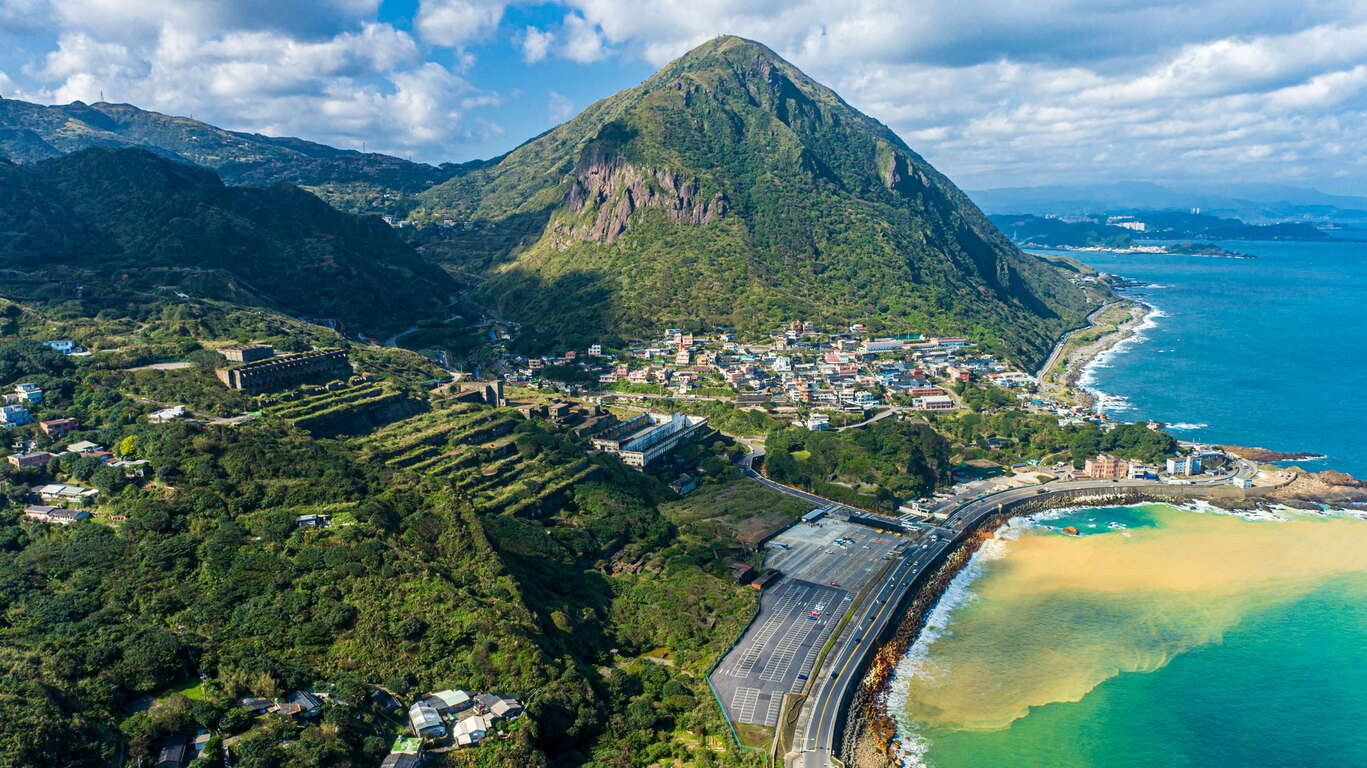
        In 1889, Taiwan's first railway was under construction at full speed between Keelung and Taipei. Railway construction workers discovered glittering gold dust in the river in today's Qidu area of Keelung. Those who are seeking wealth traced the river upstream, and eventually found the outcrop of gold vein in Xiaojingua and Dajingua, which kickstarted the gold mining era of Northern Taiwan. The previously quiet Jinguashi and Jiufen therefore entered their golden years. Until 1987, Taiwan Metal Mining Corporation closed the mining business and drew an end to Jinguashi's hundred-year mining history.Different from the strong commercial vibes of Jiufen, after the mining activities ended, Jinguashi became an isolated and quiet little mountain town. The buildings scattered among the emerald hills, the huge Guangong statue guarding the area, and the occasionally seen hikers in the alleys represent the present life of Jinguashi."Let us never forget." During World War II, Jinguashi was once used as a Japanese war prisoner camp. The locals called it "Dubiziliao," which meant the place where foreign prisoners were held. These prisoners of war in Southeast Asia were from Britain, the US, Canada, New Zealand, Australia, South Africa, and the Netherlands. During their imprisonment, they mined copper here under poor living conditions. Most of them did not survive the war and died in Jinguashi. In 1997, Taiwan POW Memorial and Peace Park opened to commemorate the war. "Freedom is not free" reminds the world that peace and prosperity are not easy to come by.Qitang Old Street is an important street of Jinguashi. The old street built along the mountain is the main living circle of the miners in the early years. In its most prosperous period, 80,000 gold diggers gathered here! In addition to restaurants and grocery stores, there were entertainment venues such as jewelry shops, pool halls, and bars! During the Japanese Rule period, it was known as the "Jinguashi Ginza." After the gold mining era ended, the number of residents in Jinguashi plummeted to less than 2,000. Today, the once-bustling Qitang Old Street retains a strong nostalgic atmosphere. The renovated rainbow stairs have become a topic in social media, drawing the world's attention to this mining town in the mountains again.Follow the rainbow stairs up to Jinguashi Quanji Temple, also known as Qitang (Qi Hall). The temple has been built for more than 120 years. It is the belief center of Jinguashi, dedicated to worshiping the Holy Emperor Lord Guan. The most treasured object at Quanji Temple is the largest Guan Gong statue in Taiwan that is made of pure copper and 10.6 meters in height. This statue of Guan Gong reading Chunqiu (the Spring and Autumn Annals) and standing majestically at the high point of Jinguashi against the mountains and facing the sea is the most visible landmark of Jinguashi. It is also the patron saint, blessing generations of Jinguashi people.The 260-meter-high Baoshi Mountain is named after the timed horns here during the Japanese Rule period. From the parking lot of Quanji Temple, you can walk up along the hiking trail and reach the viewing platform in 10 minutes. Facing the sea, Yin-Yang Sea and the North Coast are all within your sight. Looking back at the mountains, you can see Teapot Mountain and Liukeng Slope Cableway right in front of your eyes, surrounded by greenery and between mountains and the sea.Teapot Mountain is the backbone of the Jinguashi area, with an elevation of 602 meters. When viewed from the Jinguashi side, the ore rock at the top of the mountain looks like a teapot without a handle, earning it the cute and memorable name of "earless teapot." Teapot Mountain Trail is the most popular hiking trail in Jinguashi. It takes about 30-50 minutes to reach the top of the mountain from the parking lot of Quanji Temple. It is the most beautiful view in Ruifang. With Keelung Mountain right in front of your eyes, the little town of Jinguashi, the winding roads under your feet, and the boundless blue sky and sea, this spectacular scenery can heal you from your stressful daily life."Asia's No. 1 precious metal mine" was the prestige Jinguashi enjoyed in the past. The settlements formed around gold and copper mines in the old days carried the dreams of countless gold diggers. After the demise of the mining industry, what remained unchanged is the beautiful scenery of mountains and seas. They remain the spiritual home of hikers and Jinguashi people.
        Read more
        Back to the top of page
        小客帶路