Go to the main content section Anchor point

New Taipei City Travel

Visiting Heritage-A Romantic Tour of Shuijinjiu

Anchor point
Visiting Heritage-A Romantic Tour of Shuijinjiu
Category :
Classic
Travel days :
1 day

推薦路線

Day

      Introduction

      Anchor point
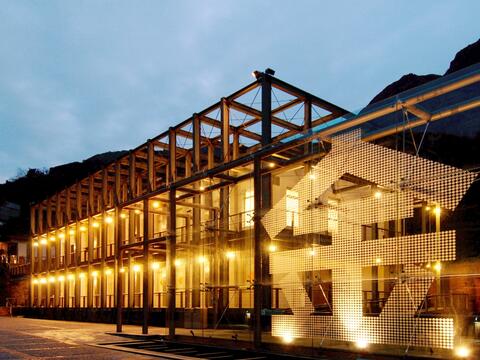
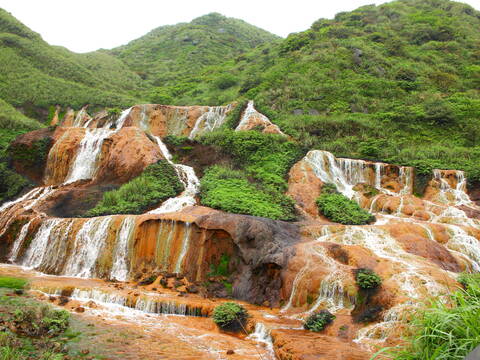
      If you love travelling to places with a historical atmosphere, then you can’t miss the “Visiting Heritage-A Romantic Tour of Shuijinjiu” tour, the only one featuring all relics of the rise and fall of the mining industry in Taiwan. Key sites include Jiufen Old Street, Gold Museum, Shancheng Art Gallery and Yinyang Sea, all of which were once bustling locales that fell into squalor with the fall of the mining industry. However, these sites are all filled with traces of history. Let us embark on a journey through the historical sites described above!

      Note

      【Return-Take a bus】
      🔸Step 1: Take the bus route 891 Romantic Jinshui to the “Golden Waterfall Stop.”
      🔸Step 2: Take the bus route 856 Taiwan Trip-Gold Fulong Line from the “Golden Waterfall Stop” to Jiufen Old Street (stay overnight in Jiufen ) or Ruifang Train Station (take the trains for Taipei).
      Previous
      One-day literary youth in Tamsui. Have a crazy summer night at Fisherman Stage!
      No fear for the heat and no fear for the sweat – summer is the time to go all out! How can literary youth not know about Tamsui Chongjian Street?! Chongjian Street, which is one block away from Tamsui Old Street, is actually the earliest developed business street. It had once lost its glory, but has been rebuilt over the recent years under active promotion of local residents. Integrating old architecture, history, humanities, culture, and performance, as well as Taiwan’s only stair market that takes place every month, Chongjian Street has been revitalized and reborn into a popular attraction for literary youths. On the other hand, there is also Tamsui Customs Wharf, also a top tourist site after it’s re-opening in 2018, which is filled with an artistic ambiance with all kinds of exhibitions and installation art. Along with the vintage red-brick architecture, visitors can easily take gorgeous pictures while learning about the history. Fisherman Stage, which centers on Taiwan’s original music, arts and markets, will take place on August 4th through 25th in 2019. If you’d like to enjoy the night breeze and gourmet food while listening to Taiwan’s music, don’t miss this great opportunity! After listening to the spectacular musical feast, it’s highly recommended to take a stroll at the Fisherman’s Wharf nearby – the snowy white Lover’s Bridge will show its fantastical beauty unseen during daytime after the light sculpture is illuminated at night!
      Next
      Get going! Experience one day of in-depth Hakka culture of Sanxia.
      "Hakka, indigo dyeing, and old streets" are probably the three main impressions that come to mind when thinking of Sanxia. Sanxia was formerly known as "Sanchiaoyung," and "yung" means water waves in Taiwanese. Hengxi, Sanxia River, and Dahan River converge here, forming a triangular plain. The place name shows the characteristics of the past century - abundant water resources and open plains.The Hakka immigrants in Sanxia engaged in the dyeing, tea, and camphor industries with rich natural conditions as the background. Moreover, the rivers crisscrossed the area, enabling the transportation of large quantities of cloth, making the dyeing industry a thriving industry. To get to know Sanxia, start with the indigo dyeing experience. Wandering around the former Sanchiaoyung Street (now called "Sanxia Old Street") and visiting the New Taipei City Hakka Museum to experience the collision of Hakka culture from the past to the present.▲ Sanxia was once a significant center of the indigo dyeing industry. (Photo source: authorized and provided by Can Culture Art and Nature)Here is the significant center of indigo dyeing, a part of Hakka culture.Sanxia is a place with many hills, suitable for growing the blue-dyed plant "Assam Indigo." The confluence of rivers also provides advantages for leaching and river transportation. Hakka immigrants took advantage of the perfect geographical conditions and developed the treasures of this land. The place once experienced a prosperous era with many dyeing factories until the introduction and popularization of chemical dyes.When visiting Sanxia Old Street, people still see the old dyeing workshop plaques hanging high. A group of young people who returned to their hometown, holding the concept of local creation, rented a century-old house on Qingshui Street next to Sanxia Old Street and jointly established "Can Culture Art and Nature" to maintain the gradually declining culture. It provides a traditional craftsmanship experience and a canteen with fermented and brewed local ingredients.▲The courtyard of Can Culture Art and Nature, nestled against the century-old house, is shaded by large trees and full of greenery.Participating in Can Culture Art and Nature's DIY blue dyeing, the instructor will start by tracing the history of blue dyeing in Sanxia and then delve into the principles and techniques of blue dyeing. Through various methods of tying, determine the pattern differences on the fabric. After designing each pattern, the next step is to immerse the fabric in a traditional dyeing vat, gently massage it, and finally disassemble the tying tools. Drying in a well-ventilated place helps the dye to oxidize, and the color will gradually turn blue.▲ Dip the tied fabric into the dye vat and press it gently. (Photo source: provided by Can Culture Art and Nature)Once welcomed by the Hakka people, the blue dress is wear-resistant, dirt-resistant, and can be repeatedly dyed. As part of the Hakka culture of Sanxia, through a complete experience, people can understand the unique connotation of blue dyeing in Sanxia from a new perspective. It is not only a superficial living craft but also carries the simplicity that the Hakka people adhere to. Nowadays, many local dyeing workshops have launched course experiences and held the Sanxia Blue Dyeing Festival to allow this beautiful craft to take root in Sanxia and continue well.▲ Dry in a well-ventilated place to help the dye solution oxidize. (Photo source: provided by Can Culture Art and Nature)👉 Registration Information for Indigo Dyeing Experience DIY of Can Culture Art and Nature.The class opening has over six or more people, and participants must register three days in advance..Course time: Morning session 10:00 (holidays only) / Afternoon session 14:00 (weekdays and holidays)..The actual situation is subject to the organizer.Explore local cuisine in the unique old street that combines Minnan and Western styles.After experiencing indigo dyeing, visit the nearby Sanxia Old Street to visit the ancient sites and eat delicious food. It feels like traveling through time and space. Walking on Sanxia Old Street, it seems to see still the scene of people transporting coal and camphor wood on the road. This settlement street, which faces the river and the mountains, combines ancient Greek columns, Roman arches, and Baroque decorations. The long red brick arcade is a check-in spot for tourists.▲Sanxia Old Street is an S-shaped street built according to the terrain, and the red brick arcade is a tourist must-photograph attraction.The must-try food in Sanxia Old Street is not only the Golden Croissants. It would help to catch the original Golden Croissant ice cream. The modified croissant cup used to hold it has a crisper taste. There are also many ice cream flavors to choose from. Everyone should have an ice cream to cool down when the autumn heat comes. Handmade tofu pudding made according to the ancient method, rice blood with a unique garlic sauce, and braised dishes made with Chinese medicine and fruits and vegetables are also classic foods. Taste every deliciousness for just coins' price!▲ The most famous one is the Golden Croissant of Sanxia, which has also developed many extension products, such as Golden Croissant ice cream.👉 Read more: Sanxia Old Street Tour Guide (Sanxia Old Street Shopping District Official Website)It is a comprehensive collection of Hakka history, culture, and art, a place for education and entertainment.With a satisfying meal, why not walk to the " New Taipei City Hakka Museum," only a ten-minute drive from Sanxia Old Street? The round earthen buildings come into view with Hakka architectural elements such as the Vochang (Hakka dialect for "the place for drying grains in sunlight ") and corridors. The gun holes on the outer wall and the watchtowers at the commanding heights are all meant to prevent and resist foreign invasions and have rich landscape features.▲ The earthen building is not only eye-catching in appearance but also incorporates Hakka architectural elements.Entering the New Taipei City Hakka Museum, the central theme is the history and culture of Taiwan's Hakka people. The permanent exhibition of cultural relics is from multiple perspectives, including clothing, utensils, and art. A ceramic boutique area and traditional clothing display also incorporate Hakka imagery into artworks. They even combine blue dyeing and floral fabrics with Barbie dolls, using features such as slanted plackets, fasteners, and culottes to create a unique Hakka Barbie. Moreover, there are occasional special exhibitions of Hakka artists to showcase the artistic styles and features created by the New Taipei Hakka people under the changing environment.👉Read more: Current Exhibitions at New Taipei City Hakka Museum▲ For more information about current exhibitions, please visit the official website of the New Taipei City Hakka Museum.The gourmet restaurants in the park can satisfy your cravings for classic Hakka dishes that are "salty, fragrant, and fatty" or afternoon tea snacks such as steamed cakes and mochi. If you want to experience the Sanxia Hakka culture in New Taipei City, visiting the New Taipei City Hakka Museum is the first choice for physical, mental, and spiritual enrichment!
      Read more
      Back to the top of page
      小客帶路