During the summer lotus season in Shuangxi, you can enjoy flowers, play with water, and walk along the old streets.

Anchor point
Category :
Senior citizen & Family tour & Outdoor excursion & Nostalgic tour of the old street & Secret attractions
Travel days :
1 day
適合對象 :
Public & Family & The aged

推薦路線

Day

Introduction

Anchor point
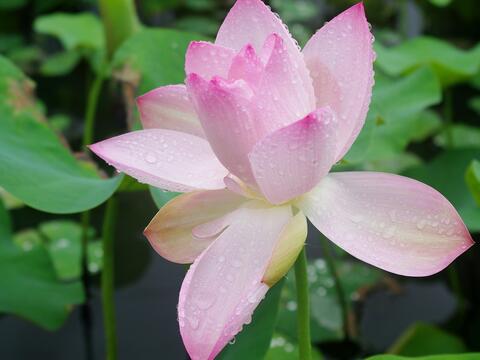
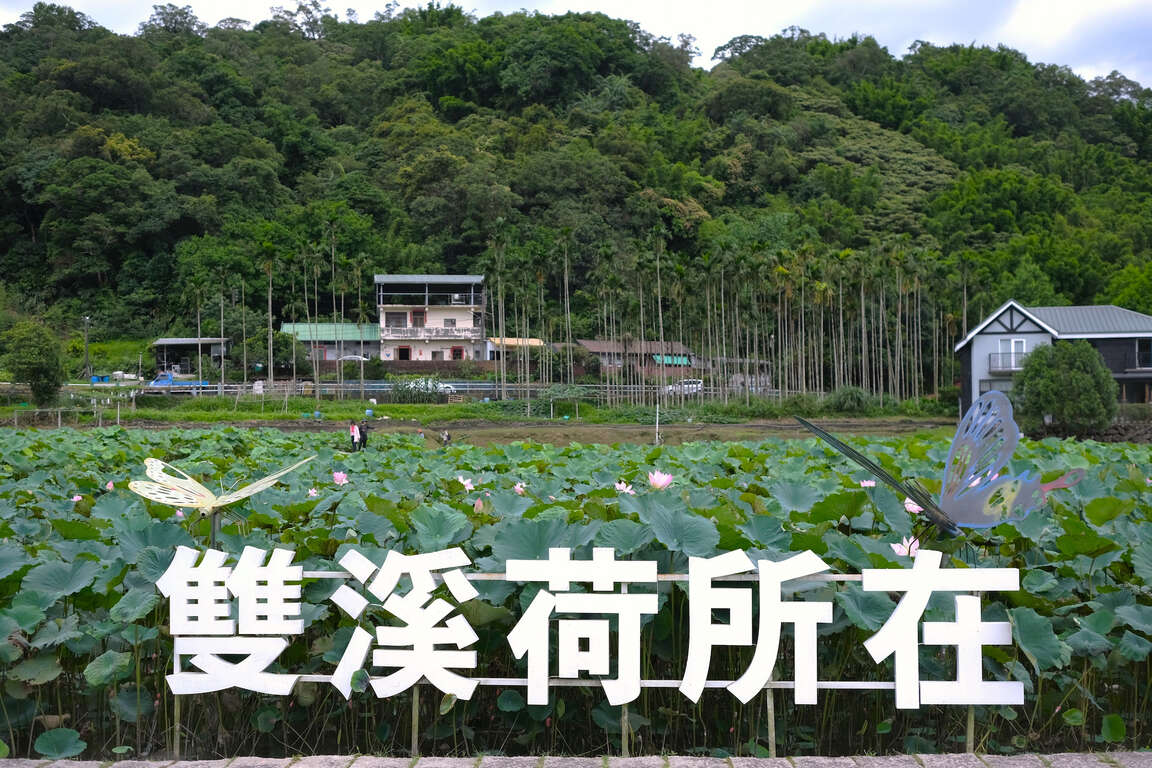
On a summer morning, before the sun shines, go to the Shuangxi Lotus Garden to enjoy the flowers. The peach-pink lotus flowers peek out from the dense lotus leaves. Brush shoulders with children playing on the ridges beside the pond. One is looking for the best spot to enjoy the flowers, while another is looking for the crystal water drops sliding down the edges of the leaves, so the kid scoops up handfuls of water repeatedly from the pond and splashes it on the lotus fields, washing away the summer heat at the same time. After capturing all the ideal angles in the camera, there is also the farmer's market at the entrance of the garden and the handmade DIY series of lotus seasons, which are bustling with people and very lively.

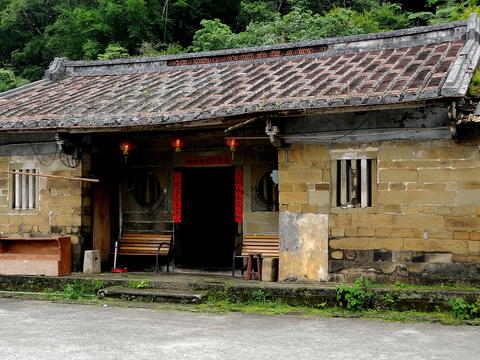
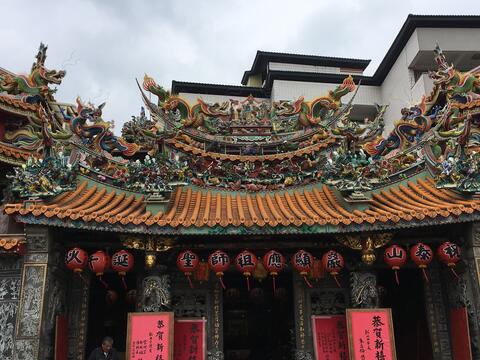
Then, go to the Ruanqiaoduan Water Park to play in the water and take a walk. When hungry, have a good meal at the nearby Shuangxi Old Street and stroll through the old town to feel the tranquility of the years. After a full stomach, look at the Chinese architectural aesthetics of the Lian Juren Historic House and the Zhuang Gong-Sheng Ancient House. The simple and charming inscriptions and carvings give a glimpse of the time's cultural status and social expectations.
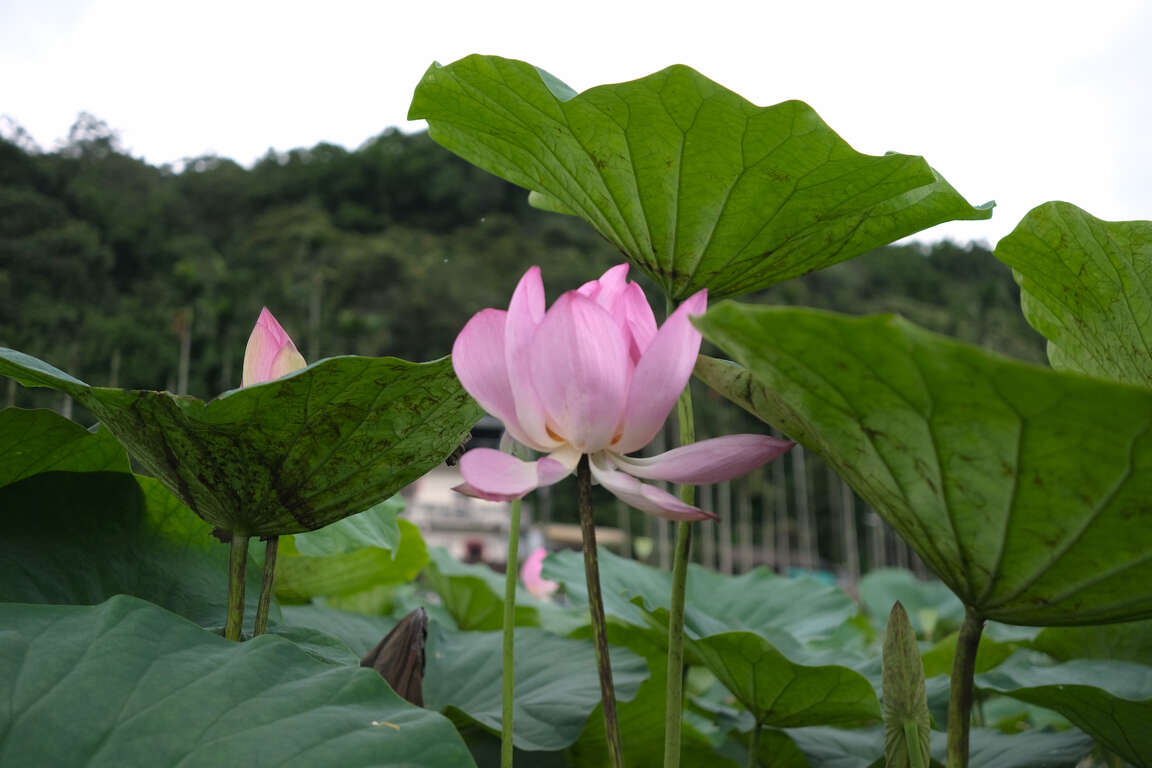
六月中花況約三成,許多荷花含苞待放,花季一路持續至八月。
▲ About 30% of the flowers bloom in mid-June, and many lotus flowers are still in the bud. The flower season will last until August.


The largest lotus field in New Taipei City is where to seize the limited beauty in summer.
While driving on the Shuanggan Highway, flower fields are on both sides. The largest lotus garden field in New Taipei City is in Shuangxi. Shuangxi Lotus Garden has promoted friendly farming for more than ten years, with a scale of 7.5 hectares. Besides the two significant representatives of water lily fields, lotus, and water lily, the garden also planted various varieties such as Oga lotus, peony lotus, perfume lotus, Victoria regia, and louver lotus. The limited seasonal beauty kicked off in June and continued to bloom until August.
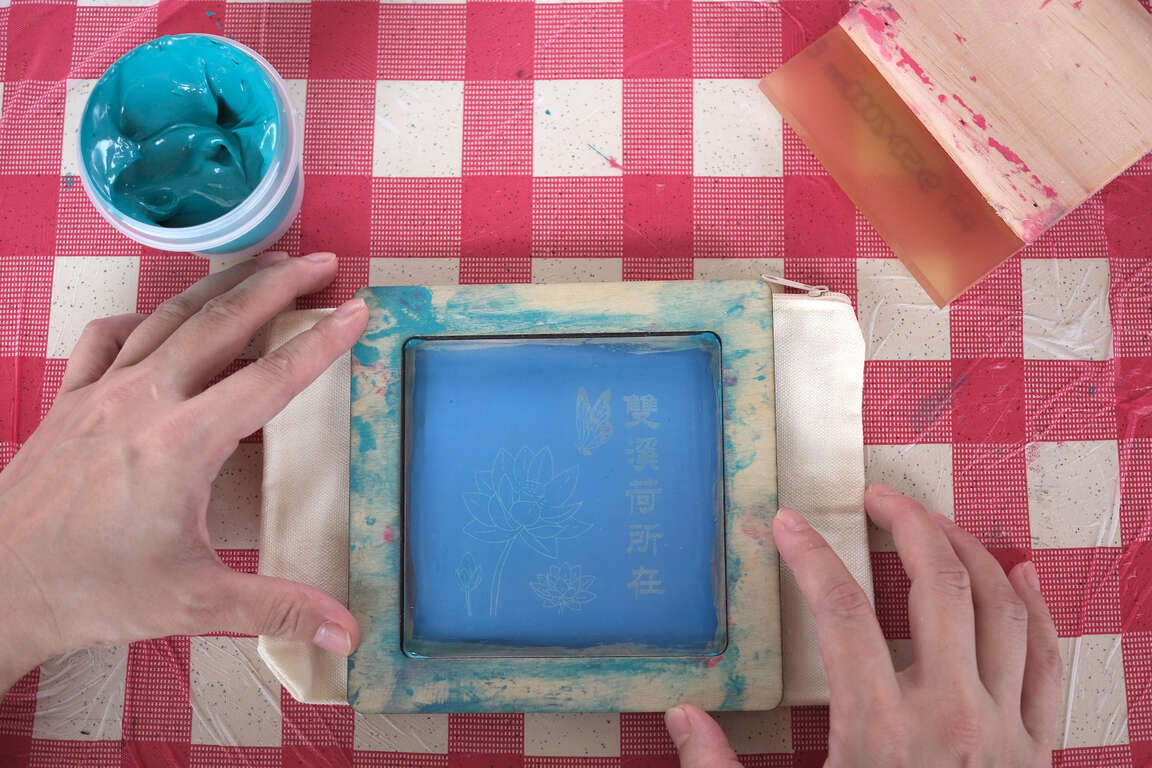
零錢包絹印DIY,將顏料塗抹在絹板上方,使用刮版將顏料由上至下刮勻。
▲ DIY coin purse of silk printing involves smearing the pigment on the silk board and scraping the pigment evenly from top to bottom with a scraper.


The "Shuangxi Lotus Season" officially opens in mid-June. The pond is full of flower buds, making people look forward to the scene of full bloom in midsummer. The organizer has prepared a series of handmade DIY activities to match the flower season, from making palace-style lotus pastry and experiencing silk printing of coin purses to creating lotus-shaped light soil pots. Many parents accompanied their children to participate. Walking along the farmer's market corridor with their finished works, they can't help but hold tofu pudding in one hand and honey water in the other, trying their best to resist the arrival of the hot summer. Organic fruits and vegetables, eggs, and pickled vegetables from local small farmers filled the stalls. In the hustle and bustle of chatting and selling goods, experience the gentleness and kindness of the Shuangxi people in such a leisurely life.
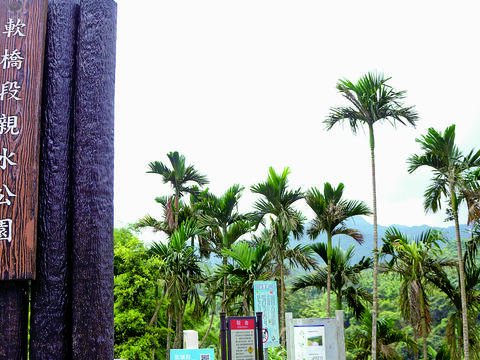
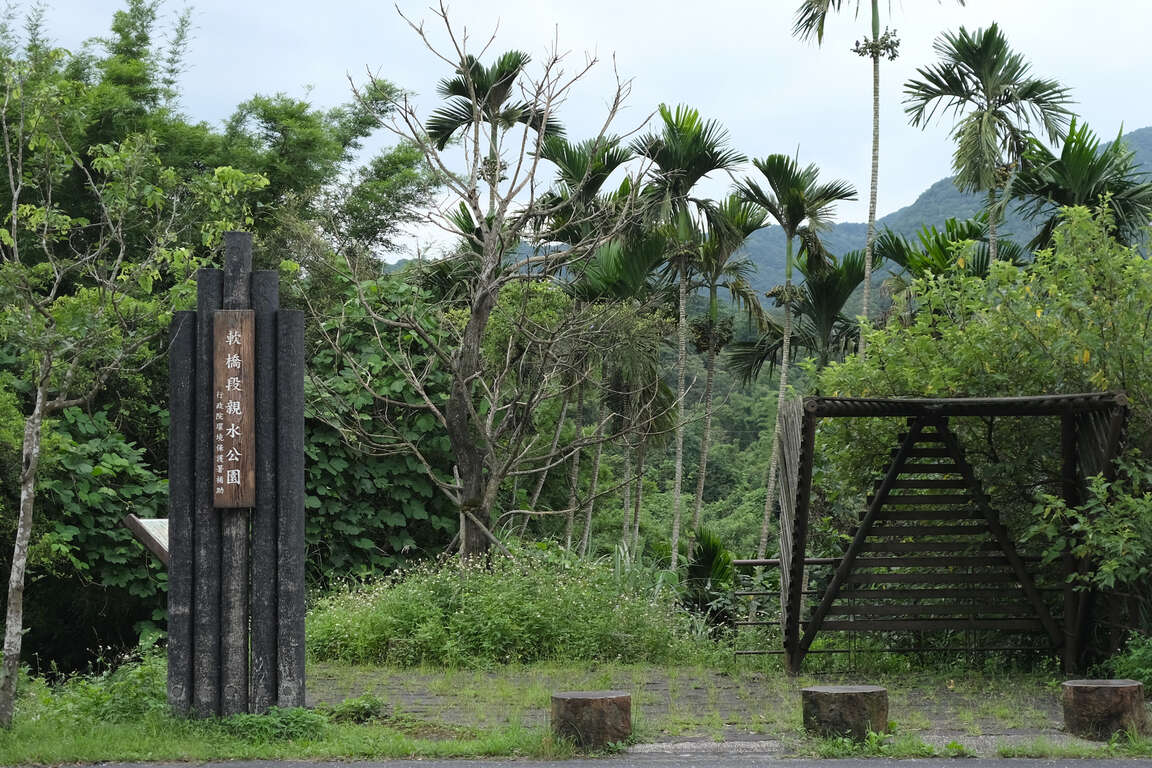
軟橋段親水公園入口隱身在馬路邊,建議停妥車輛再步行至此。
▲ The entrance to the Ruanqiaoduan Water Park is on the side of the road. We recommend parking cars and then walking here.

The clear and transparent secret water play spot relieves summer heat.
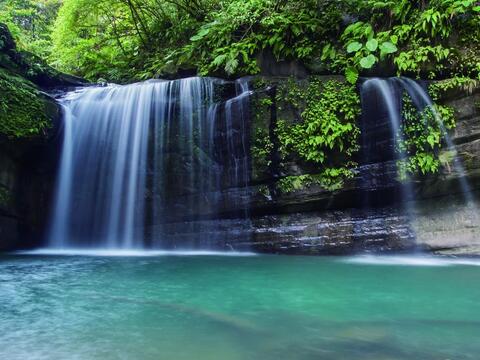
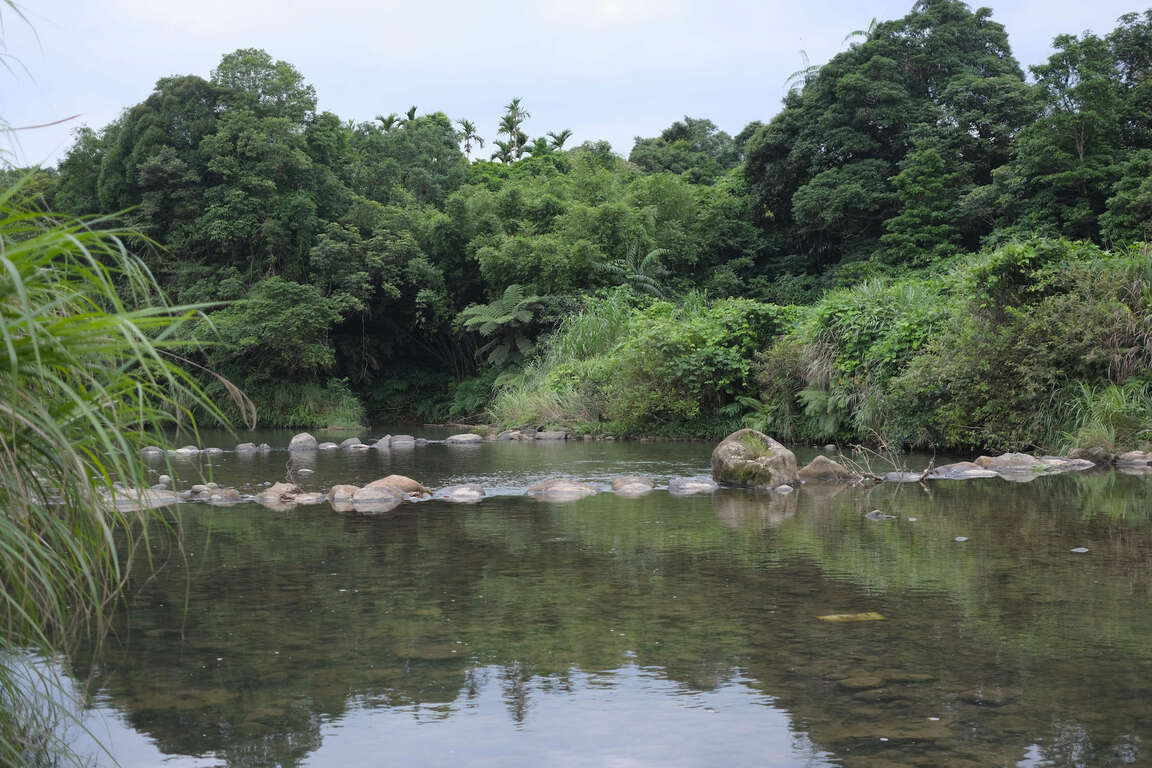
Using ecological methods to build the Ruanqiaoduan Water Park, its entrance is next to the Pinglin section of the Jifu Highway. Walk down the stone steps, the view suddenly opens, and the green lawn appears. At the end of the lawn are stairs for easy entry into the water. The closure of Pinglin River banned fishing successfully, so now the water is clear, and you can see the bottom. There are also schools where fish can swim leisurely, including Taiwan shoveljaw carp and Taiwan torrent carp. This place has become a good place for the whole family to play in the water and have picnics.

When playing in the water, be aware of the impact of chemical sunscreen on the aquatic environment, as it may cause ecological accumulation and even affect the endocrine system of marine organisms. When contacting natural waters in the hot summer, choose ocean-friendly sunscreen, or enjoy the sun!
草坪盡頭有石階可以入溪,溪流清淺,許多魚兒優游其中。
▲ At the end of the lawn are stone steps leading to the stream. The stream is shallow, and many fish swim leisurely in it.

Stroll through the tranquil Shuangxi Old Street to explore the ruins and enjoy delicious food.
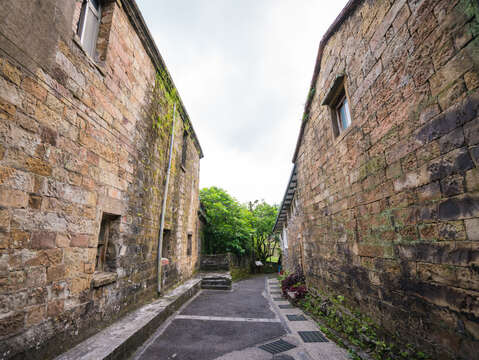
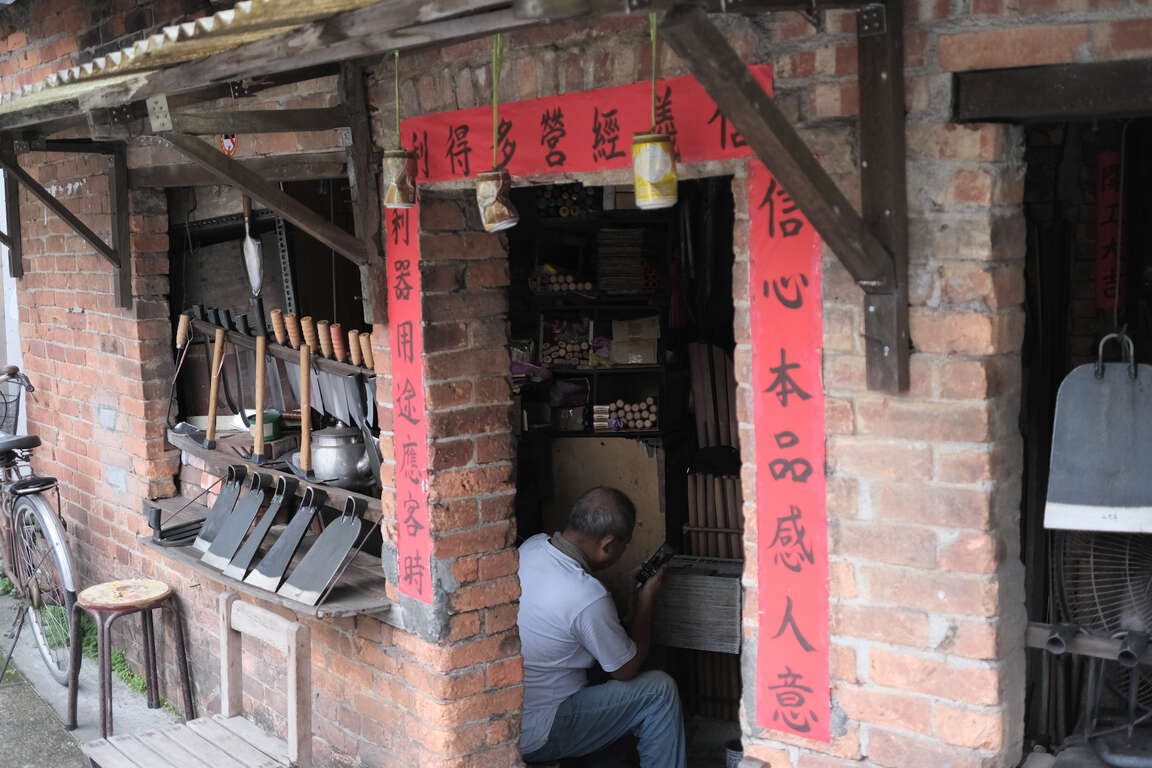
After playing in the water and feeling hungry, why not go to the nearby Shuangxi Old Street to search for food? Unlike the noise of Shenkeng Old Street and Pingxi Old Street, the atmosphere of Shuangxi Old Street adds a sense of peaceful life to the old city area. Strolling through it, run against a century-old blacksmith shop made of red bricks at the corner and a two-story Western-style building Chinese medicine shop with the sign "Lin-Yi-He Pharmacy" hanging on it. Looking at the exterior of the building, it seemed like time had passed, but only by delving into it did you realize that everything was still steadily rotating.
百年打鐵舖見證了臺灣自農業社會一路走來的歷史。
▲ The century-old blacksmith shop has witnessed Taiwan's development history from an agricultural society.


Shuangxi Public Market gathers many people, and hidden delicacies are all around, whether it is the Caozaiguo with a chewy skin and a grassy aroma, filled with shredded radish, or the traditional shaved ice with dozens of ingredients to choose from. Although it lacks exquisite decoration, the market's delicious food still has a down-to-earth charm that makes residents and tourists visit repeatedly.
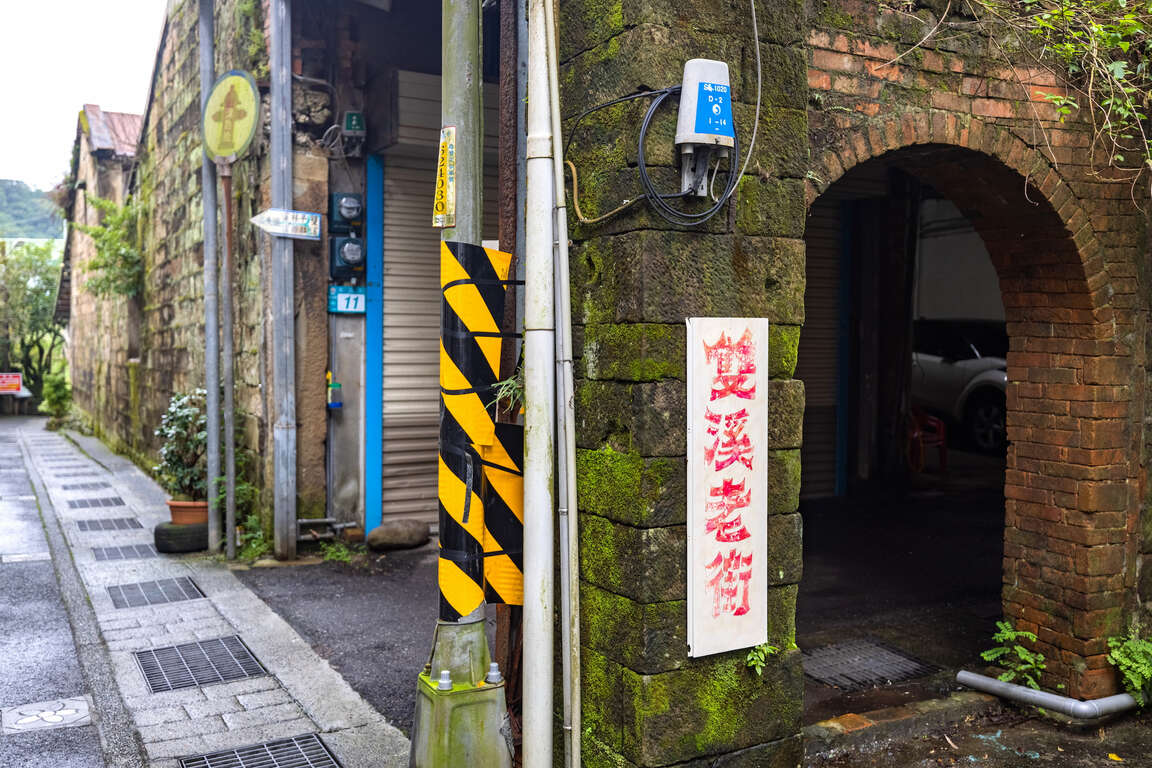
長安老街末端,便是雙溪渡船頭,亦是平林溪、牡丹溪匯流處。
▲ At the end of Changan Old Street is Shuangxi Old Ferry Dock, where the Pinglin and Mudan rivers also meet.


At the end of Changan Old Street is the remains of Shuangxi Ferry Deck, which was the traffic hub of the Tamsui-Kavalan Historical and Cultural Trails during the Qing Dynasty, creating a prosperous period for Shuangxi Town. Changan Street was full of rice shops, cloth shops, inns, and Chinese medicine shops during its heyday.
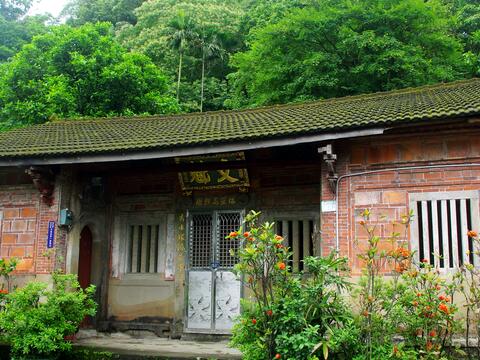
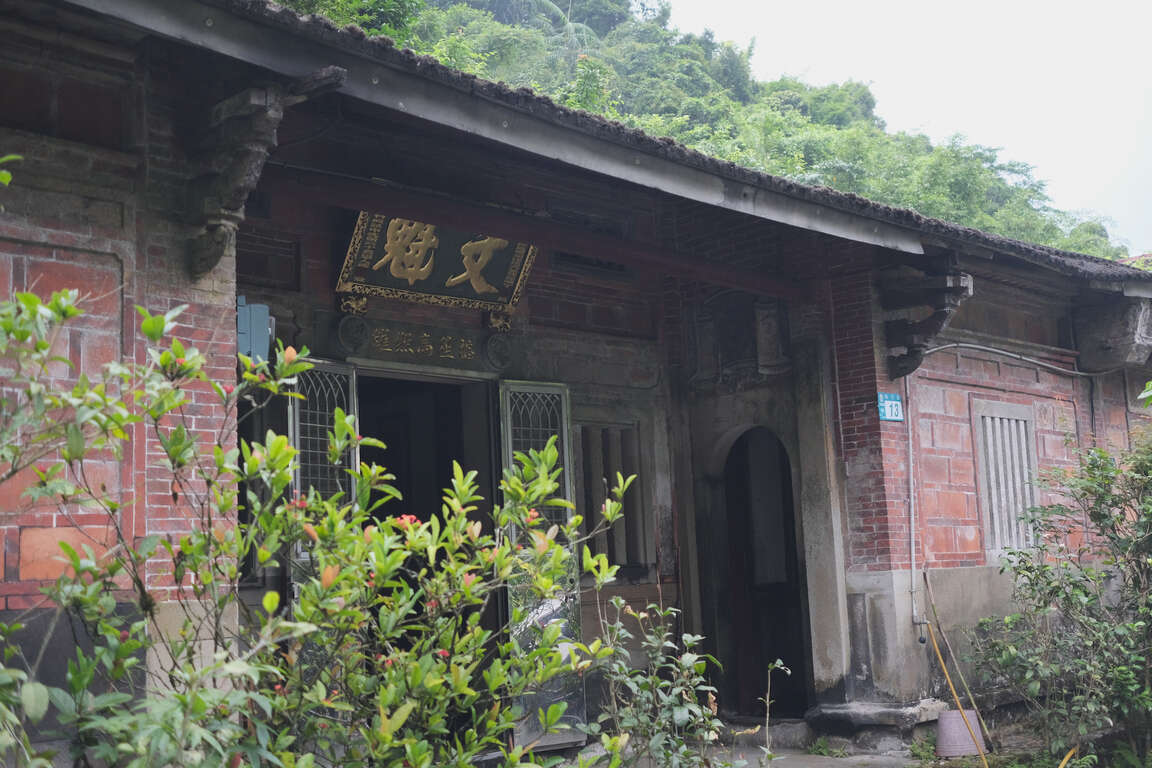
「連舉人古厝」的左右兩側門上刻有「出忠」、「入孝」字樣。
▲The words "Chuzhong (transferring filial piety towards parents)" and "Riuxiao (to show loyalty to the country)" are engraved on the left and right doors of the "Lian Juren Historic House."


The ancient house tour is to explore the Shuangxi from a century-old mansion.

There is also a century-old house called "Lian Juren Historic House" near the ferry dock. A large plaque with the words "Wenkui" is hung on the main hall door. In the past, people would thank their ancestors after achieving fame. At this time, local officials would present plaques to show their appreciation. Hanging plaques can also show the family's status in the imperial examination. In the fifth year of the Tongzhi reign of the Qing Dynasty (1866 AD), Yuan-Qiao Lian's descendant, Ri-Chun Lian, went to Fuzhou to take the provincial examination and passed the Bingzi imperial examination. He was the first imperial examination in Shuangxi District, so his house was honored as "Juren House." This "Wenkui" plaque was erected by Ri-Chang Ding, Fujian's governor, in 1876 AD.
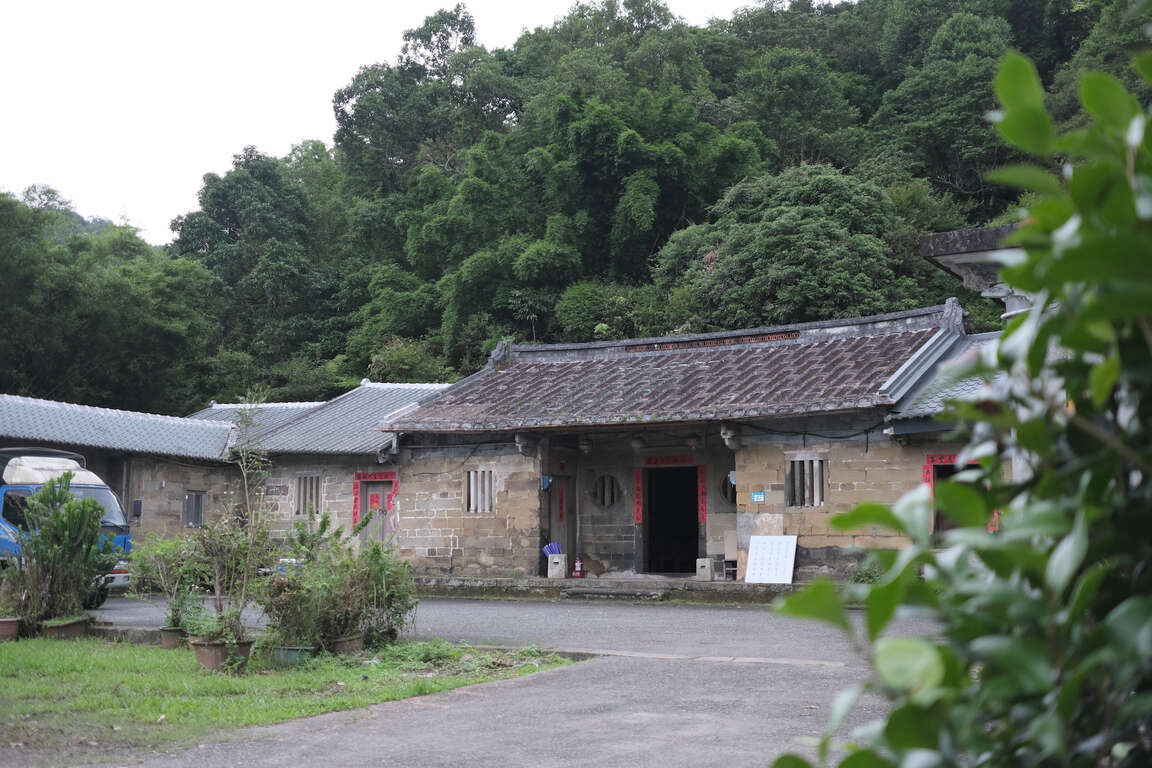
「莊貢生古厝」牆面上有許多富含寓意的石雕,可見前人的祝福與期許。
▲ The walls of the “Zhuang Gong-Sheng Ancient House” contain many meaningful stone carvings, which show the blessings and expectations of the ancestors.


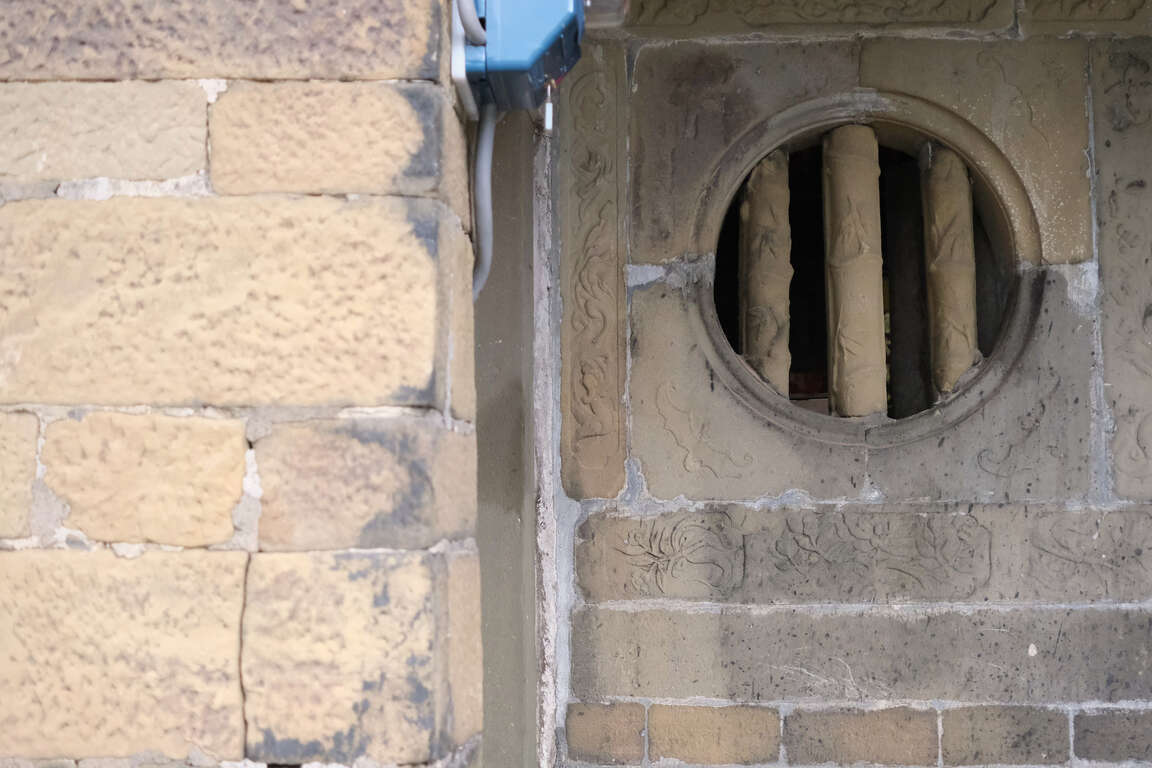
In the 34th of the Meiji era (1901), Ting-Can Zhuang went to Zhangzhou Prefecture in Fujian Province to participate in the Qing Dynasty's imperial examination and passed the imperial examination. After returning home, he co-founded the "Mei Zhu Yuan" private school with local Juren, Ri-Chun Lian, to cultivate talents. The locals called Ting-Can Zhuang's ancestral home the "Zhuang Gong-Sheng Ancient House." Mountains back the Zhuang's ancient house and face water in three courtyards in Fujian style architecture. It has circular stone windows with bamboo window frames on both sides and bats surrounding them, full of blessings, noble character, and unquestionable integrity.
「莊貢生古厝」石窗上雕飾竹節窗櫺,還有蝙蝠環繞,充滿福氣與高風亮節的意味。
▲ The stone windows of the "Zhuang Gong-Sheng Ancient House," with bamboo window frames and bats surrounding them, are full of blessings, noble character, and unquestionable integrity.


These century-old houses are still in their original stone appearance and are generally well preserved. Visitors can still see the intricate carvings under the traces of time. Through explanations from later generations, people can get a glimpse of Shuangxi's prosperous past. Time has preserved the stories of the old streets and houses waiting for visitors to explore one by one on foot.
Previous
Exploring Tamsui Womenet s Road: Hearing the voice of women voice in the Red Castle
Let's embark on a deep travel led by women in Tamsui. Begin by walking from the alleys near Tamsui Mazu up to Chongjian Street to uncover the romantic tale of the painter Lin Yu-chu and the writer Wang Chang-hsiung. Then, explore the century-old Red Castle to witness women's dedication to heritage and create your own thread-bound book. Finally, delight in the performance of Peking Opera at the Tamsui Customs Wharf against the backdrop of a sunset. Guided by an elegant female guide, let's embark on a cultural journey through Tamsui and listen to the stories of women in this area.Visiting Tamsui Mazu and the two old streetsCommencing the journey from the old alley adjacent to Fuyou Palace to visit Tamsui's four major temples – Fuyou Palace and Yinshan Temple dedicated to the worship of Mazu, Longshan Temple, and Qingshui Temple. Mazu, symbolizing the fortitude and compassion of women in the past time, is the goddess most familiar to the Taiwanese people and serves as the guardian of Tamsui's maritime activities. Fuyou Palace holds numerous legendary tales. According to accounts, during the Sino-French Battle of Tamsui and World War II, Tamsui Mazu manifested miracles and successfully safeguarded the safety of the Tamsui region. Furthermore, Fuyou Palace sits at the crossroads of two historic streets in Tamsui – Chongjian Street and Zhongzhen Road – bearing witness to the area's development over the past 200 years.Painter Lin Yu-chu’sromance of Chongjian StreetAscending the stairs that wind along the mountain slope, you will arrive at Tamsui's Chongjian Street, the original commercial street. Today, in contrast to the bustling Zhongzheng, Chongjian Street exudes a more serene ambiance. However, it remains the authentic Tamsui Old Street and is home to many political and economic figures of Tamsui. From the mid-19th century to the early 20th century, this area was the most prosperous district in Tamsui. Gazing back at Chongjian Street offers a panoramic view of the picturesque Tamsui River landscape. It also holds significance as the romantic backdrop for Painter Lin Yu-chu and Writer Wang Chang-hsiung.Lin Yu-chu was born on Qingshui Street near Chongjian Street. Qingshui Street, previously known as the "rice market street", was the primary location where rice vendors congregated in Tamsui a hundred years ago. Lin's family, for example, was involved in the rice-selling business. While studying at Tamsui Girls' School, Lin Yu-chu encountered her respected teacher, Chen Jing-hui. Chen Jing-hui, the grandson of Canadian missionary Mackay, had previously received a comprehensive arts education at the Kyoto City Specialized School of Art. Under Chen Jing-hui's careful guidance and through her dedication to learning, Lin Yu-chu began to shine in the field of painting.With the encouragement of her teacher, Lin Yu-chu participated in Taiwan's grand annual art event – the Taiwan Fine Art Exhibition. In 1936, Lin Yu-chu's Nihonga artwork titled "Lighthouse at the Estuary" and Chen Jing-hui's "Aftertaste" were both selected for the 10th Taiwan Fine Art Exhibition. The outstanding accomplishment of a 17-year-old girl within Taiwan's art community during that era significantly heightened the radiance of Tamsui.“If you open the door within your heart, you will witness the vibrant spring scenery.Though spring may not endure, it has the power to alleviate my distress for the moment.”With its lyrics penned by the physician and writer Wang Chang-hsiung, the song 'If I Open My Heart’s Door' has already become a classic Taiwanese song known to all Taiwanese people. Lin Yu-chu and Wang Chang-hsiung met through her teacher Chen Jing-hui. During their courtship, the two frequently rendezvoused on Chongjian Street, leaving behind their footprints, which have now transformed into a notable spot on Chongjian Street today – The Alley of Love, a place that exudes warmth and romance.After visiting the distinctive shops along Chongjian Street such as "Vanilla Street House" and "Nine Valley 28", you will veer into an inconspicuous alley. This alley serves as a time tunnel leading to the Tamsui Red Castle.Grandma of the Red Castle, Hung Hsu-feng, preserves the Red Castle for Tamsui.The brick arched corridor leads to the Tamsui Red Castle, standing proudly on the slope of the old street. This red-brick Western-style building is a century-old landmark in Tamsui and has been featured in numerous paintings depicting this region. Constructed in 1899 by the wealthy businessman Li Yi-he, it was later acquired by Tamsui Street's chief, Hung Yi-nan, in 1913 and became a gathering place for local literati and scholars, attracting many prominent figures. In the 1960s, it was further purchased by Hung Hsu-feng, the owner of Te Yu Taiwan Fish Crackers."When Taiwan's economy started to take off, a construction company once approached Hung about rebuilding the Tamsui Red Castle, but Hung Hsu-feng steadfastly refused to sell it. The reason is that the Red Castle is not only a shared memory among the people of Tamsui but also holds a significant meaning symbolizing family unity and blessings. By steadfastly preserving the Tamsui Red Castle, it now functions not solely as a restaurant but also partners with Tamsui Community College to promote vegetarian cooking and participates in cooperative endeavors with 'Vanilla Street House' on Chongjian Street. These collaborative efforts actively safeguard the heritage of old Tamsui through ongoing initiatives.Visitors can savor a cup of traditional tea within the Red Castle's century-old splendor; don traditional Hanfu attire; and, under the guidance of Li-hsin, a representative possessing national treasure-level female expertise, craft their own thread-bound book at a leisurely pace. This allows visitors to momentarily detach from the digital age's information bombardment and immerse themselves in ancient craftsmanship predating the industrial era, facilitating a serene and mindful experience for the body and soul.The days of sea lights – Wang Jing's Road towards Peking OperaSituated on the banks of the Tamsui River, the Tamsui Customs Wharf plays a significant role in Taiwan’s international trade history. After Taiwan opened the port in 1860, Tamsui welcomed its most splendid era. The wharf, constructed from stones such as Guanyin stone or Kiligan rock, stands as a testament to Tamsui's history as an international trading port. However, as a result of river channel siltation, the functions of the Tamsui port gradually declined, causing it to lose its former prominence.Afterward, the clamor of wharf workers was replaced by the voices of women. In 1975, the Navy Art Work Brigade relocated from Zuoying in Kaohsiung to Tamsui Customs Wharf. The Haiguang Peking Opera Team and Haiguang Peking Opera Training Class, embodying the strength and aspirations of women, also found their new home by the Tamsui River. The former port warehouse was then repurposed as a dedicated space for training Peking opera skills. Over time, talents like Wang Ching, known as the “sea light”, were drawn here and eventually illuminated the Peking Opera stage with their brilliance.In the old warehouse of Tamsui Customs Wharf, several renowned Peking Opera performers such as Wei Hai-min, Wang Hai-bo, and Shen Hai-jung were nurtured. These performers gracefully dance on stage, narrating stories through their art. They also challenge traditional gender roles, where women are not just supporters behind the scenes but also prominent figures on stage. Rooted in local culture, Tamsui Women’s Road will persist in uncovering stories of women in Tamsui and scripting a future of gender equality.
Next
Take the MRT to Savor New Taipei’s Michelin Bib Gourmand Delicacies
The Michelin Guide is the world's premier dining and travel guide. Since its debut in Taiwan in 2018 with the Michelin Guide Taipei, it has significantly boosted the international visibility of Taiwanese cuisine and driven the upgrade of the catering industry. In 2025, New Taipei City was included in the evaluation for the first time, with a total of 15 restaurants receiving the Bib Gourmand recommendation, showcasing the profound strength of New Taipei's local street food. Many award-winning shops are located near popular attractions; use the MRT to connect sights with flavors for a New Taipei food day trip! Image source: Michelin GuideTake the MRT to Xindian Station in the morning; the famous Bitan Scenic Area in Xindian District is located right next to the station. Bitan is situated in the middle reaches of the Xindian River, where the wide waters resemble a sea at the edge of a basin, making one feel relaxed and happy. Walk across the Bitan Suspension Bridge or ride a swan boat to admire the lake and mountain scenery of Bitan from different angles.Superman Sea Bass🚇MRT Xindian District Office StationAfter enjoying Bitan, take the MRT for one stop to Xindian District Office. Superman Sea Bass is located along the bustling Beixin Road. The made-to-order sea bass soup features tender meat and springy skin. The broth is brewed with clams and milkfish, with goji berries and basil added to enhance the aroma and sweetness—fresh, sweet, and stomach-warming! A wide array of side dishes, maltose braised pork knuckles, and braised pork rice are also must-order popular items in the shop. After enjoying the sea bass soup, take the MRT to Dingxi Station. From Exit 1, a half-minute walk brings you to the street with the most authentic "Korean flavor" in all of Taiwan. Yonghe Zhongxing Street is known as "Korean Street" or "Little Korea." In the 1950s, Korean expatriates settled in Yonghe, forming the earliest cluster of Korean goods in Taiwan. The neighborhood features lifestyle Korean language signboards and Korean traditional toy experiences. Shops line both sides, offering everything from instant noodles, seaweed, and ginseng to clothing, cookware, and electric blankets. Song Jhao🚇MRT Dingxi StationSong Jhao's warm and low-key sign is hidden inside the market next to Korean Street. The two-story hipster-style dining space is comfortable and cozy. Since its opening in 2022, it has focused on exquisite Sichuan-style cuisine: the must-order dish is Mouth-Watering Chicken, with tender and fresh meat paired with a secret sauce that is numbing, fragrant, and appetizing; Spicy Braised Pork Rice is another signature dish, with distinct grains of rice drizzled with braised sauce and fatty pork cubes, full of collagen and melting in your mouth. As the lights illuminate and the evening begins, Lehua Night Market gradually becomes lively. Located in the heart of Yonghe, this night market has developed since the 1970s into a large-scale night market covering Yongping Road, Section 1 of Baofu Road, and Lane 18 of Baoping Road, merging with the Dingxi shopping district and Beyond Plaza department store into a vibrant area. A-Pa's Taro Balls🚇MRT Dingxi StationThe popularity king of Lehua Night Market—A-Pa's Taro Balls—is deeply loved by taro enthusiasts. The signature "Taro Meets Mud Sugarcane Flake Ice" uses refreshing and delicate sugarcane flake ice as a base, topped with homemade chewy taro balls, dense and rich taro mash, as well as Job's tears, white jade tangyuan, and pearls. The multi-layered textures and rich flavors bring surprises with every bite. The walls covered with sticky notes add to the youthful and vibrant atmosphere. After exploring Lehua Night Market, take the MRT to Banqiao Station. Centered around the multi-rail Banqiao Station, the Xinban Special District is the largest urban-type shopping district in New Taipei City. Every year on the eve of Christmas, the dazzling "Christmasland in New Taipei City" debuts in the Xinban Special District and Fuzhong Shopping Area. Take beautiful photos in the brilliant light zones, enjoy spectacular light shows, and browse the Christmas market to immerse yourself in the holiday atmosphere. Daonegone Lamb🚇MRT Xinpu Station / Xinpu Minsheng StationLocated on the outskirts of the Xinban Special District, Daonegone Lamb is the top choice for a late-night snack after visiting Christmasland. After ordering and taking a number, wait for the piping hot mutton soup and "black gold" braised pork rice to be served. The angelica broth, simmered all day, exudes a sweet herbal fragrance, paired with Australian mutton to warm and nourish the body. The black gold braised pork rice features springy rice grains and fatty pork mince overflowing with collagen, savory and well-seasoned. Paired with a braised egg, it is aromatic and deliciously perfect.
Read more