Linkou Handcraft Experience

Anchor point
Linkou Handcraft Experience
Category :
MRT Travel
Travel days :
1 day

推薦路線

Day

      Introduction

      Anchor point
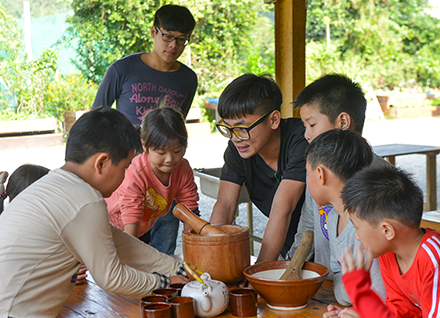
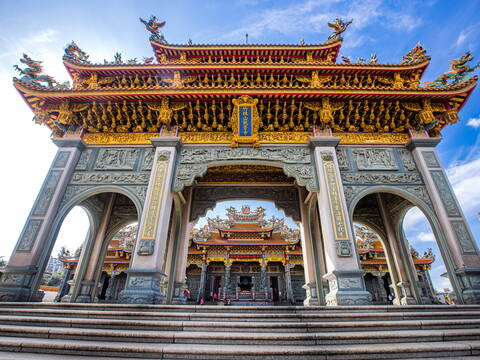
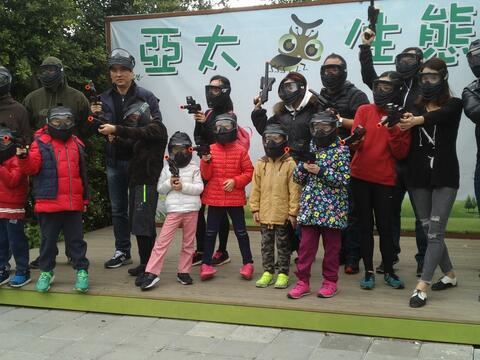
      The scenic attractions along this journey are perfect for the entire family, because aside from plenty of fun, children can also experience different cultures through traveling. The starting point of this journey is the Taoyuan Airport MRT “Linkou Station”; the first stop is the Zhulinshan Guanyin Temple, which is rumored to have an extremely efficacious 18-armed Guanyin enshrined here, hence countless followers have made the pilgrimage to pray for family blessings at the temple since its inception. The solemn, silent atmosphere in the temple is complemented by delicate, elegant wood or stone carvings of flora, fauna and people. The couplet engraved on the stone columns emanates powerful calligraphy strokes of a master. The essence of traditional temple architecture is preserved and merged with modern technology to create the magnificent temple with plenty to offer. After admiring the beauty of the Zhulinshan Guanyin Temple, the next stop is Taiwan’s Socks Museum, which takes the visitors on a journey of art, where they can catch a glimpse of the history of socks and knowledge. Each section within the museum tells a different cultural story and the stunning knitting is simply enchanting. In addition, they can also partake in DIY activities to produce their unique socks and take them home! Located near Taiwan’s Socks Museum, the W & W Museum of Jewelry is an ideal destination for couples, as they can observe how skillful artisans apply ingenious designs to create dazzling jewelries and ornaments. The delicate, painstaking metalworking process culminates in unique, handcrafted matching rings to romantically join two hearts together. At the last stop, the “Asia Pacific Eco Park”, besides exploring the stunning natural scenery, the park also offers a diverse array of entertainment features, including: outdoor cooking experiences, kiln cooking, or scintillating paintball, laser tag or water battleground, etc. These activities are perfect for the whole family and it is an exciting playground for children.
      day01
        Previous
        Trip to Tamsui and Sanzhi to Admire Cherry Blossoms in Spring
        Temperatures rise and drop, and it is sometimes cloudy, and sometimes sunny. People do not know what to wear for unpredictable weather. However, it signals the full bloom of flowers in spring when the weather constantly changes! Tamsui and Sanzhi at the Northern Coast have gradually said goodbye to rainy winter to welcome pink cherry blossoms that come into blossom. You can admire Yoshino cherry blossoms that bloom after Taiwan cherry blossoms in Tianyuan Temple, a resort for admiring cherry blossoms. They announce the arrival of Spring God with their pinkish white flowers. Cherry blossoms by Maple Tree Lake, Sakura Path and Sanzhi Sansheng Trail awake from the stroke of the spring breeze, blooming under the clear sky.Located at the outskirt of Tamsui, Wuji Tianyuan Temple stands on the hill to the northwest of Datun Mountain. The magnificent temple faces the sea with the mountain in the back. Founded in 1972, the temple enshrines Jade Emperor. In 1992, the temple extended and constructed Zhenyuan Altar in the back mountain. The five-story sacred altar is 200 meters tall with a diameter of 108 meters. The grand and majestic architecture is the most well-known landmark on the hill of Tamsui. Undoubtedly, its gorgeous forest of cherry blossoms has made the temple even more famous. Cherry blossom trees that were planted when the temple was first founded have made it a much anticipated spot for admiring cherry blossoms in New Taipei City today thanks to temple workers who take good care of these trees.Cherry blossoms are grown in two areas at Tianyuan Temple. Taiwan cherry blossoms grown in the back mountain are pink, white and peach. They are usually in full bloom from late January to late February. Cherry blossoms grown around the altar are Yoshino cherry blossoms, and they are in full blossom around mid-March and late March. Cherry blossoms bloom all over the mountain set off the magnificent altar of Tianyuan Temple. The unique and elegant scenery has made the temple a beloved spot for photographers. They can take photos from diverse angles as the altar has been built on a slope.🌸Due to climate, the time for cherry blossoms to be in full bloom varies. You may check the latest flowering information on the websites of https://cpqweb.com/ntpciflower/and https://www.facebook.com/ntpcflowernews/?locale=zh_TW for more information.After admiring the beauty of the architecture of Tianyuan Temple and cherry blossoms, we come to Maple Tree Lake which is only five minutes away from the temple by car. Located inside Yangmingshan National Park, the lake which is surrounded by mountains on its three sides possesses the dreamlike scenes of Magnolia grandiflora, camellias and cherry blossoms. Maple Tree Lake has the largest forest of Magnolia grandiflora in Taiwan. Purple and pinkish white Magnolia grandiflora are planted by the lake. They are called “lotuses growing in the trees,” and are respected and loved by Buddhists. Moreover, they are important drug ingredients and spices. They are ornamental plants, and they provide benefits to humans as well.🌸The flowering season of Magnolia grandiflora is between early February and mid-March every year.16,000 cherry blossom trees were planted on Qingshan Road and Dahu Road successively nearly three decades ago in Sanzhi that is located right next to Tamsui. They include Taiwan cherry blossoms, double-layer cherry blossoms and Yoshino cherry blossoms, and they bloom in turn between late January and early April. They grow on both sides of the road, so it is called Sakura Path which is a popular spot for admiring cherry blossoms in Sanzhi. Landscape trails and observatories have been built for certain parts of the path. It is breathtaking to stroll on the flower path where the petals of cherry blossoms are flying all around.Sansheng Trail that is built along Dakeng River and paved with andesite is another renowned cherry blossom viewing path in Sanzhi. Over 300 double-layer cherry blossom and Yoshino cherry blossom trees have been planted along the 2-kilometer trail. Sansheng Trail combines “production,” “life” and “ecology.” The fields in farming villages are pleasing to see. You can walk on the wooden arch bridge to listen to the murmuring of the river, admire the falling of petals, and enjoy the happiness that belongs solely to spring.
        Next
        Water Source Tea Fragrance・Pinglin Low-Carbon Journey
        As global carbon reduction gains momentum, the tourism industry works to lower emissions across all tour elements. From choosing meeting points and transportation methods, to incorporating environmental education and selecting eco-friendly restaurants, professional institutions now calculate carbon footprints using international standards. Unavoidable emissions are offset through purchasing Verified Carbon Standard (VCS) certified carbon credits, achieving genuine low-carbon tourism.Pinglin, renowned for producing Paochung tea, pioneered Taiwan's low-carbon tourism movement. Starting from Pinglin Suspension Bridge, the route follows Beishi River to the Taipei Water Management Branch Environmental Education Center to discover wastewater purification processes. At midday, visitors enjoy creative cuisine featuring local tea at Just Pinglin eco-restaurant on Pinglin Old Street. The afternoon continues at Xinfeng Tea plantation in Pinglin's hills, where young farmers share their lives devoted to tea.The journey begins at Pinglin Suspension Bridge. Spanning approximately 60 meters across Beishi River, this bridge connects fish-watching trails on both riverbanks. Led by a guide, visitors observe Taiwan shovel-jaw carp (a.k.a. "underwater fireflies"), and the river's rich aquatic ecosystem. The Beishi River watershed falls within the Taipei Water Conservatiopn Area. Policies such as river closure for fish protection and sediment barrier installations are implemented to safeguard water resources for the Taipei-New Taipei metropolitan area and extend Feitsui Reservoir's lifespan.At the fish-watching trail's end, behind flood walls stands Pinglin Wastewater Treatment Plant—one of two major treatment plants under the Taipei Water Management Branch and an environmental education venue. Designated in 1984, the Taipei Water Conservation Area spans five districts: Wulai, Shuangxi, Pinglin, Xindian, and Shiding. It’s Taiwan's only protected zone established in accordance with the Urban Planning Act, with merely 1% being low-density residential areas.Inside the Environmental Education Learning Center, visitors gain insight into Taiwan's water resource management and observe the treatment plant's three-stage process—physical, biological, and chemical purification that ensures discharge quality. Visitors collect water samples themselves, comparing influent and effluent quality for an intuitive understanding of purification's importance.At noon, visit Just Pinglin eco-restaurant at the entrance to Pinglin Old Street. Inside this stone-slab heritage building, savor dishes crafted with local tea—black tea braised pork rice, salmon ochazuke, and various tea snacks. A young man from Beigang and a young lady from Guanziling chose to settle in Pinglin, New Taipei, conveying the town's atmosphere and energy to travelers through cuisine, fine tea, curated items, and exhibitions.After enjoying refined tea cuisine, explore Pinglin Old Street with a guide. Stretching approximately 200 meters, the old street features teapot installation art and uniform green signage. Paper shops, tofu stalls, grocery stores, and tea merchants line the way. Street vendors use Pinglin's famous Paochung tea to create innovative treats—tea cakes, tea steamed buns, tea nougat, and camellia oil thin noodles."UChung," established by local young tea farmers, offers a modern compound tea space on the old street, selling tea snacks, tea gift items, and tea celebration wine developed exclusively by Pinglin tea farmers. This bright space hosts tea ceremony experiences from time to time, promoting tea culture in ways that resonate with younger generations. At a corner of the old street, Pinglin Tea Cultural Museum, operated by the Pinglin Farmers' Association, visitors will learn about tea and camellia oil culture while exploring Pinglin's tea history and other industrial features. Stone heritage buildings constructed with herringbone and T-shaped patterns offer another visual highlight along the street.Afternoon brings a journey to Pinglin's hills. Near Xiangong Temple, famous for sunrises and seas of clouds, sixth-generation young tea farmer Zhan Chengde of Xinfeng Tea guides visitors through verdant tea plantations to pick one bud with two leaves, then hand-craft and taste their own tea.Xinfeng Tea is known for its "friend tea," aimed to convey warmth and authenticity. After picking tea leaves, participants personally stir-fry and knead them under the farmer's guidance to create their own green tea! Through the journey from a plantation to a cup, savor Pinglin tea town's distinctive flavor.The "Water Source Tea Fragrance・Pinglin Low-Carbon Journey" meets the Ministry of Environment's "Green Tourism" standards and appears on the "Green Lifestyle" information platform. Carbon footprint calculations show this tour produces 11.5 kg CO2e per person, reducing emissions by 5.6 kilograms compared to typical self-driving tourism.
        Read more